Cello
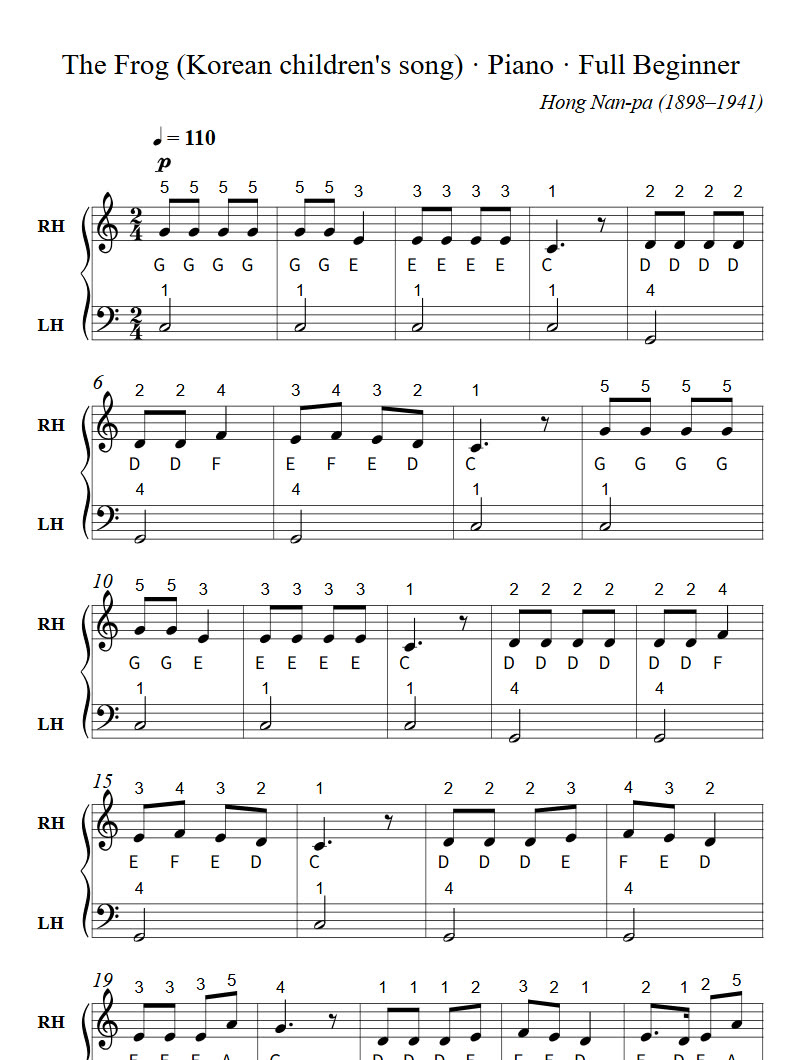 Hong Nan-pa (1898–1941)
The Frog Cello
Hong Nan-pa's song that goes 'Gaegul gaegul, the frog sings'. Taken from the original 1933 score of '100 Korean Children's Songs'.
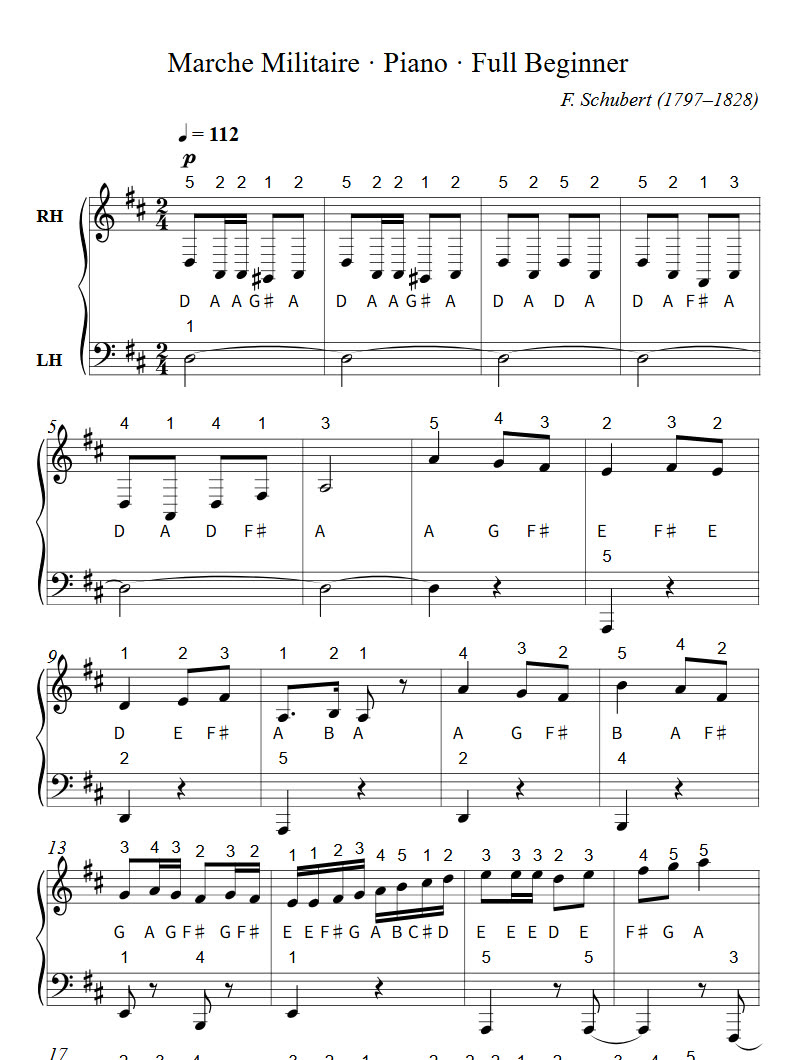 F. Schubert (1797–1828)
Marche Militaire Cello
Schubert's march. The original is a piano duet, gathered here for two hands so you can play it alone.
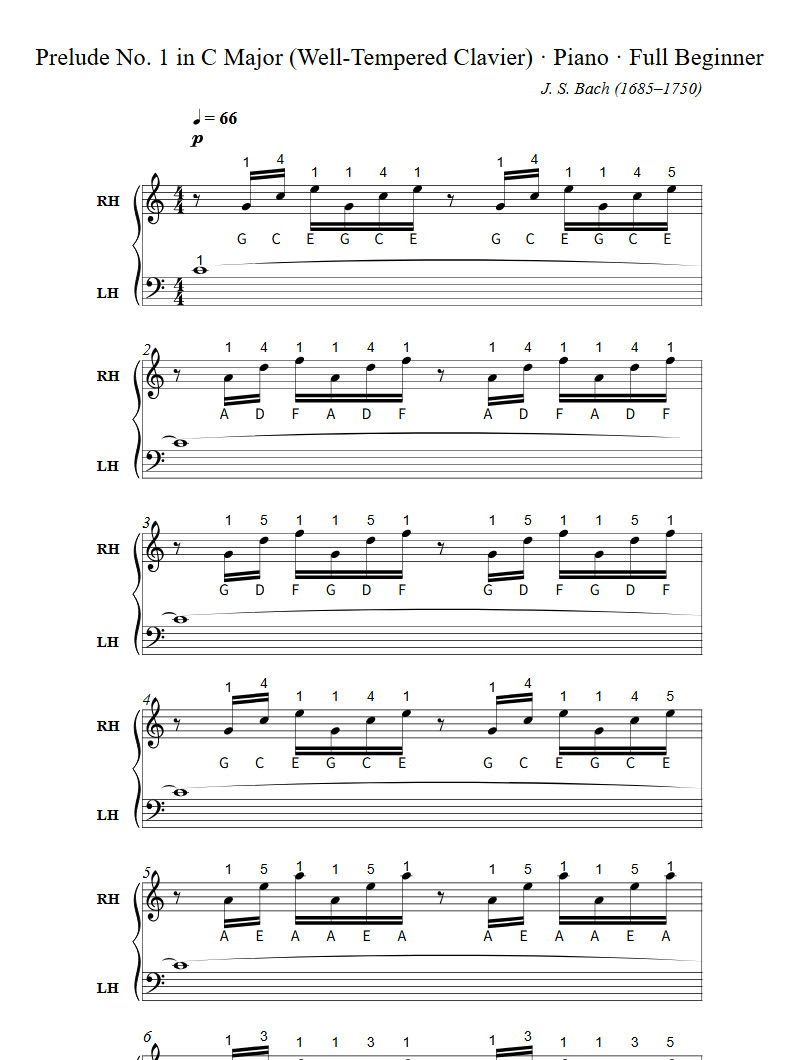 J. S. Bach (1685–1750)
Prelude in C Cello
The first piece of Bach's Well-Tempered Clavier, Book 1. The same broken-chord pattern changes harmony bar by bar.
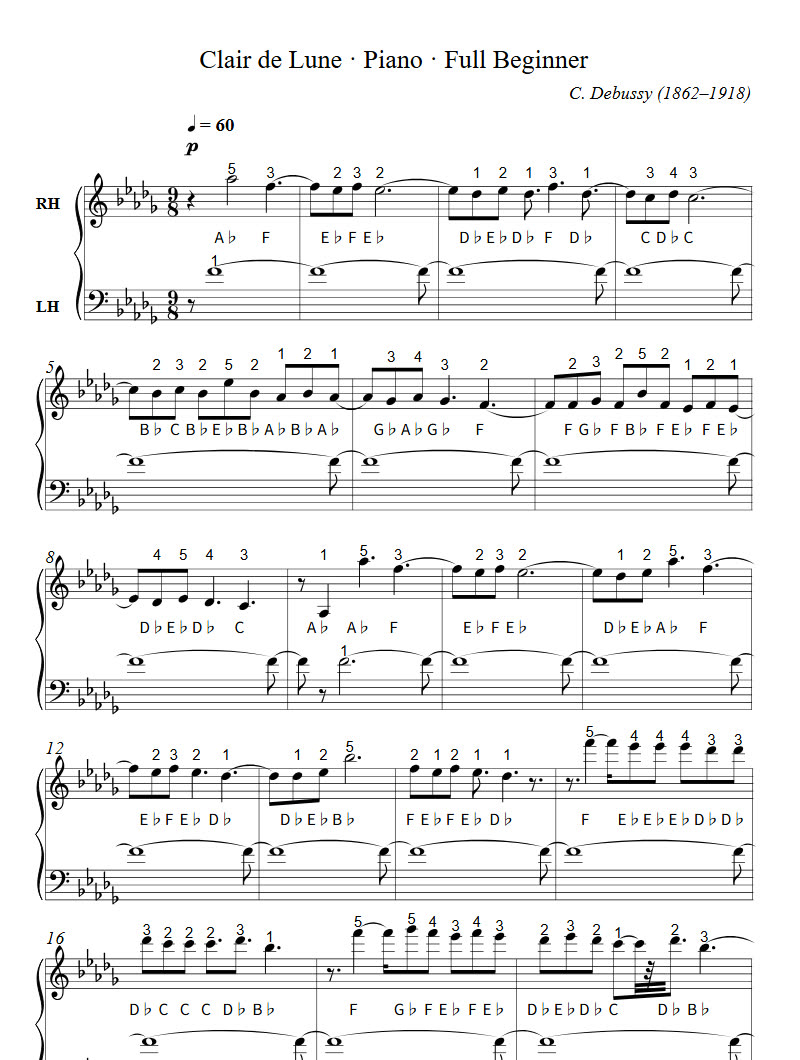 C. Debussy (1862–1918)
Clair de Lune Cello
The third piece of Debussy's 'Suite bergamasque', flowing slowly in 9/8.
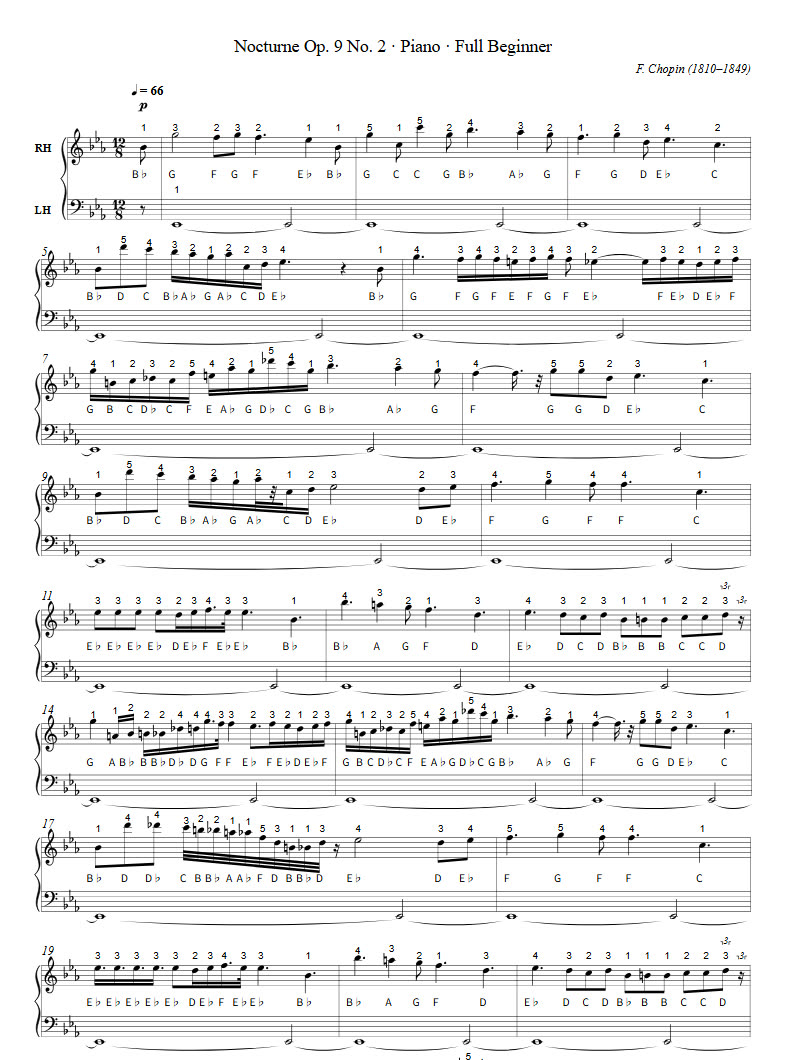 F. Chopin (1810–1849)
Nocturne Op. 9 No. 2 Cello
Chopin's best-known nocturne. A singing melody floats over a 12/8 accompaniment.
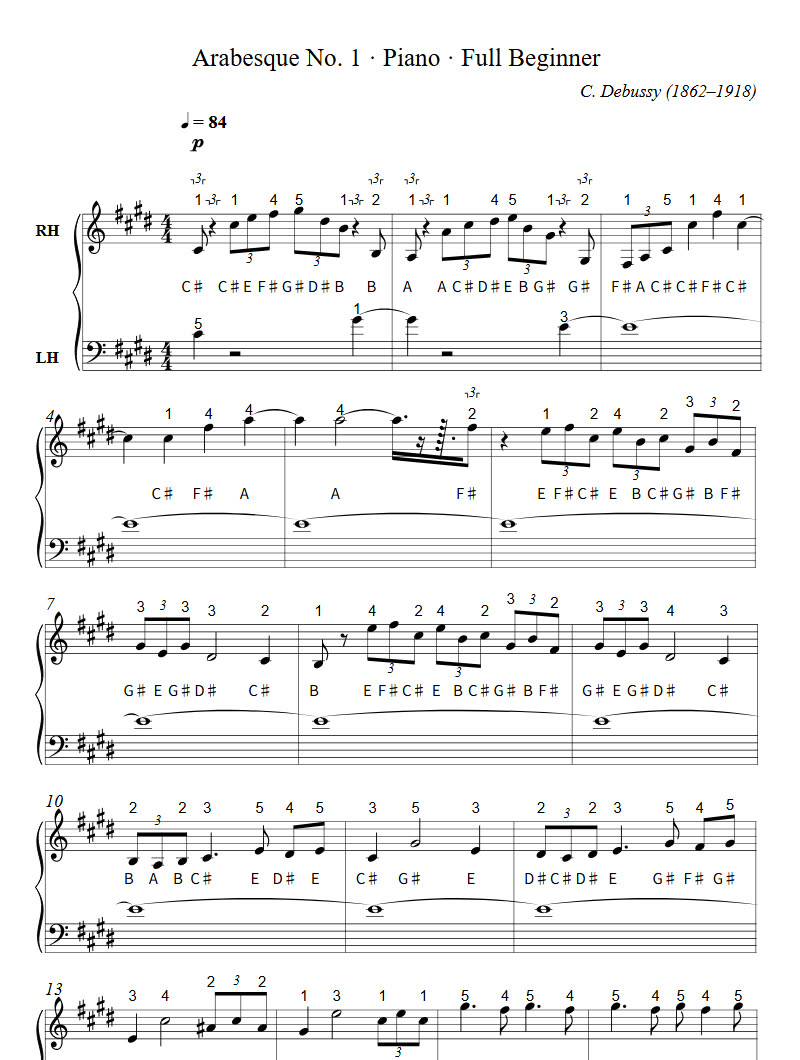 C. Debussy (1862–1918)
Arabesque No. 1 Cello
Debussy's piano piece, with triplet arpeggios rising and falling like waves.
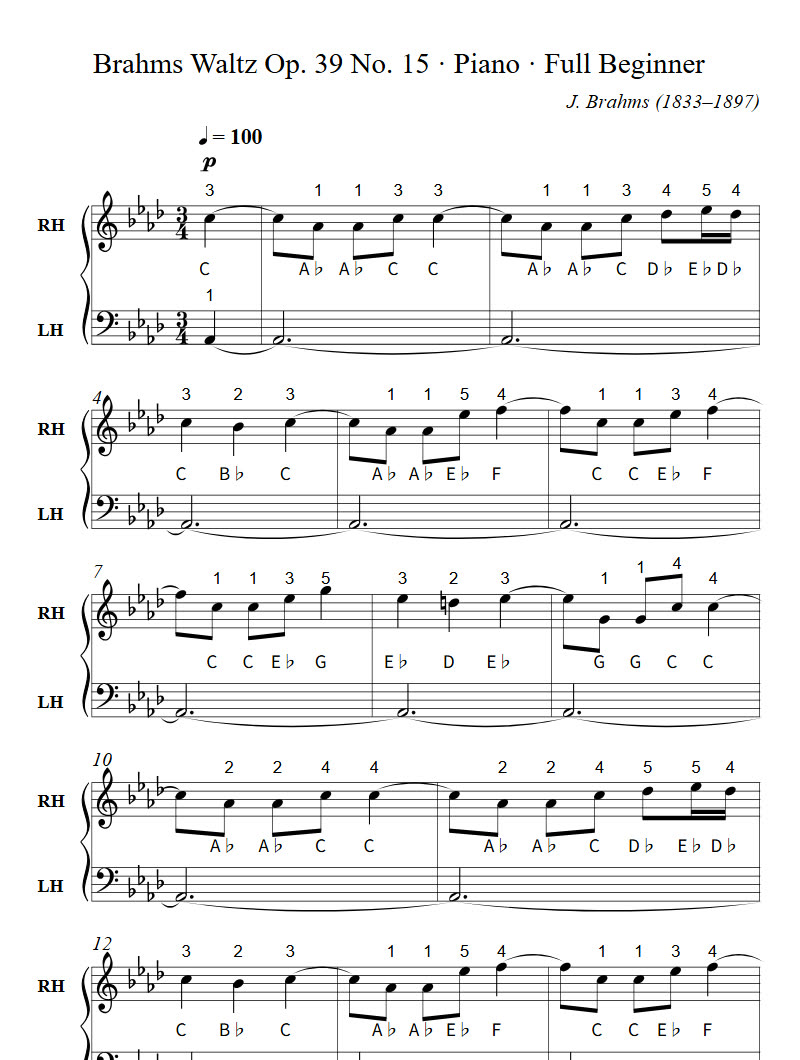 J. Brahms (1833–1897)
Brahms Waltz Cello
No. 15, the most famous of Brahms' Waltzes Op. 39.
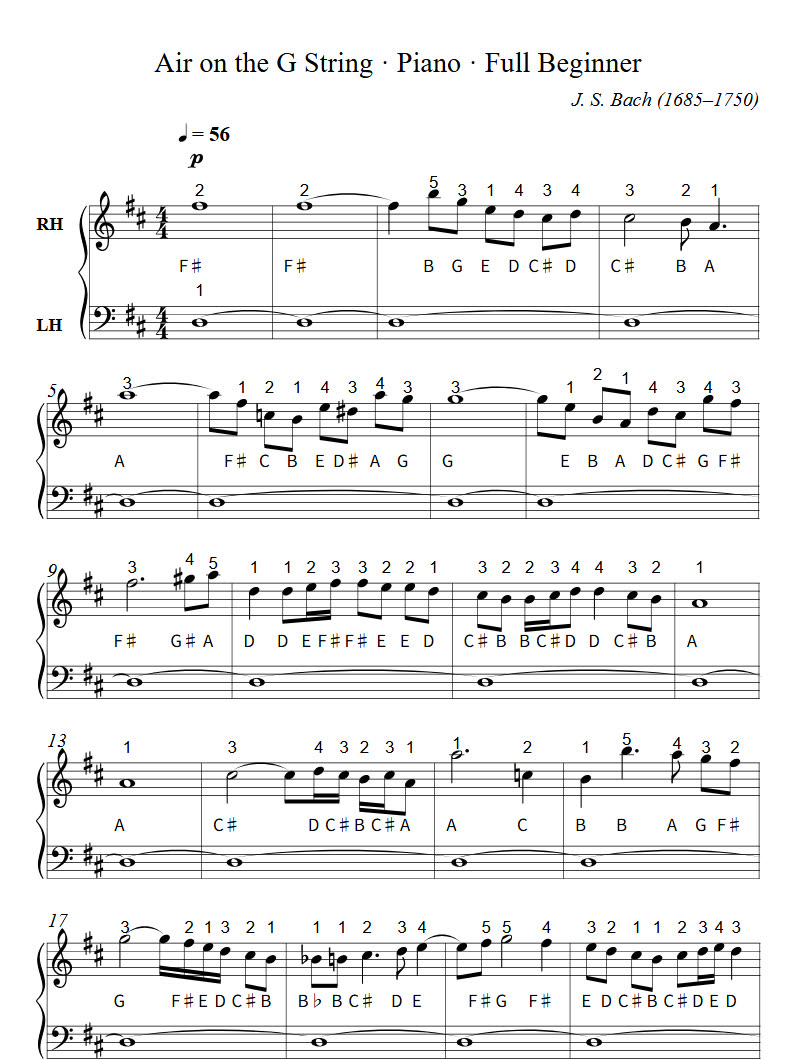 J. S. Bach (1685–1750)
Air on the G String Cello
The Air from Bach's Orchestral Suite No. 3, taken from a piano arrangement in G major.
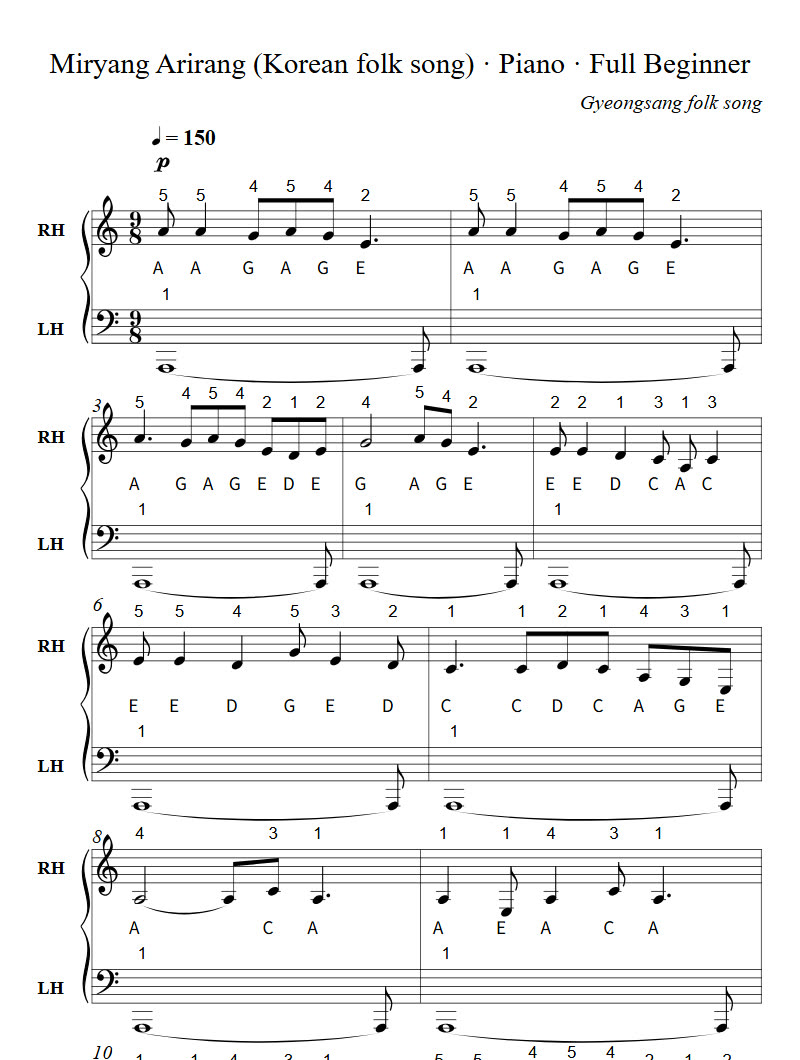 Gyeongsang folk song
Miryang Arirang Cello
A Gyeongsang-province folk song that begins 'Nal jom boso' (Look at me). Set in 9/8 semachi rhythm as in Korean school textbooks.
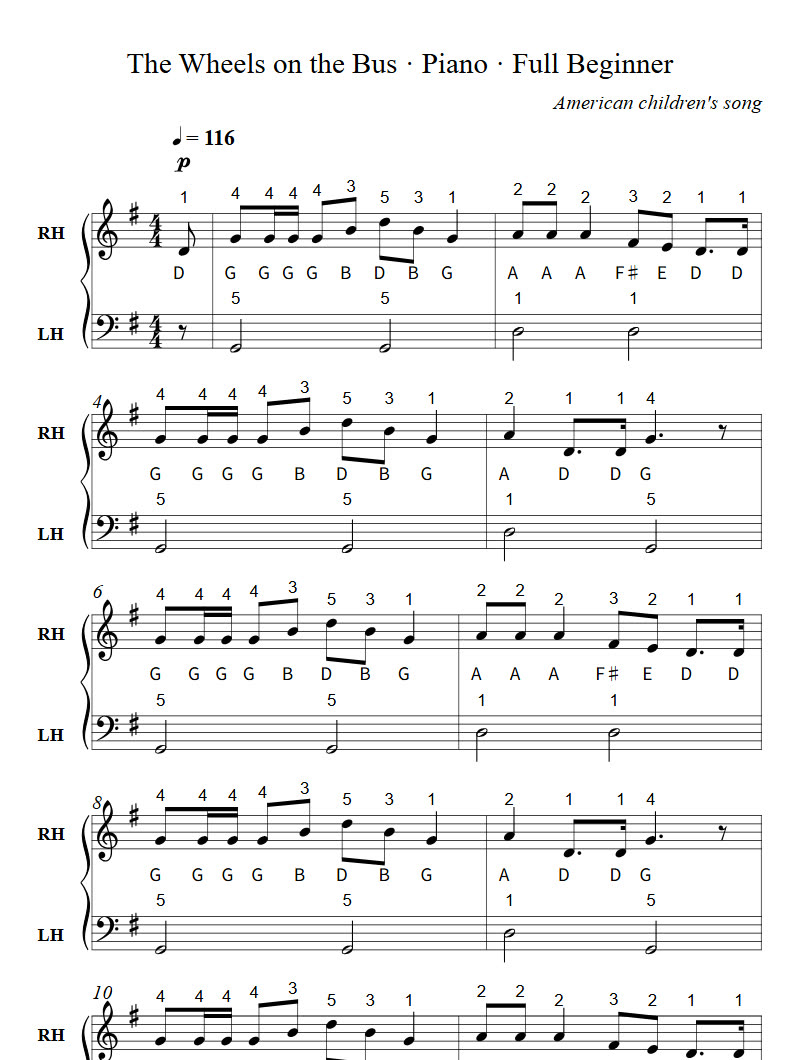 American children's song
The Wheels on the Bus Cello
'The Wheels on the Bus' — a short song repeated three times.
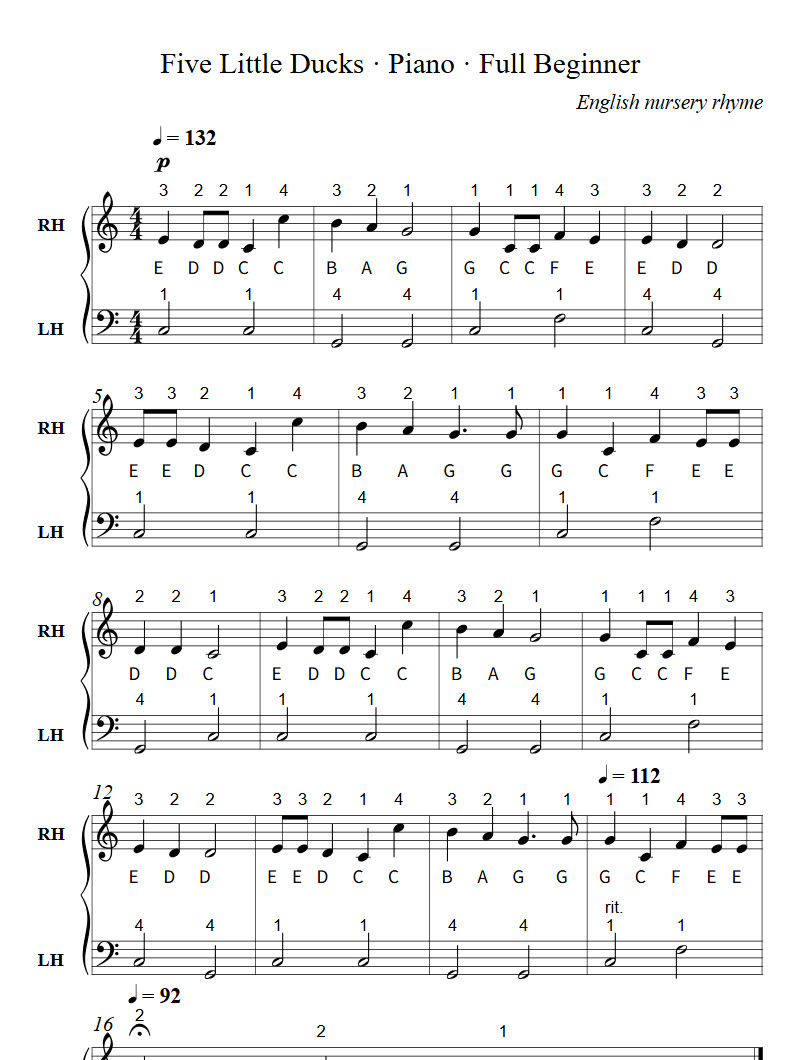 English nursery rhyme
Five Little Ducks Cello
The nursery rhyme 'Five Little Ducks'. One duck goes missing each time, so it's repeated twice.
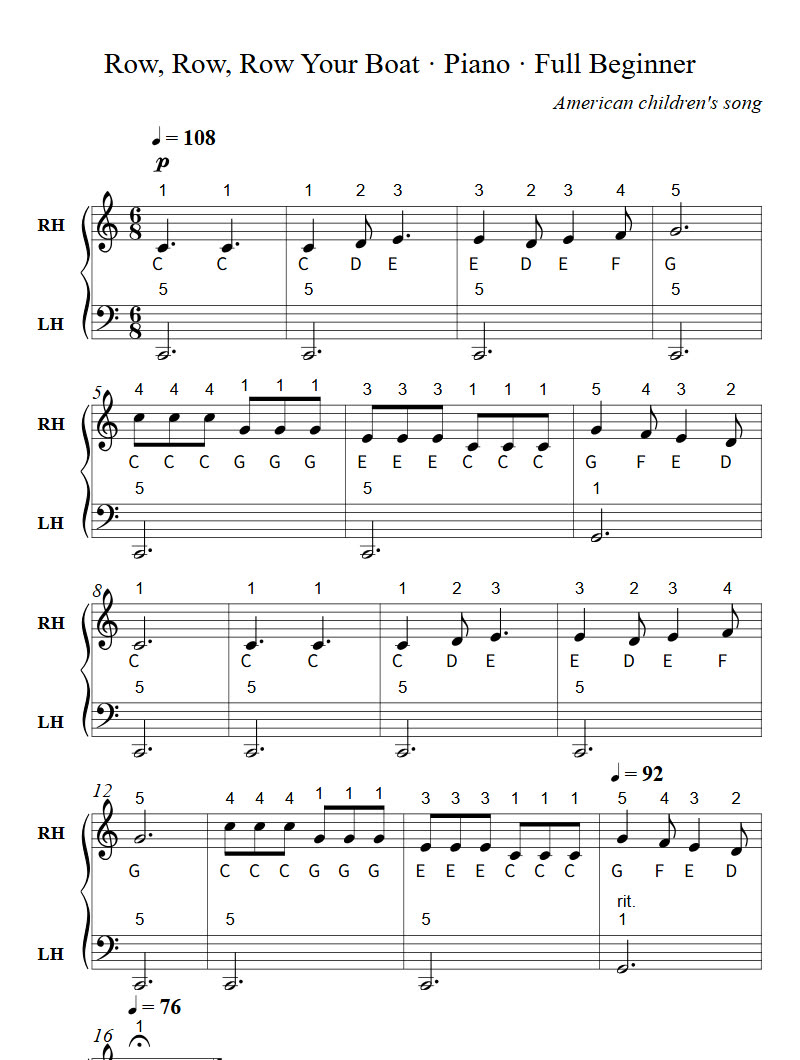 American children's song
Row Your Boat Cello
The nursery rhyme 'Row, Row, Row Your Boat' in 6/8 — also sung as a round.
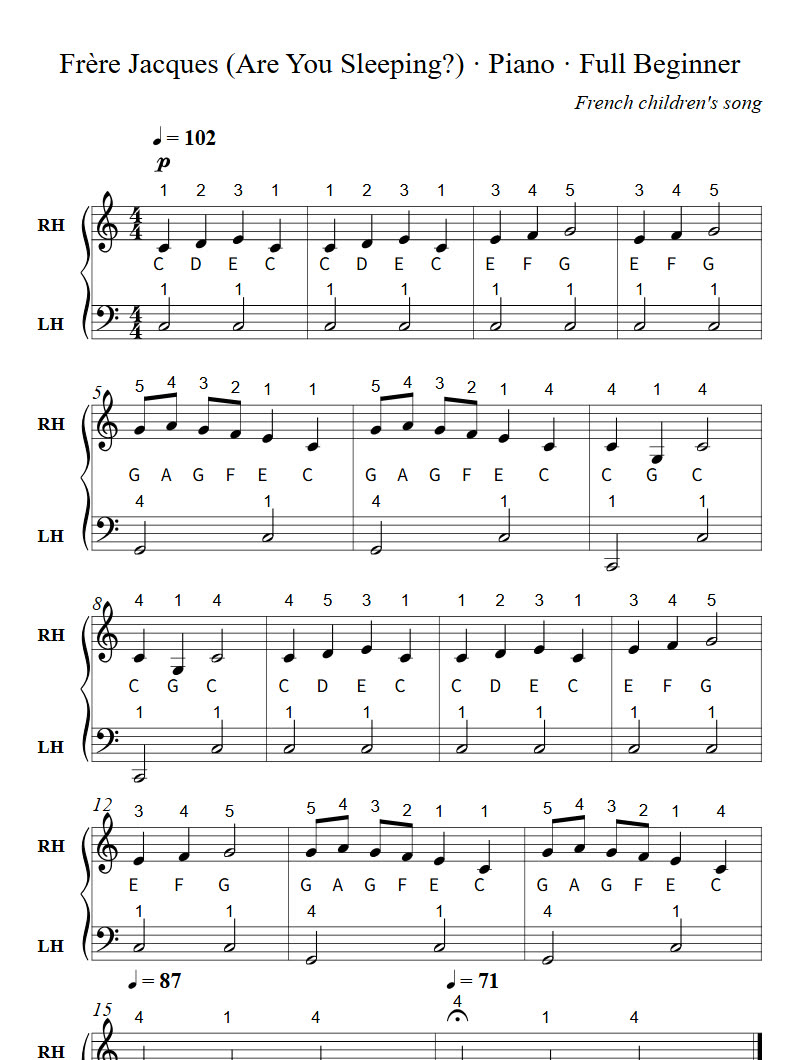 French children's song
Frère Jacques Cello
The round sung in English as 'Are You Sleeping, Brother John?'.
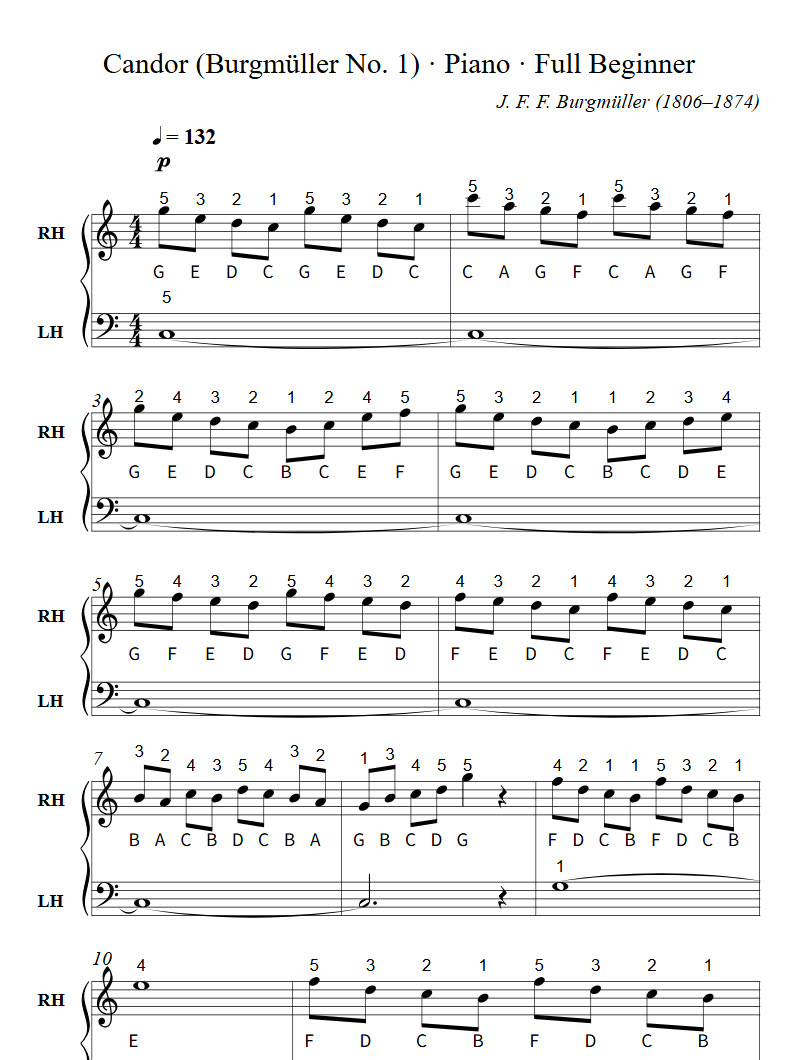 J. F. F. Burgmüller (1806–1874)
Candor (Burgmüller) Cello
No. 1 of Burgmüller's 25 Easy Études — a piece many students play alongside Czerny.
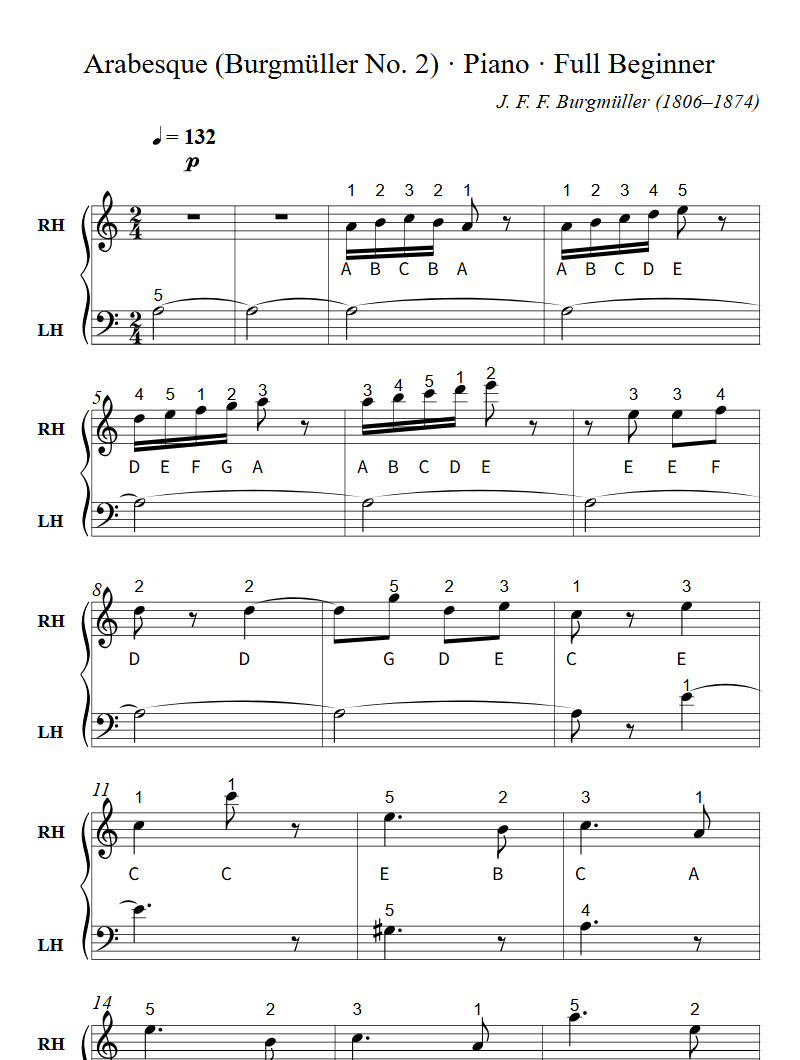 J. F. F. Burgmüller (1806–1874)
Arabesque (Burgmüller) Cello
No. 2 of Burgmüller's 25 Easy Études — a recital favorite with fast rolling sixteenth notes.
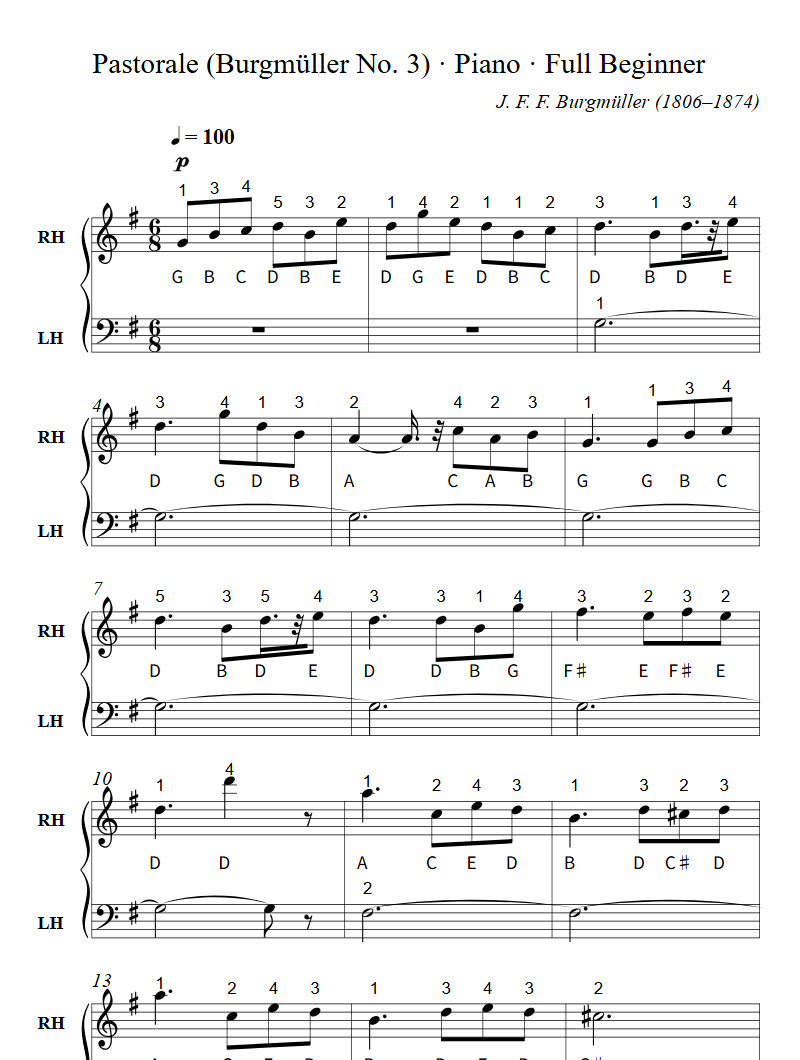 J. F. F. Burgmüller (1806–1874)
Pastorale (Burgmüller) Cello
No. 3 of Burgmüller's 25 Easy Études, in 6/8, evoking open fields.
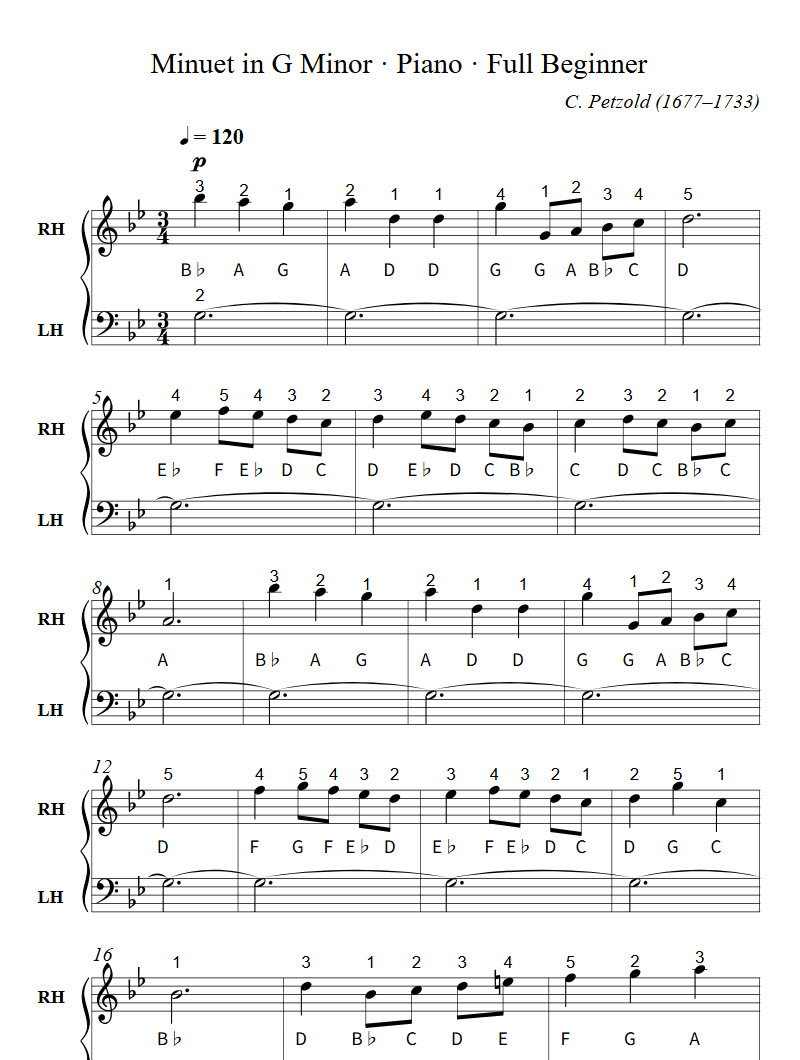 C. Petzold (1677–1733)
Minuet in G Minor Cello
The minor-key minuet from the Notebook for Anna Magdalena Bach, often paired with the Minuet in G.
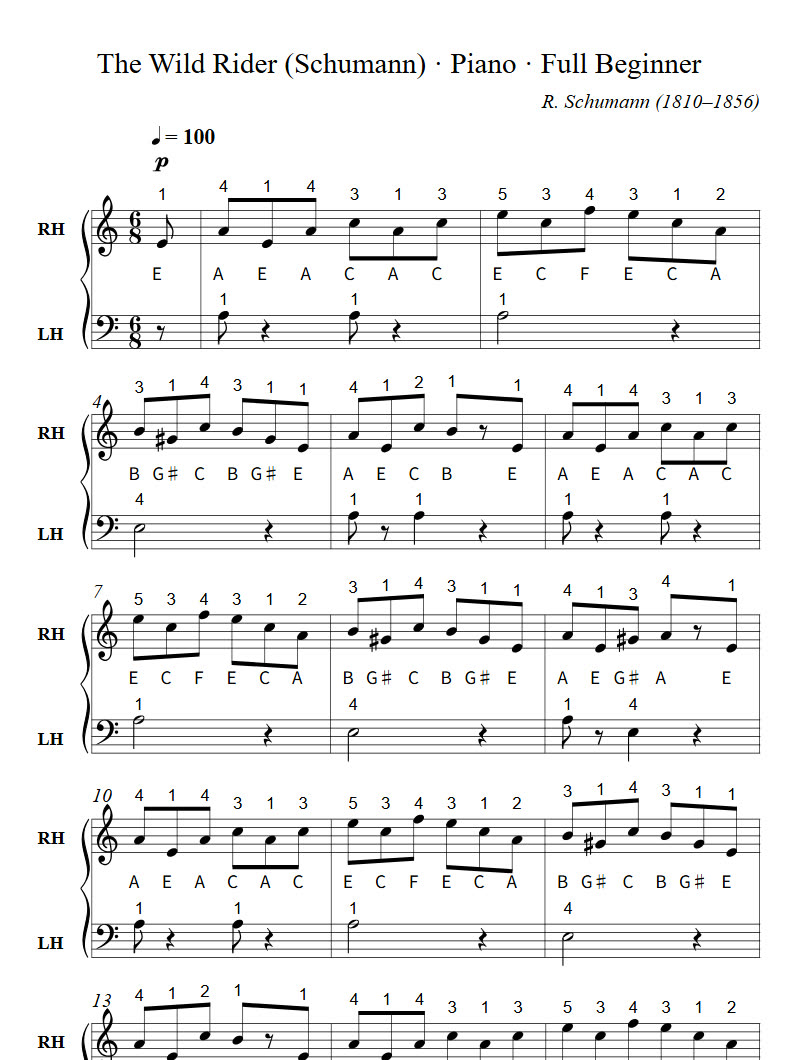 R. Schumann (1810–1856)
The Wild Rider Cello
No. 8 from Schumann's 'Album for the Young'. Play it short and strong, like a galloping horse.
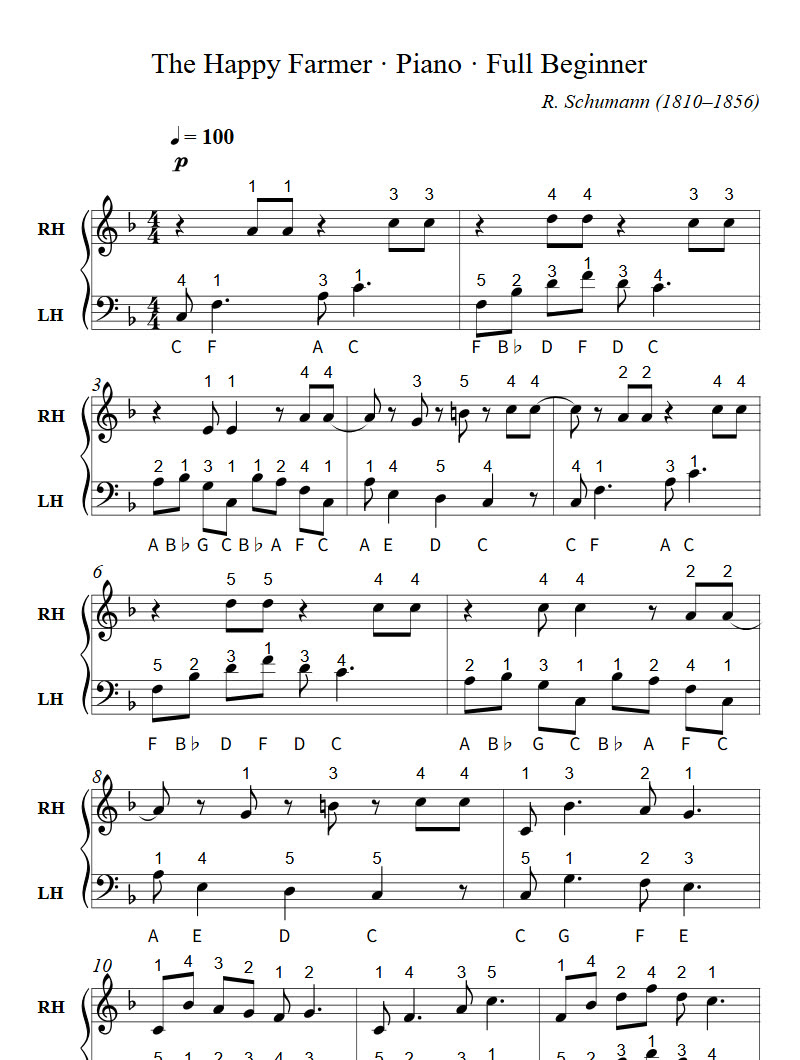 R. Schumann (1810–1856)
The Happy Farmer Cello
No. 10 from Schumann's 'Album for the Young'. The left hand sings the melody while the right hand supports with chords.
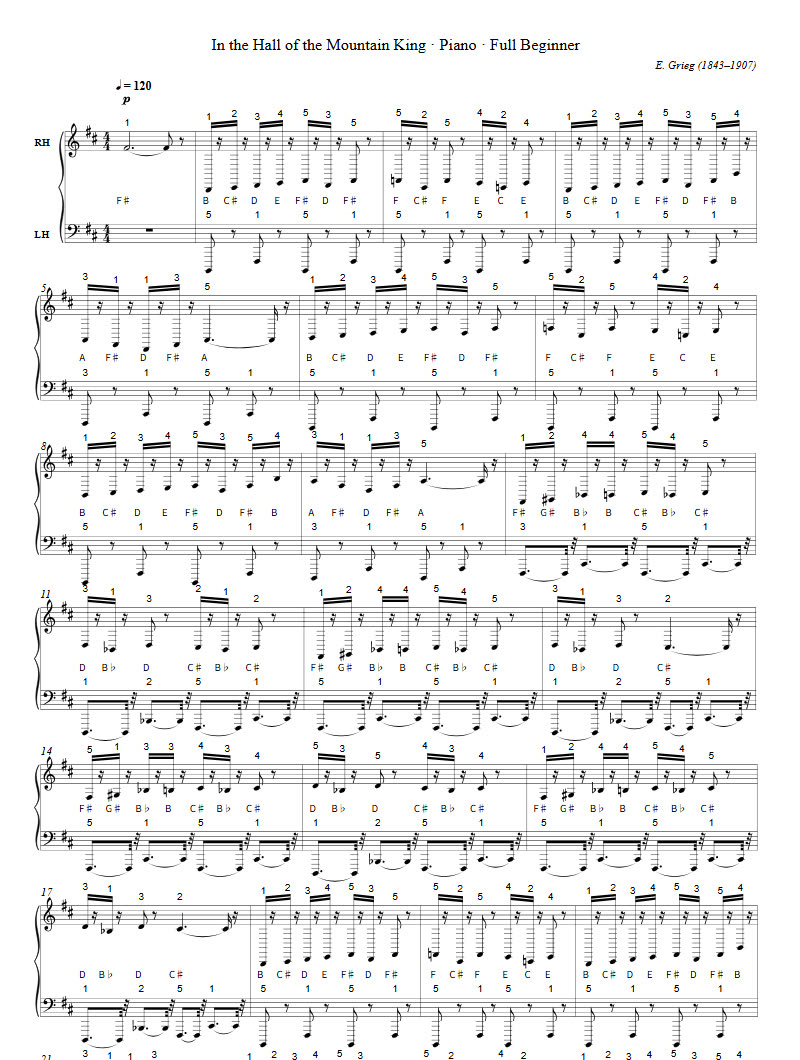 E. Grieg (1843–1907)
Hall of the Mountain King Cello
From Grieg's 'Peer Gynt'. The same melody gets faster and louder.
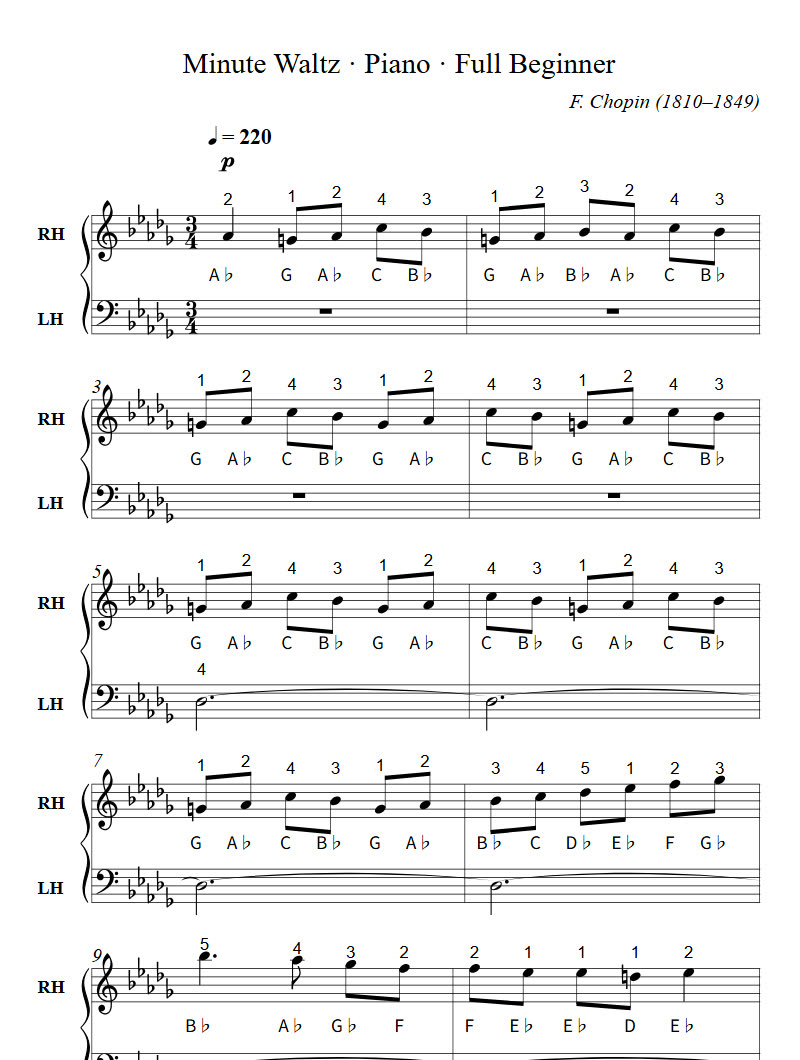 F. Chopin (1810–1849)
Minute Waltz Cello
Chopin's 'Minute Waltz', said to picture a little dog chasing its own tail.