Score Forest · Free sheet music
Tags
All tagsPopular now
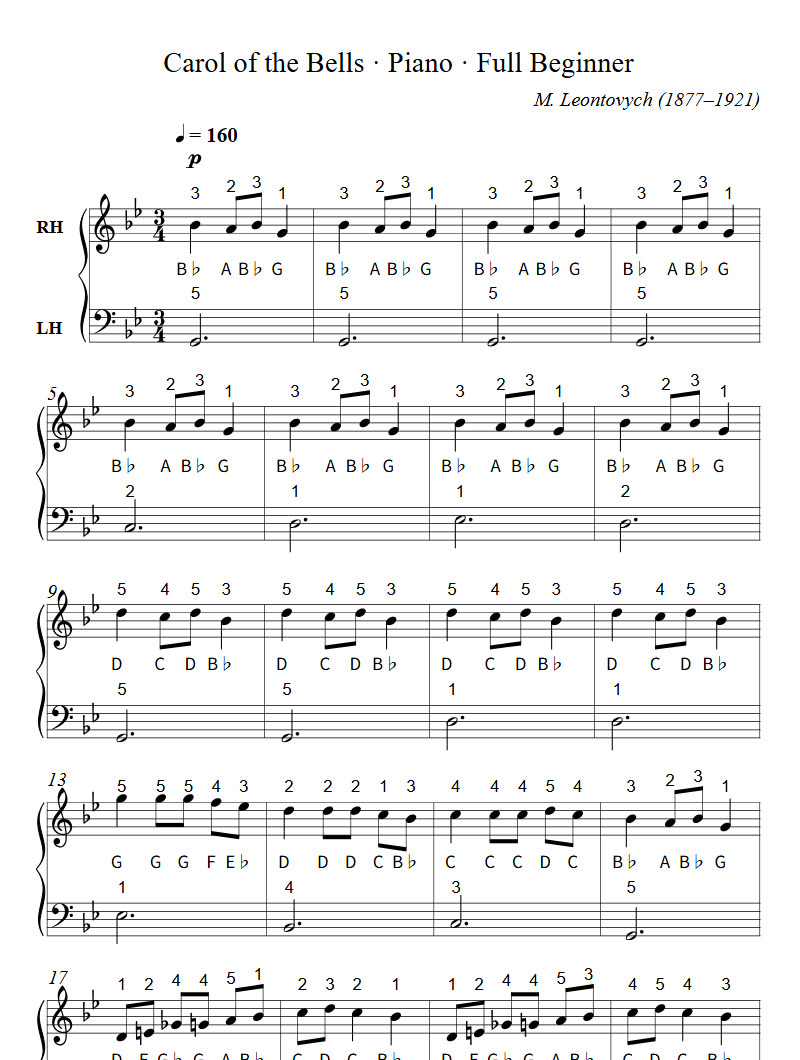 M. Leontovych (1877–1921)
Carol of the Bells
A Ukrainian carol where four notes, C–B–C–A, repeat like bells. It's in 'Home Alone'.
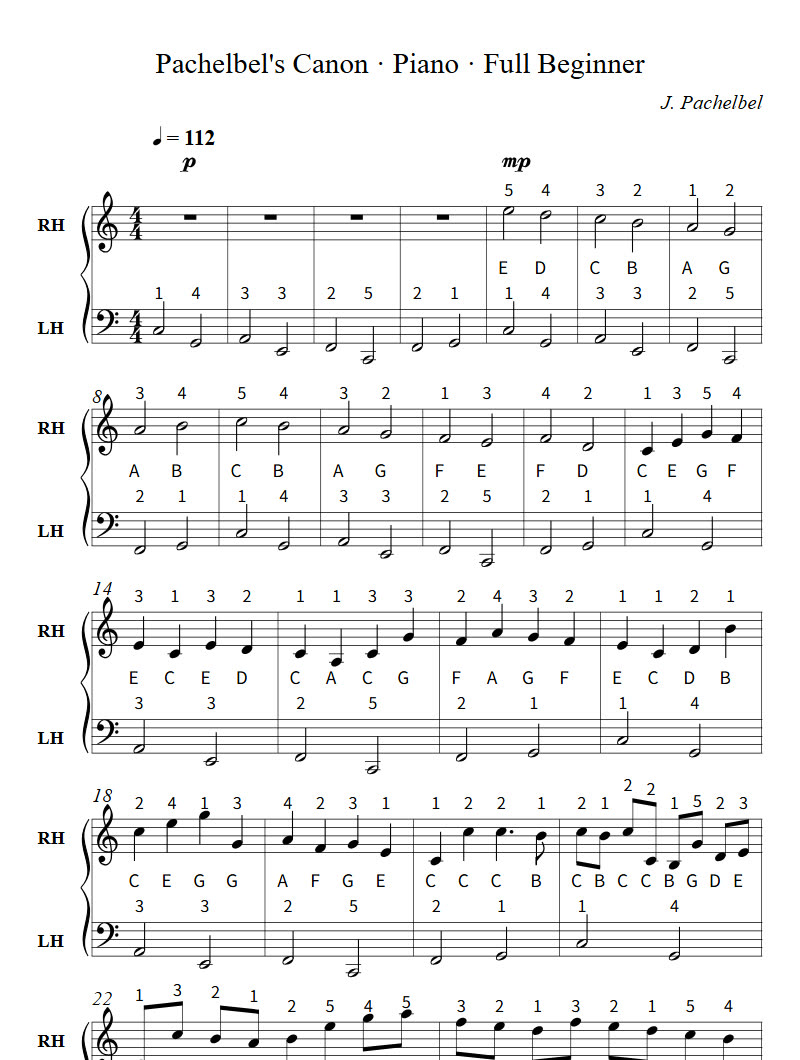 J. Pachelbel (1653–1706)
Canon in D
The most-played piece at weddings and school concerts. Layer after layer of melody builds over the same eight chords.
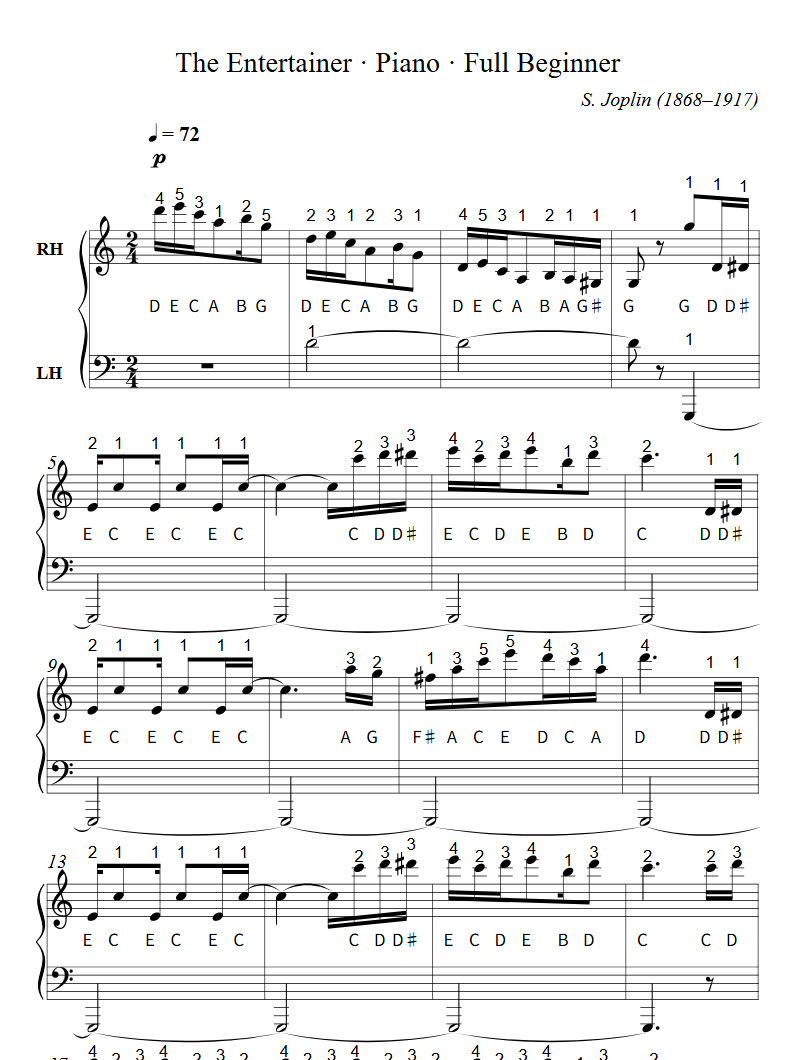 S. Joplin (1868–1917)
The Entertainer
Scott Joplin's ragtime, made famous again by the film 'The Sting'.
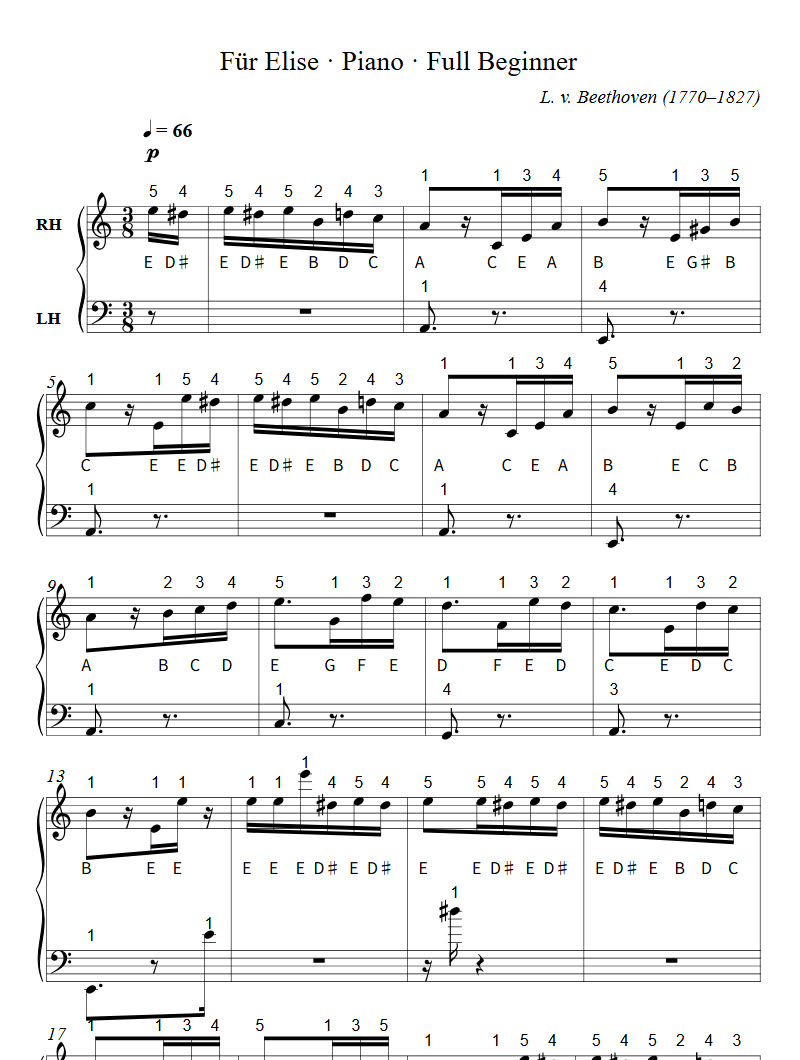 L. v. Beethoven (1770–1827)
Für Elise
The first piece many piano students reach for. Learn the opening E–D♯–E line and you're halfway there.
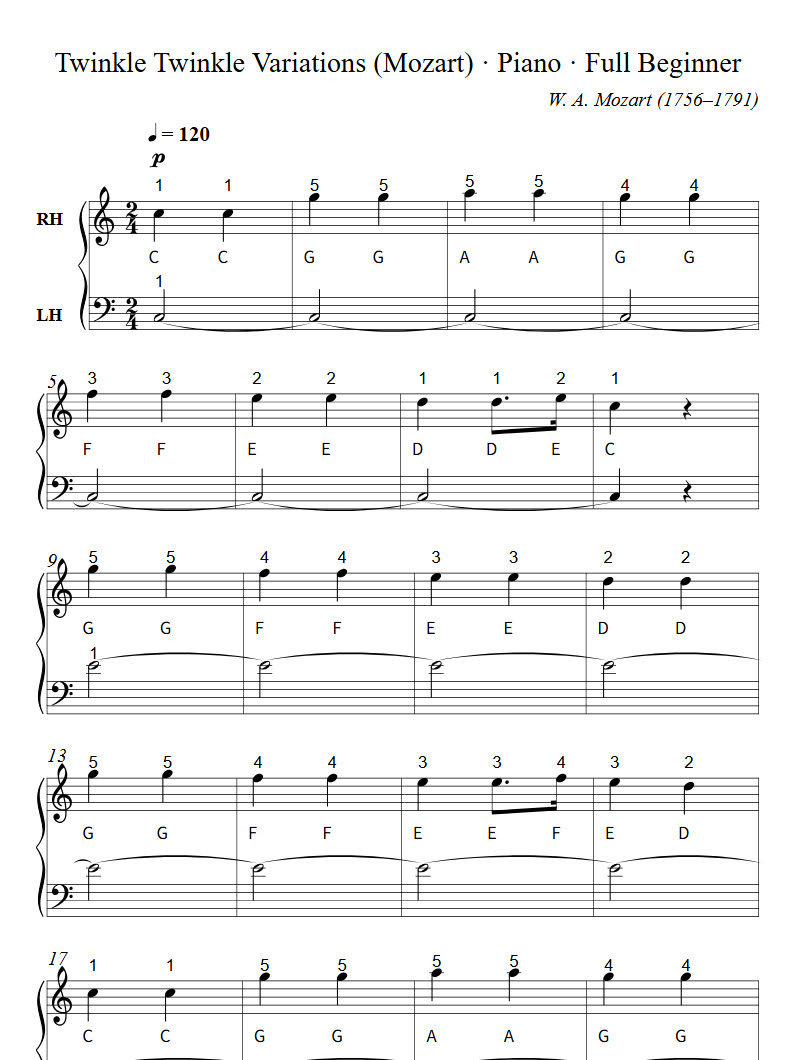 W. A. Mozart (1756–1791)
Twinkle Variations
Mozart's variations on the 'Twinkle, Twinkle' tune: the theme plus 11 variations.
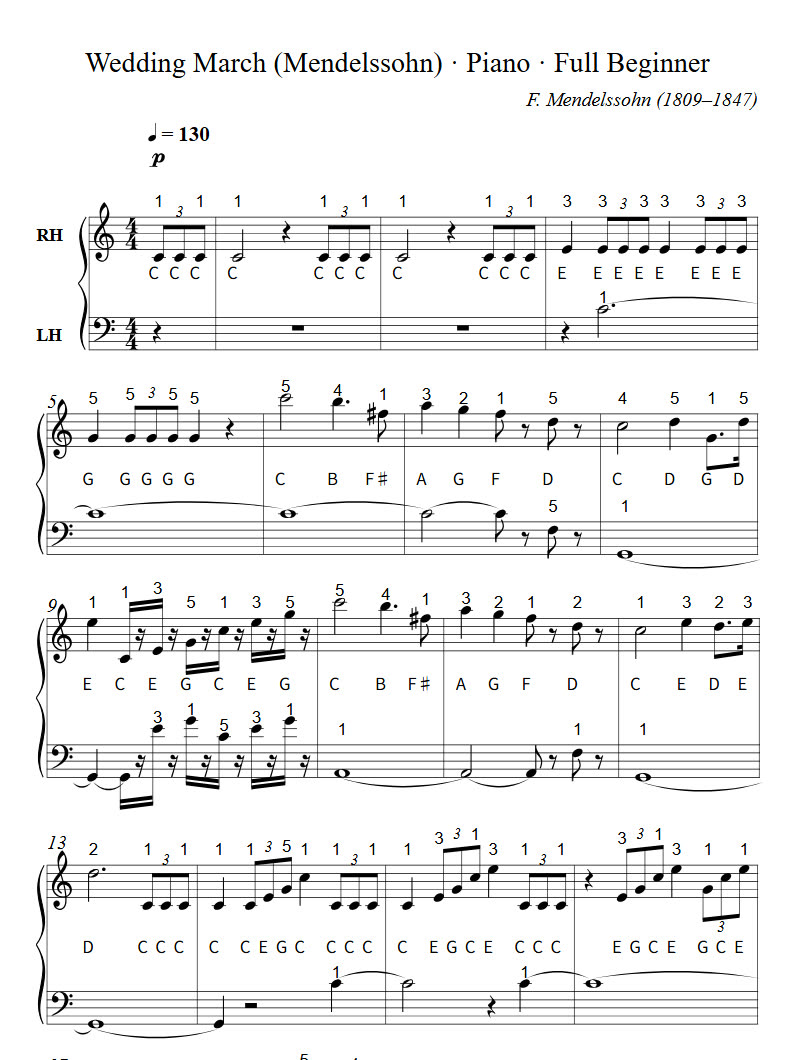 F. Mendelssohn (1809–1847)
Wedding March
Mendelssohn's march for the recessional at weddings. It opens with a trumpet fanfare.
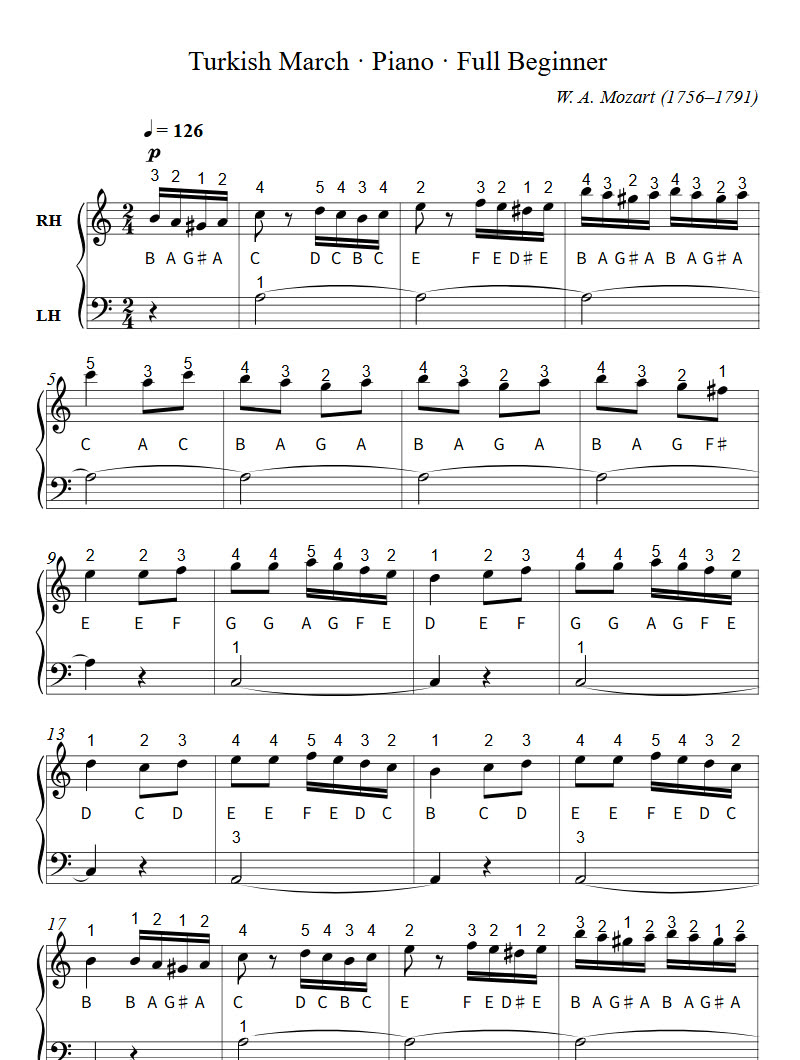 W. A. Mozart (1756–1791)
Turkish March
Its bright marching rhythm makes it a recital favorite. The beginner version is arranged so your fingers don't tangle.
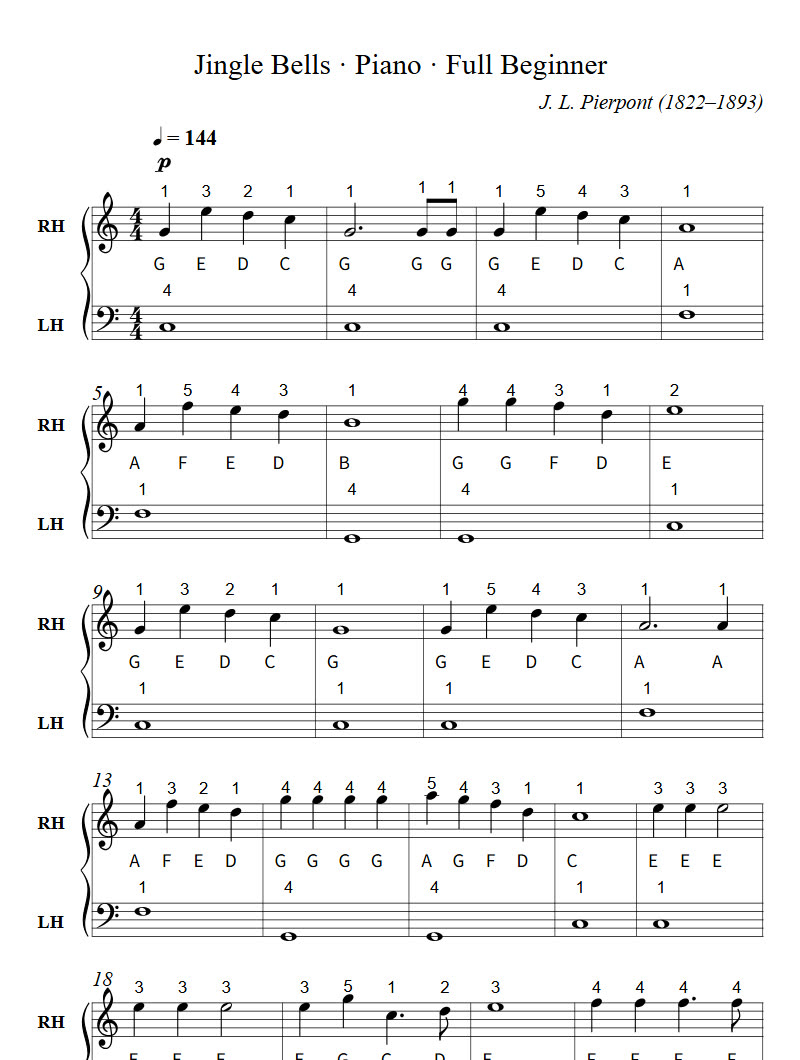 J. L. Pierpont (1822–1893)
Jingle Bells
The full Jingle Bells with verse and chorus. Choose Highlights to play just the chorus.
Christmas
See all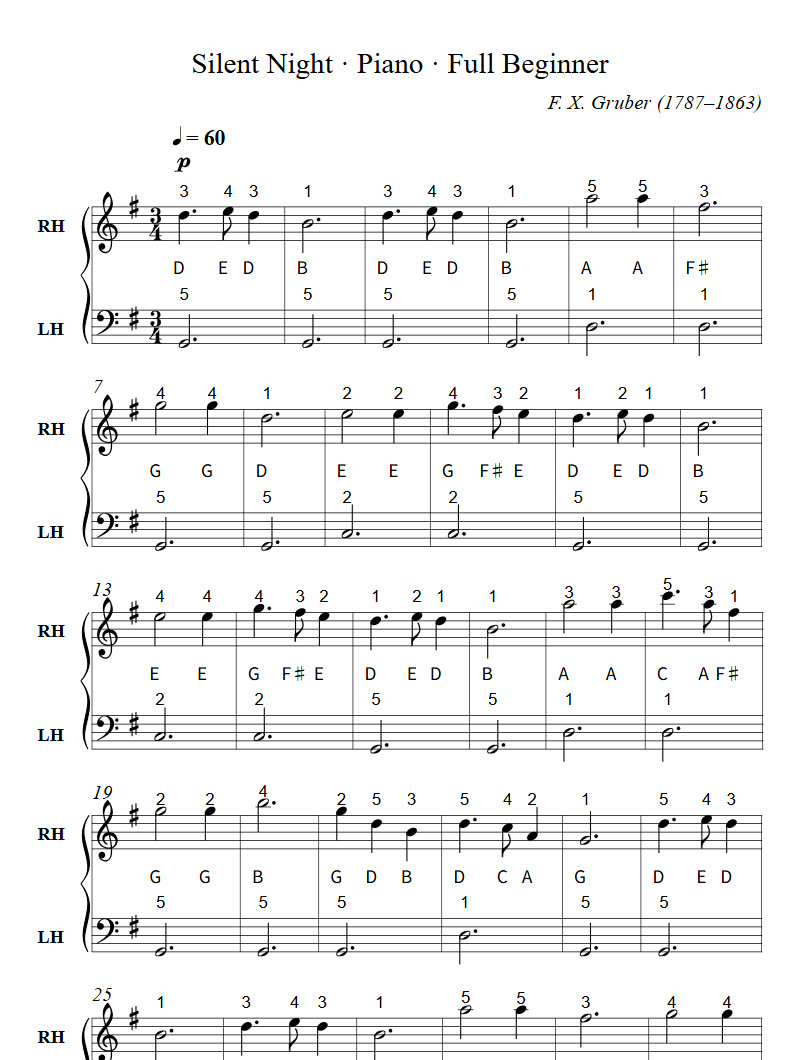 F. X. Gruber (1787–1863)
Silent Night
The most-played Christmas carol. Its gentle three-beat melody is easy to pick up, even for beginners.
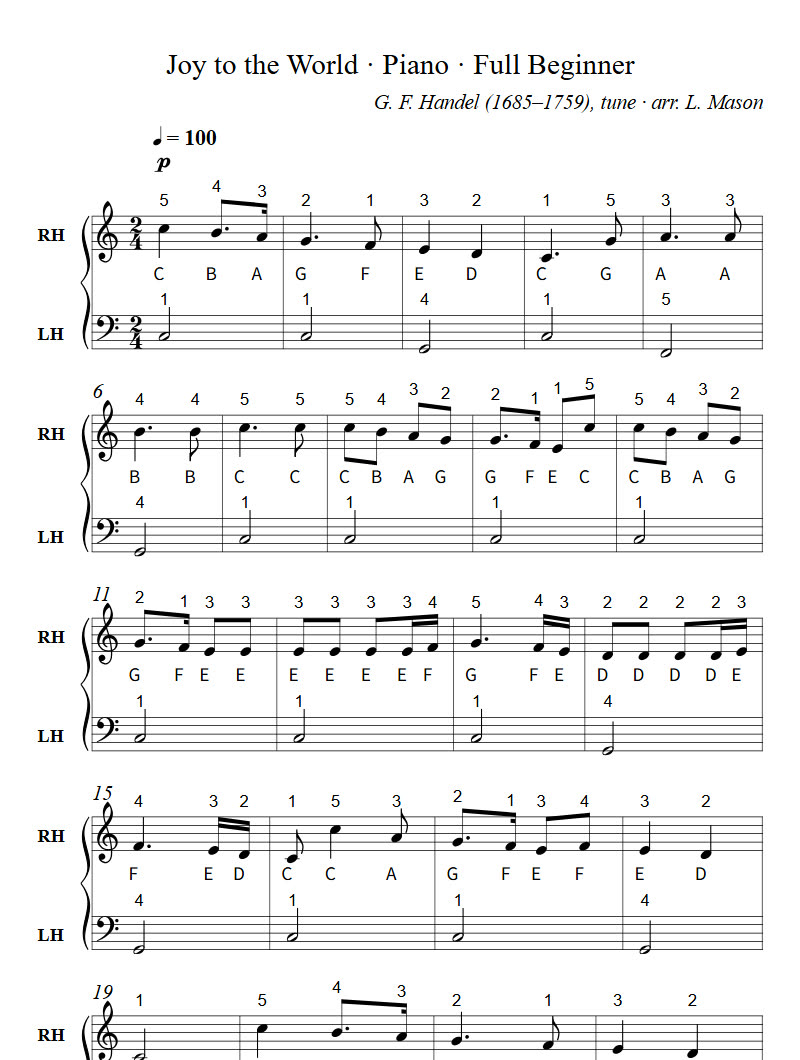 G. F. Handel (1685–1759), tune · arr. L. Mason
Joy to the World
A carol famous for its opening D–C♯–B–A scale coming down step by step. Bright and march-like, it works well for ensembles.
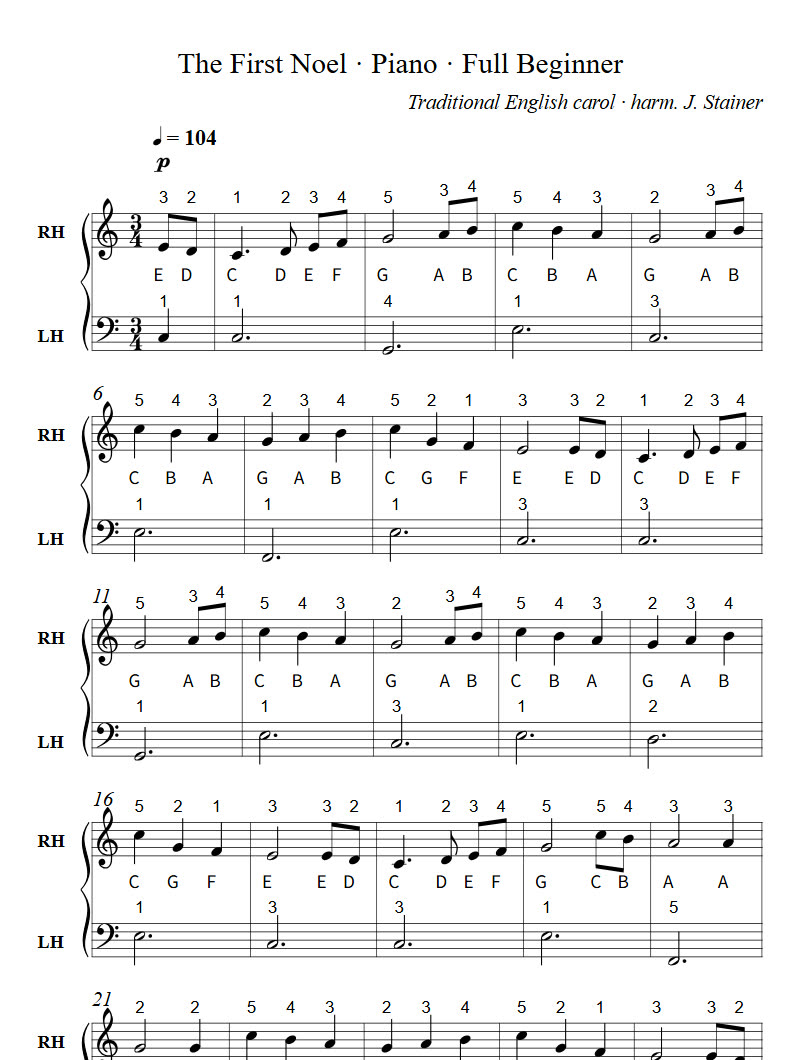 Traditional English carol · harm. J. Stainer
The First Noel
A traditional English carol with the repeating 'Noel, Noel'. The melody repeats, so it's quick to memorize.
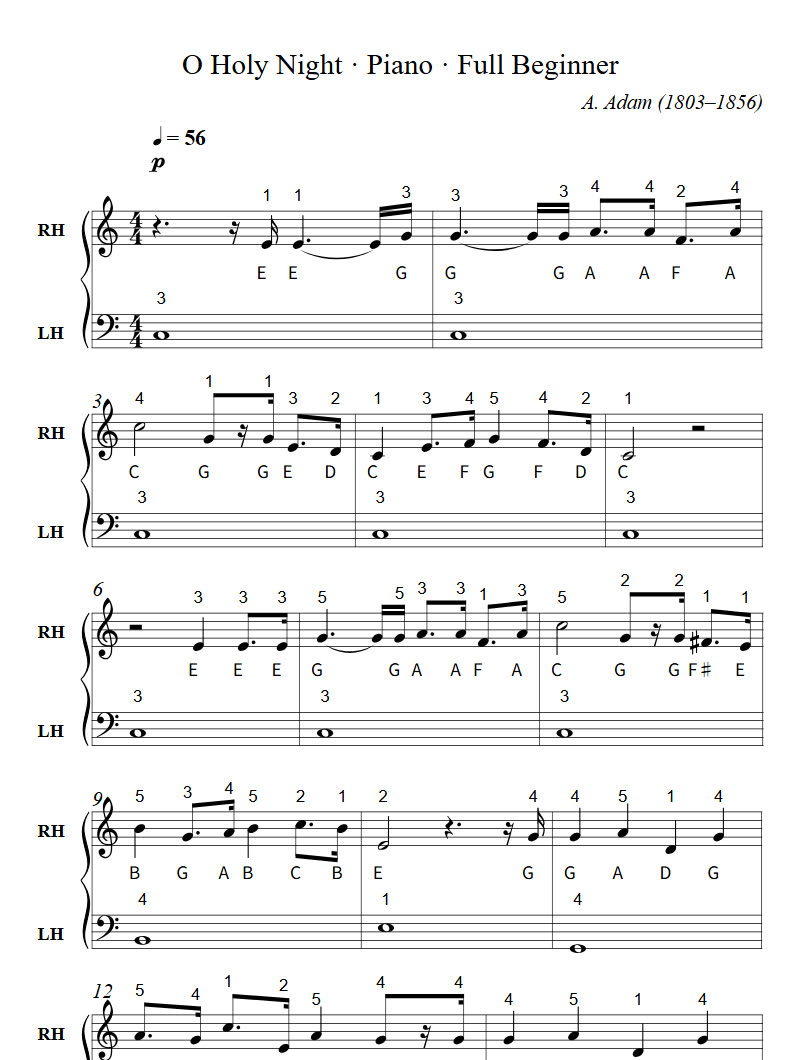 A. Adam (1803–1856)
O Holy Night
Adam's best-known carol. It starts quietly and bursts out at 'Fall on your knees'.
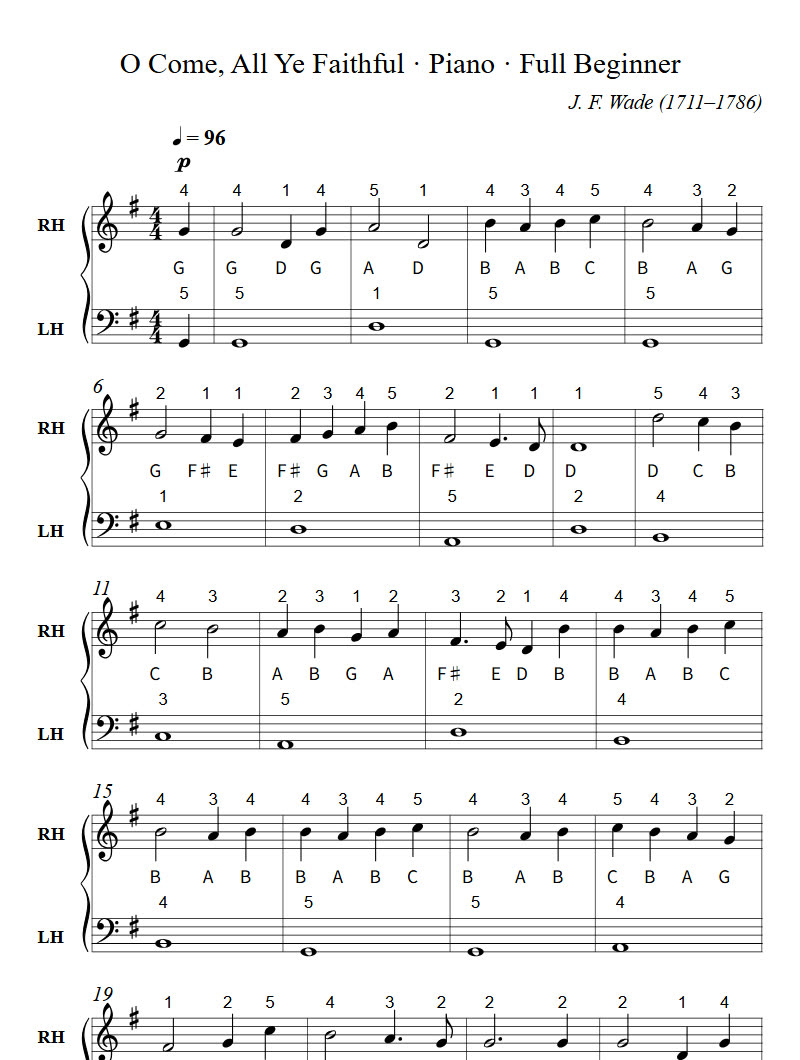 J. F. Wade (1711–1786)
O Come, All Ye Faithful
The Christmas hymn 'O come, all ye faithful'. The refrain grows louder three times, making it a great closing piece for choirs and ensembles.
J. L. Pierpont (1822–1893)
Jingle Bells
The full Jingle Bells with verse and chorus. Choose Highlights to play just the chorus.
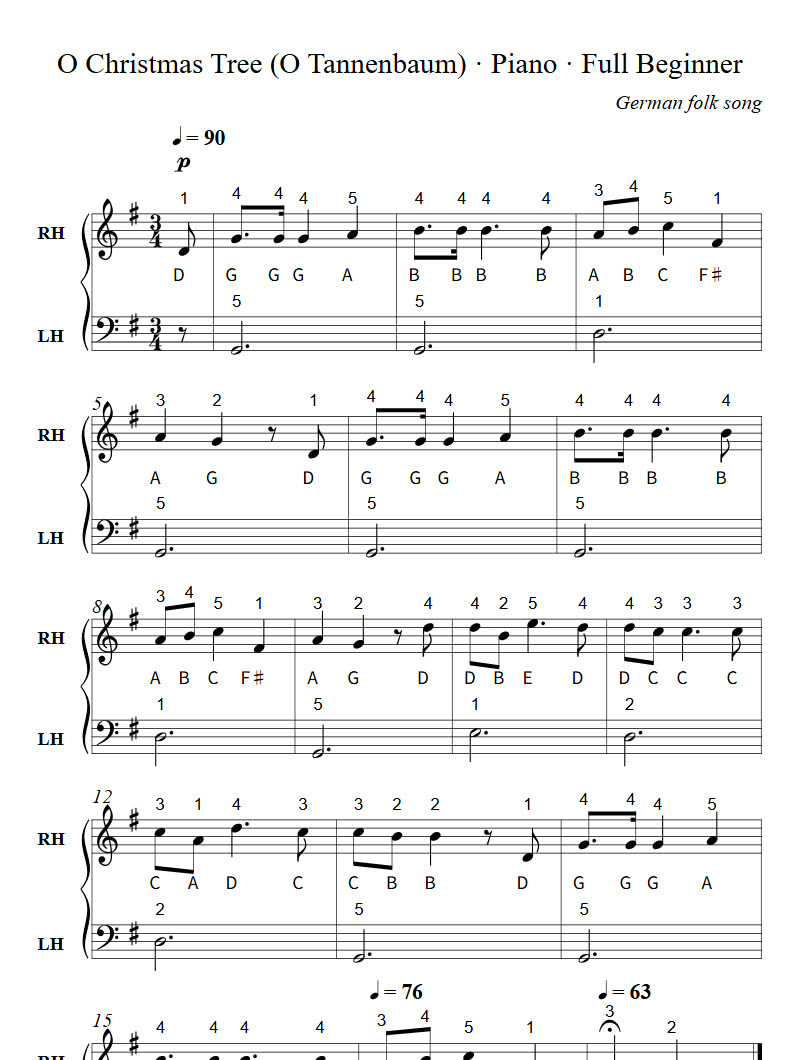 German folk song
O Christmas Tree
The German carol 'O Tannenbaum'. It's a Christmas song rather than a hymn, so it suits school events too.
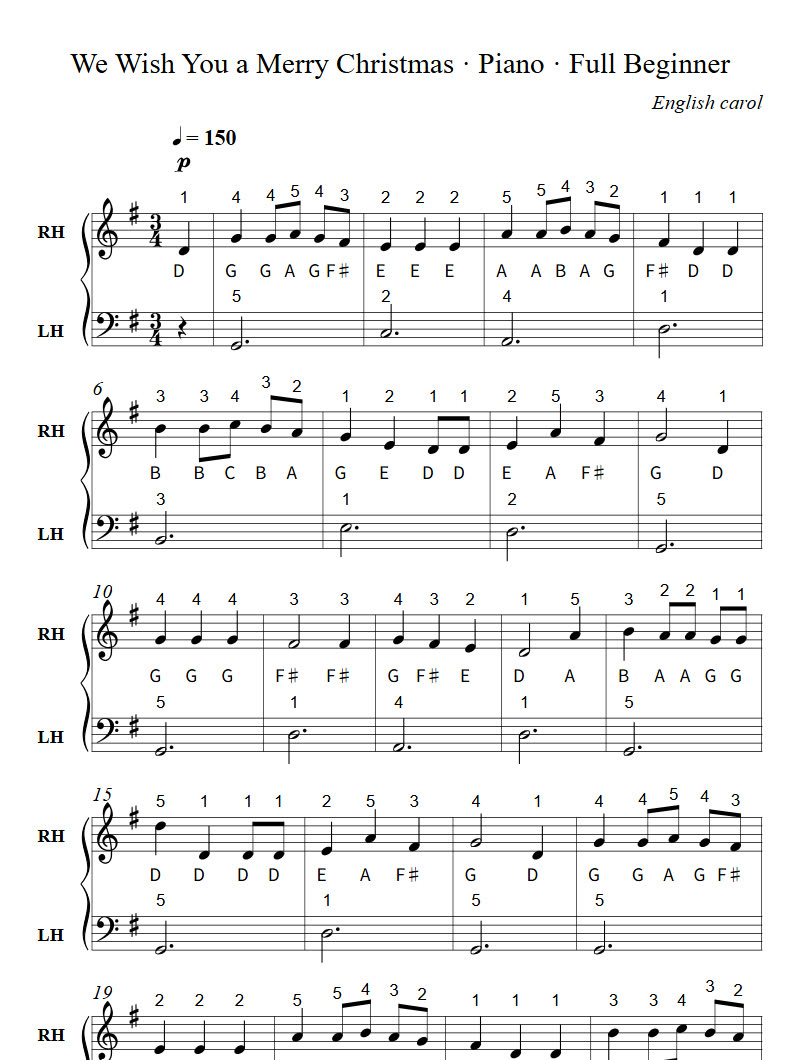 English carol
We Wish You a Merry Christmas
An English carol played brightly in 3/4: verse, chorus, and verse again.
Kids' songs
See all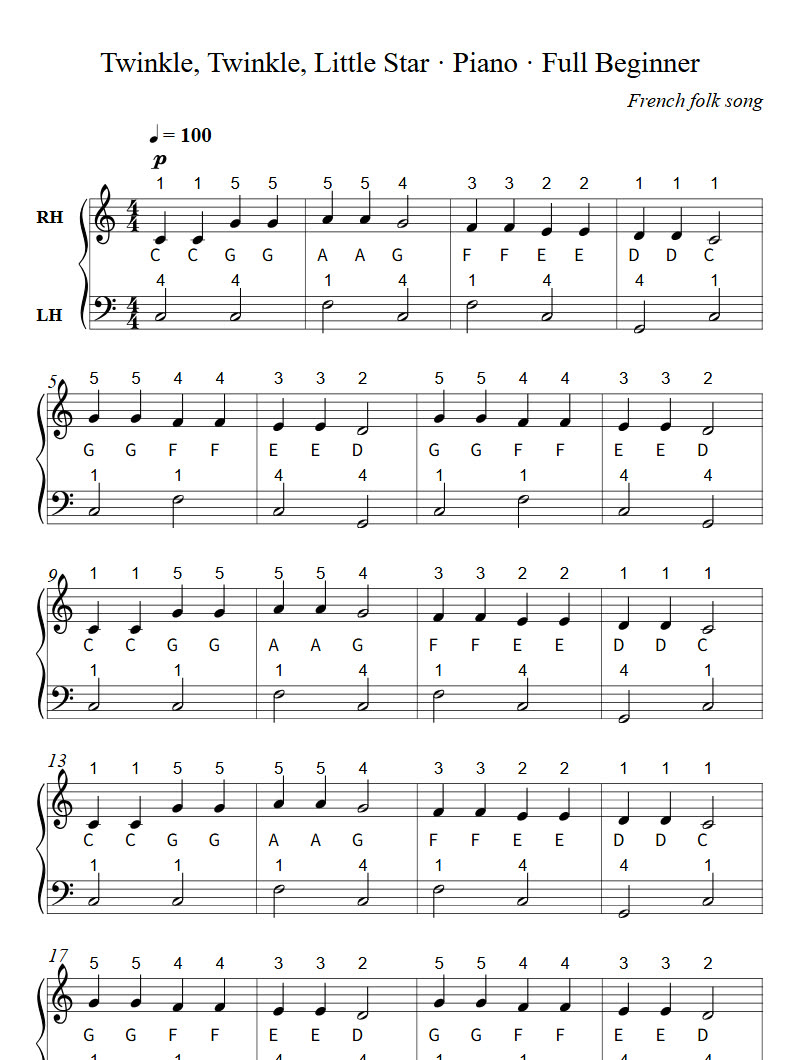 French folk song
Twinkle, Twinkle, Little Star
Often the very first piece on a new instrument. Playing each note twice is great for learning to keep the beat.
 German folk song
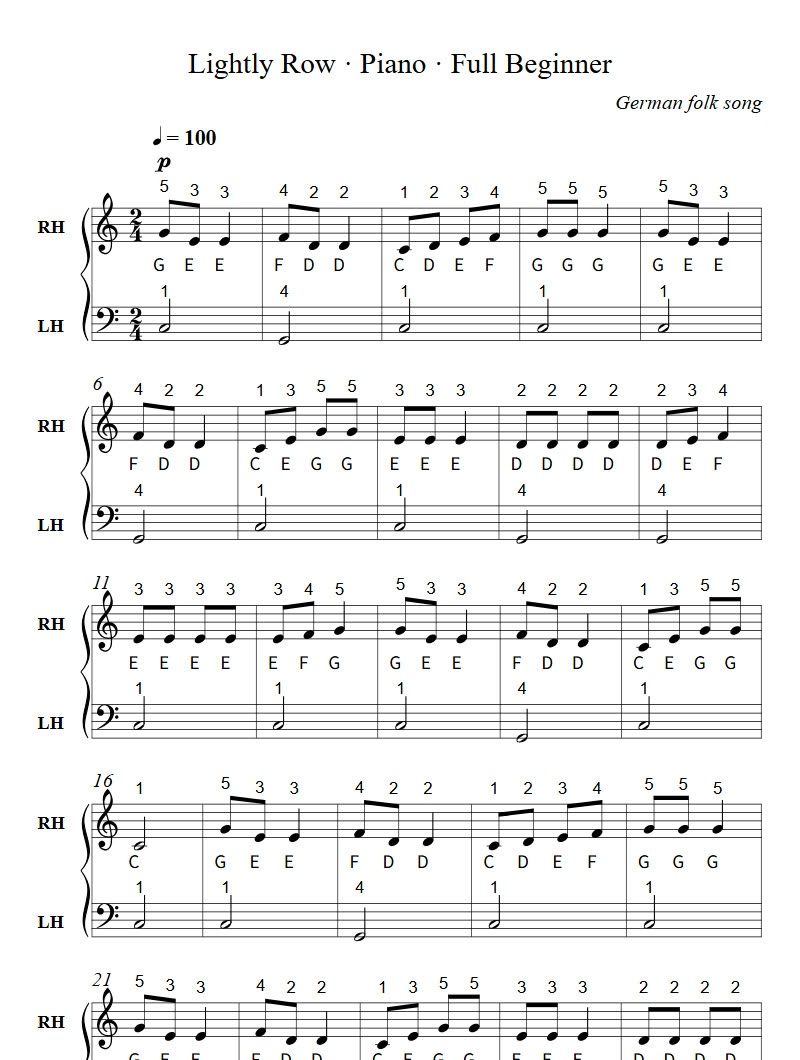
Lightly Row
A children's song that starts G–E–E, F–D–D. You can play it with your hand in a single five-finger position.
 English folk song
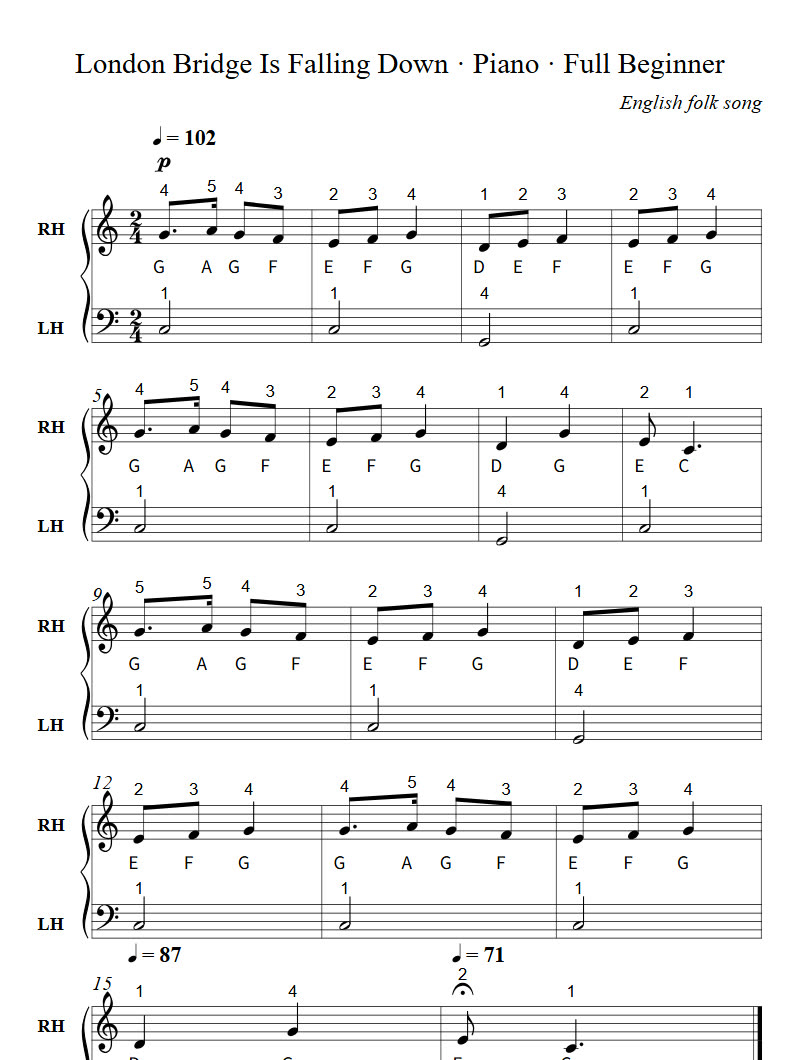
London Bridge
An English nursery rhyme famous as a playground game. Short and repetitive, so it's easy to memorize.
 German folk song
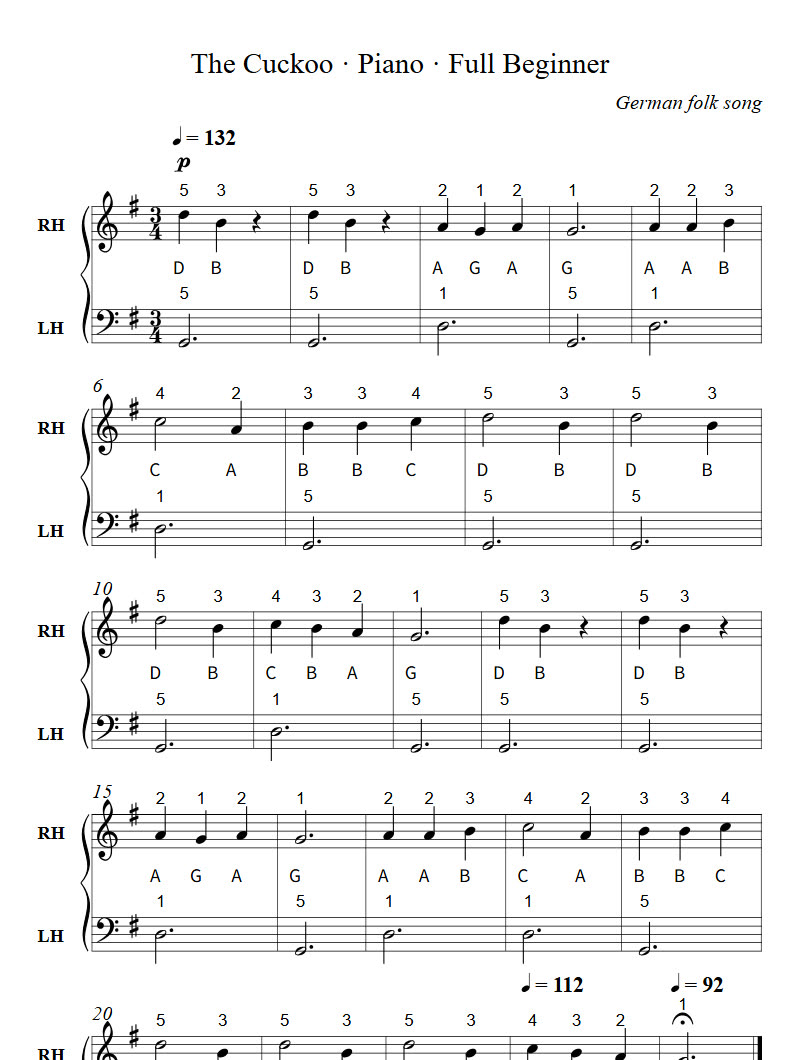
The Cuckoo
A children's song in three beats that imitates the call 'cuckoo, cuckoo'.
 J. Brahms (1833–1897)
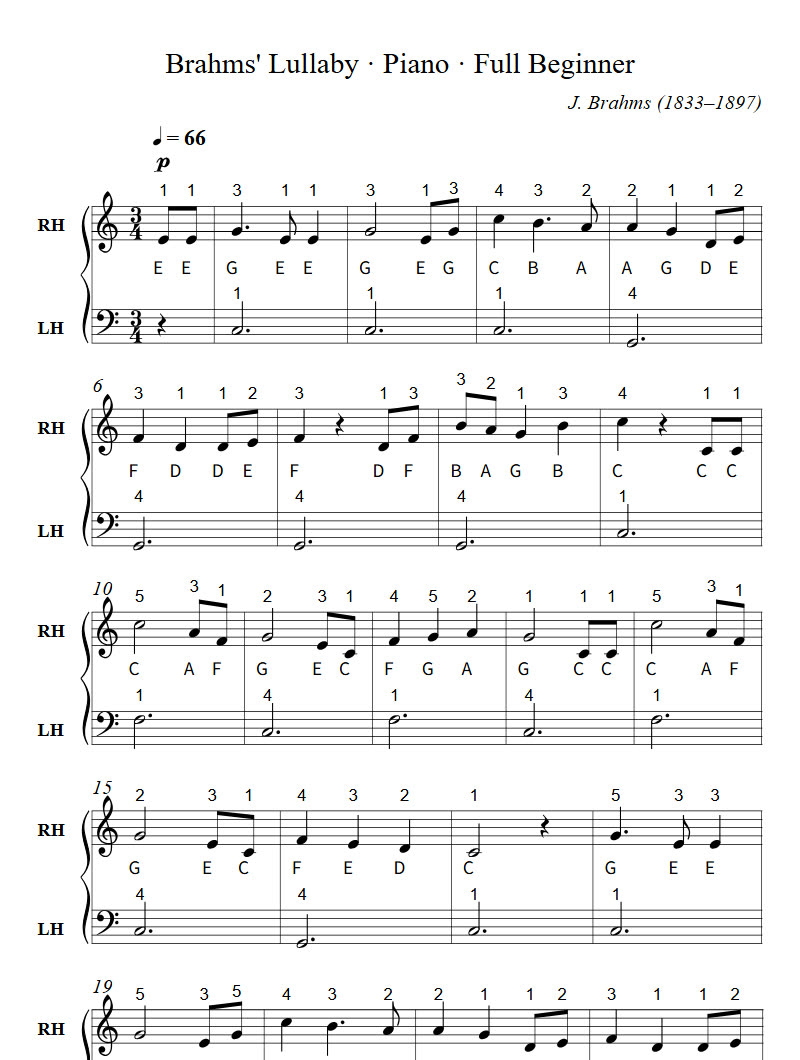
Brahms' Lullaby
Brahms' lullaby. Its slow three-beat lines are good practice for playing long, connected notes.
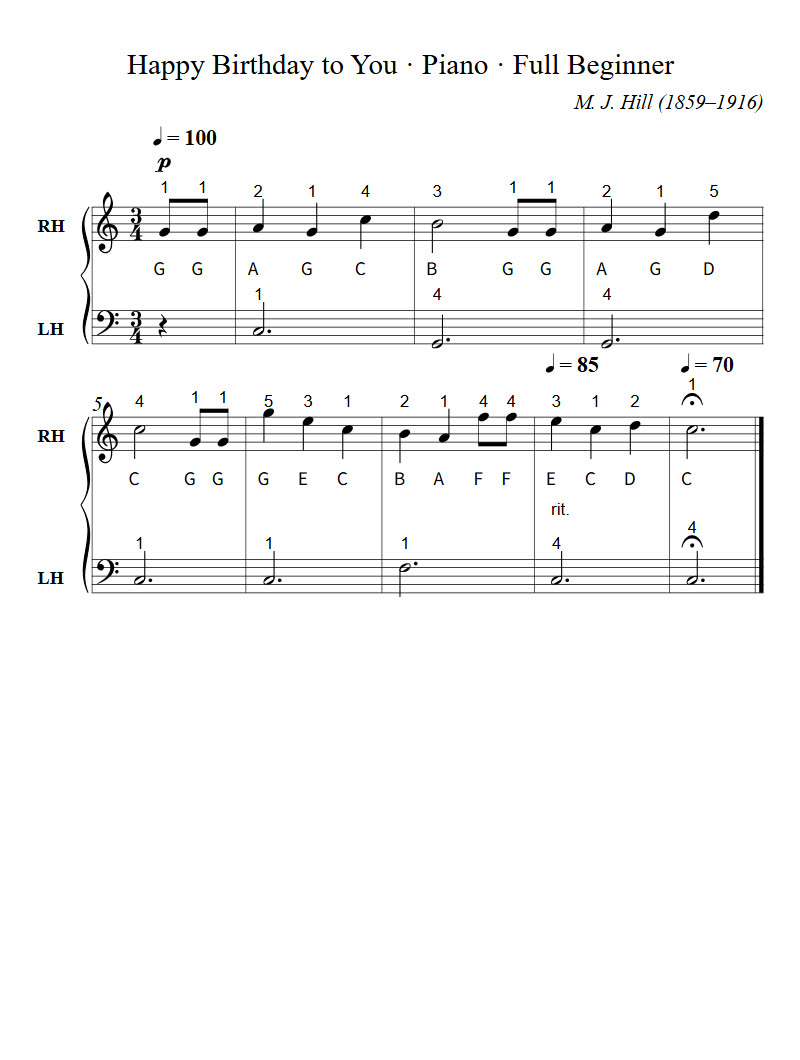 M. J. Hill (1859–1916)
Happy Birthday
Moved to C major so you can play it right away at a birthday party.
J. L. Pierpont (1822–1893)
Jingle Bells
The full Jingle Bells with verse and chorus. Choose Highlights to play just the chorus.
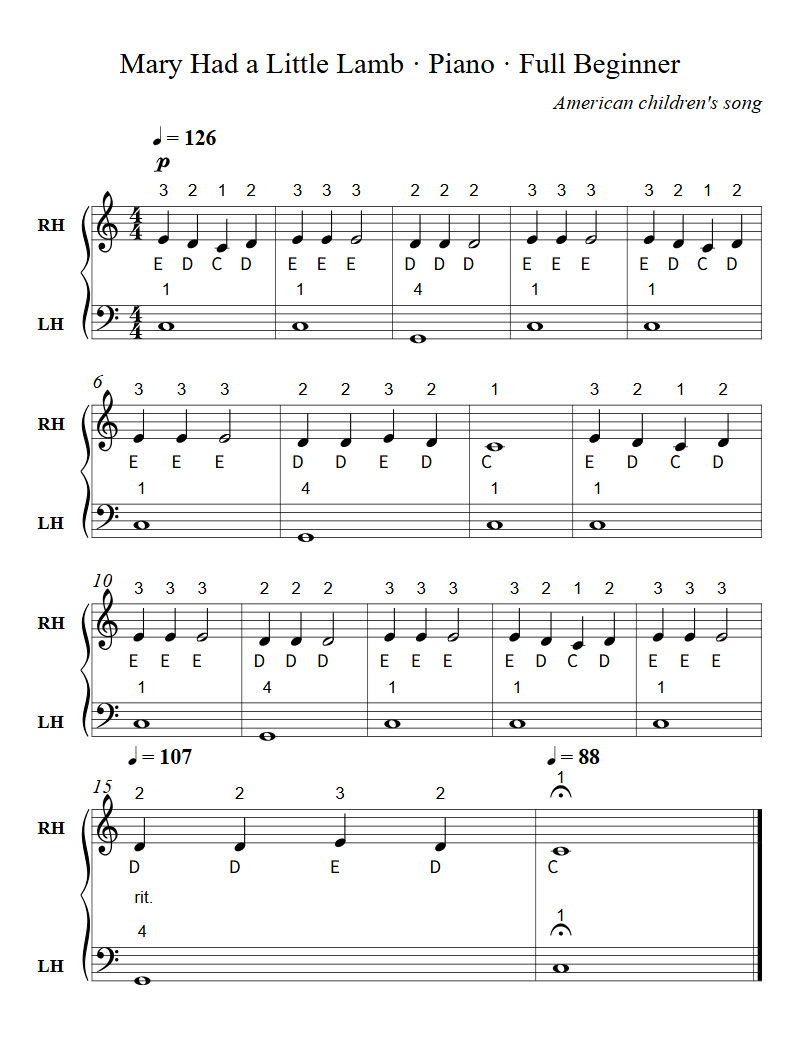 American children's song
Mary Had a Little Lamb
A children's song that begins E–D–C–D–E–E–E. It uses only five notes, from C to G, so it makes a great first piece.
Classical favorites
See all
J. Pachelbel (1653–1706)
Canon in D
The most-played piece at weddings and school concerts. Layer after layer of melody builds over the same eight chords.
L. v. Beethoven (1770–1827)
Für Elise
The first piece many piano students reach for. Learn the opening E–D♯–E line and you're halfway there.
W. A. Mozart (1756–1791)
Turkish March
Its bright marching rhythm makes it a recital favorite. The beginner version is arranged so your fingers don't tangle.
J. Brahms (1833–1897)
Brahms' Lullaby
Brahms' lullaby. Its slow three-beat lines are good practice for playing long, connected notes.
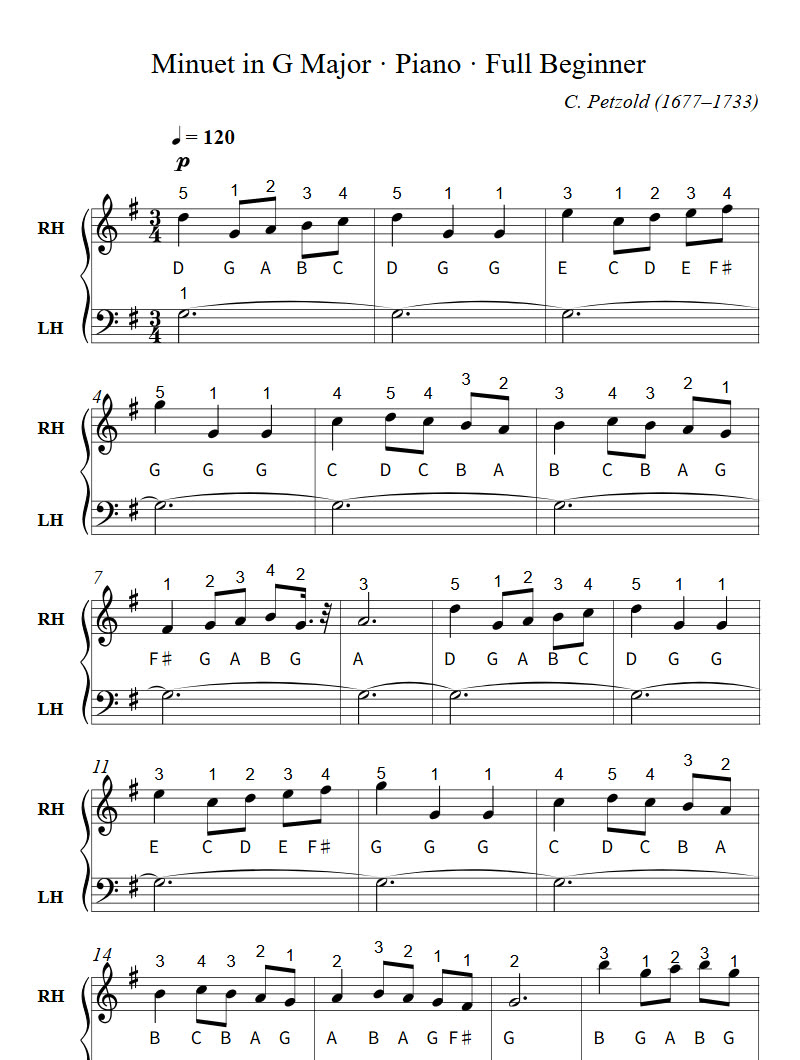 C. Petzold (1677–1733)
Minuet in G
The minuet from the Notebook for Anna Magdalena Bach — a piece every piano student meets.
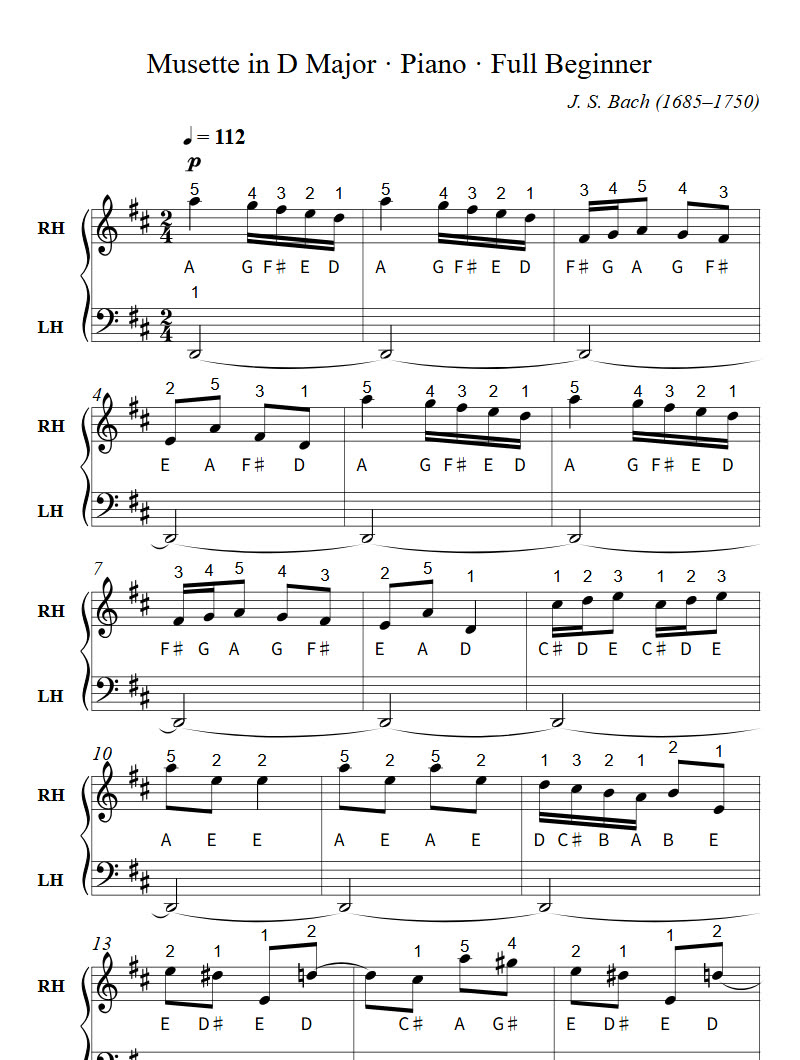 J. S. Bach (1685–1750)
Musette in D
A short piece from the Notebook for Anna Magdalena Bach. The left hand leaps between octaves.
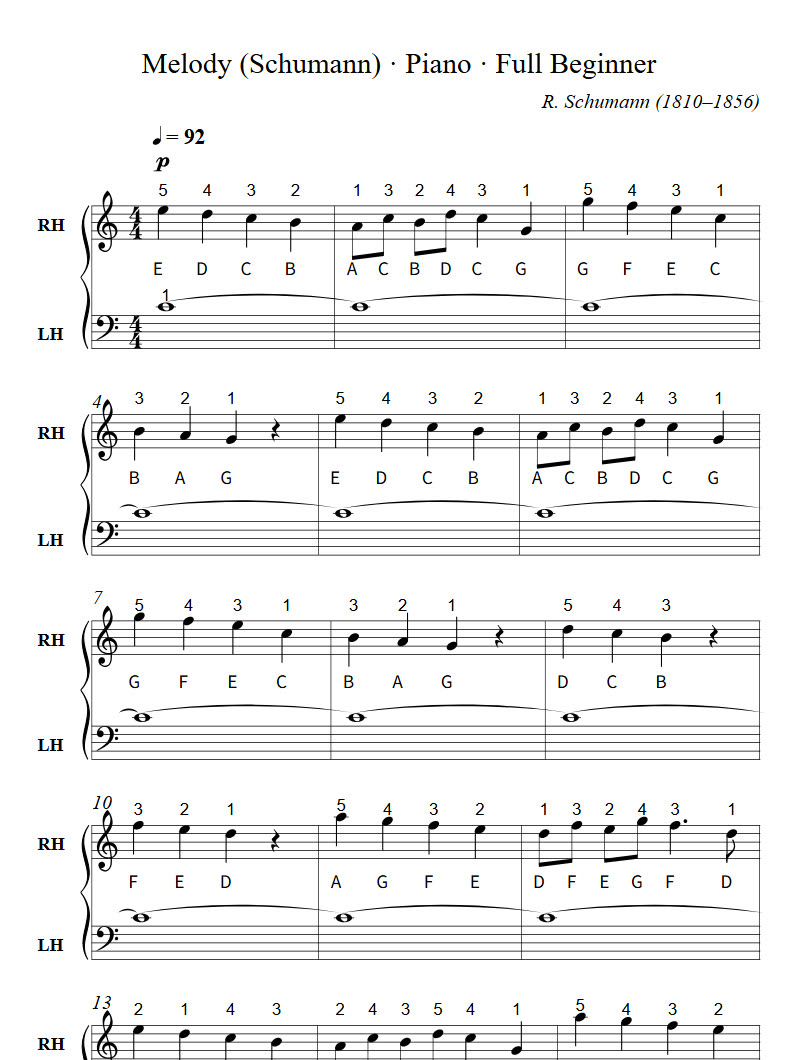 R. Schumann (1810–1856)
Melody (Schumann)
No. 1 from Schumann's 'Album for the Young'. Play the right-hand melody as if singing.
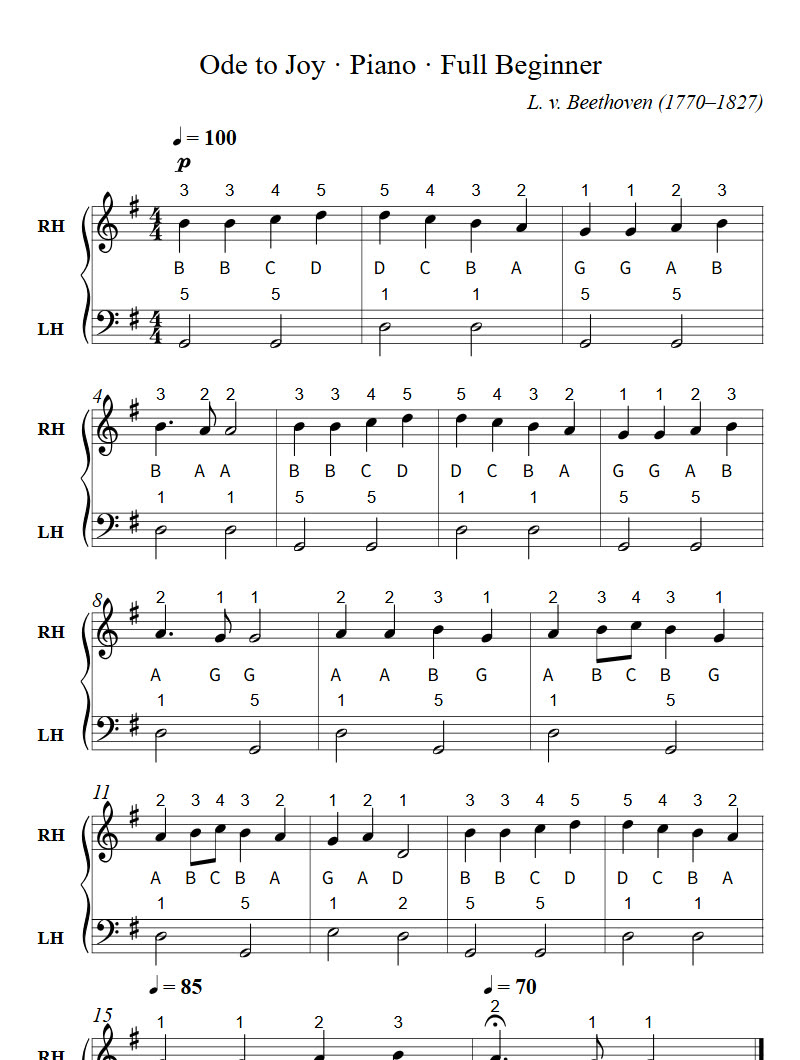 L. v. Beethoven (1770–1827)
Ode to Joy
The theme from the finale of Beethoven's Ninth. The notes move mostly step by step, so it's easy to learn first.