Christmas
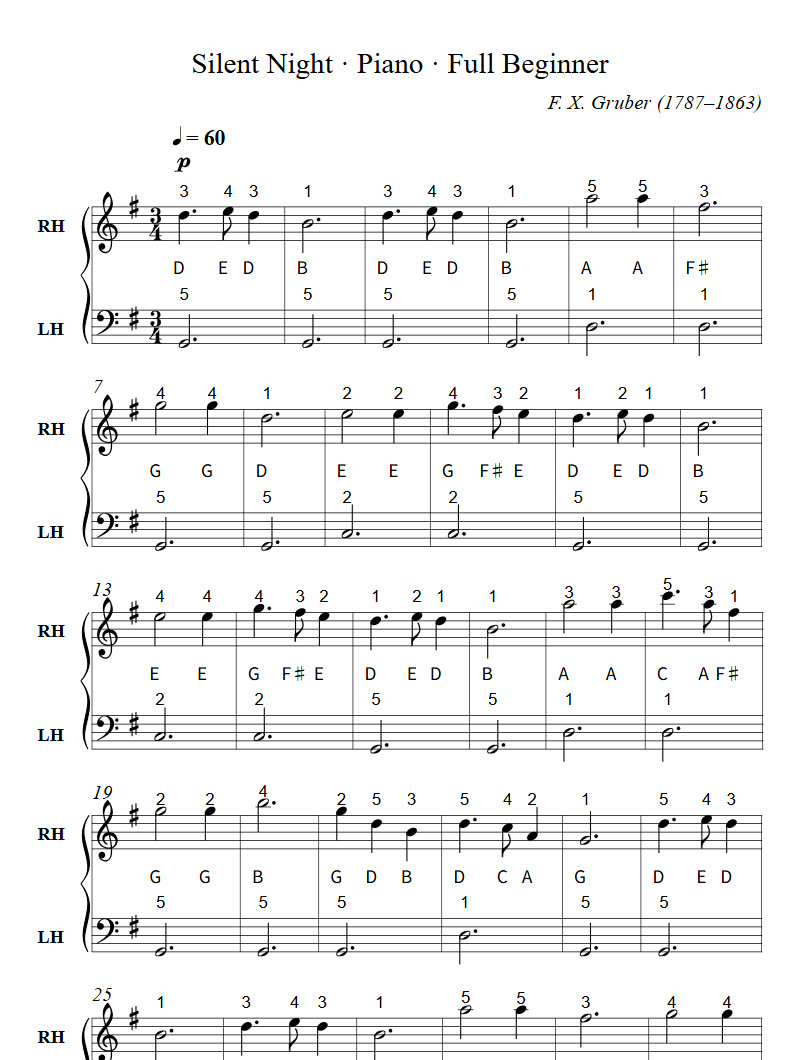 F. X. Gruber (1787–1863)
Silent Night
The most-played Christmas carol. Its gentle three-beat melody is easy to pick up, even for beginners.
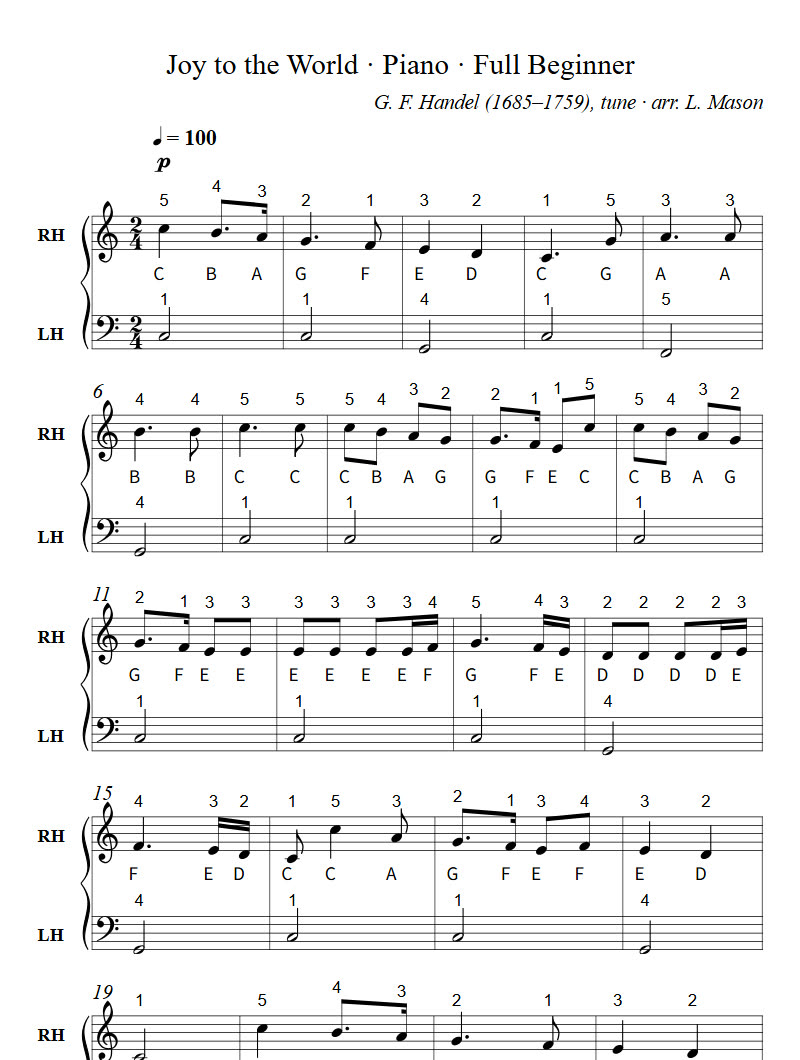 G. F. Handel (1685–1759), tune · arr. L. Mason
Joy to the World
A carol famous for its opening D–C♯–B–A scale coming down step by step. Bright and march-like, it works well for ensembles.
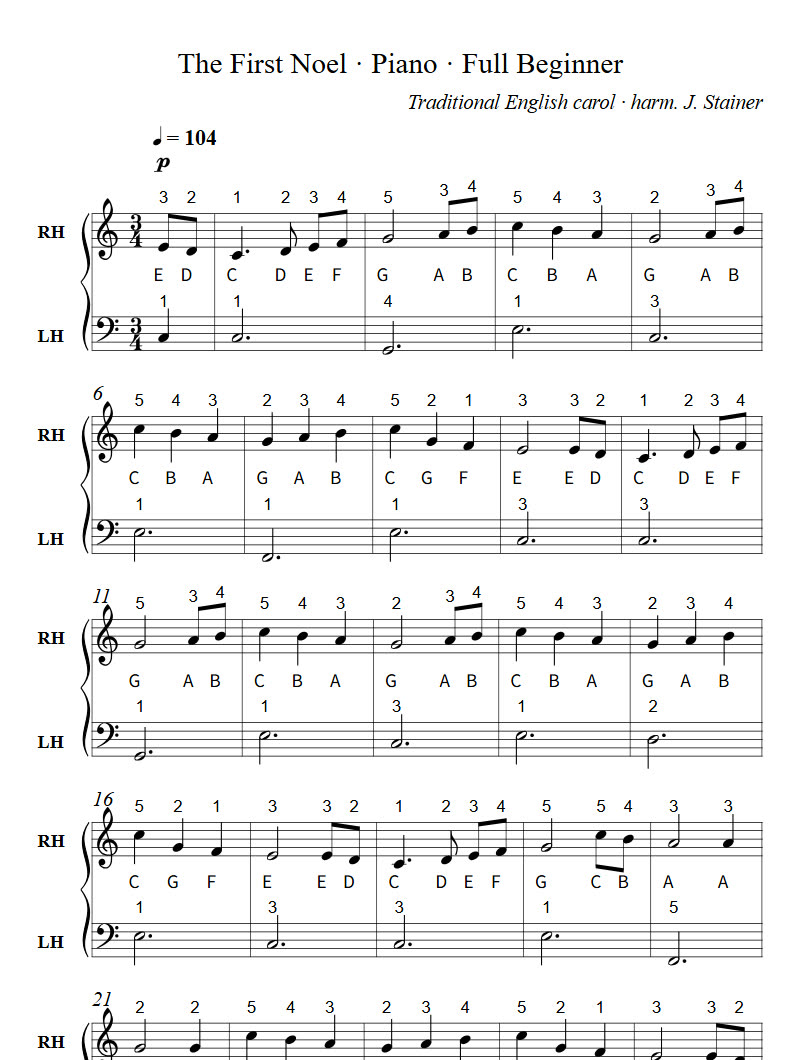 Traditional English carol · harm. J. Stainer
The First Noel
A traditional English carol with the repeating 'Noel, Noel'. The melody repeats, so it's quick to memorize.
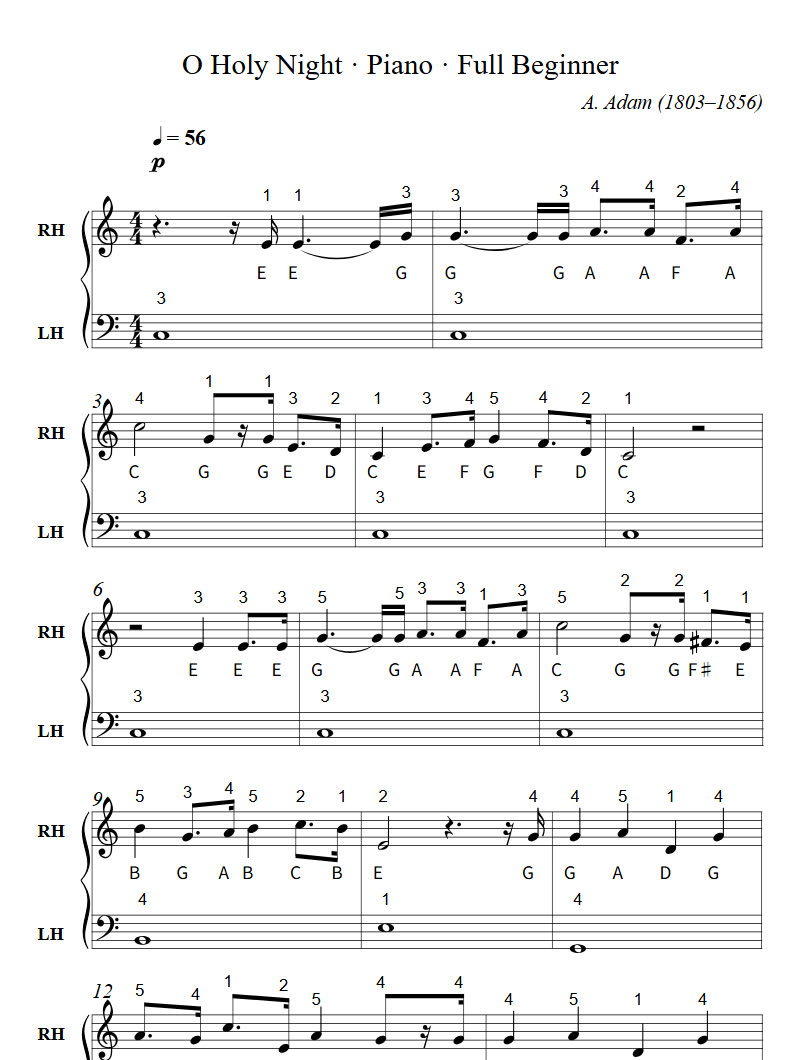 A. Adam (1803–1856)
O Holy Night
Adam's best-known carol. It starts quietly and bursts out at 'Fall on your knees'.
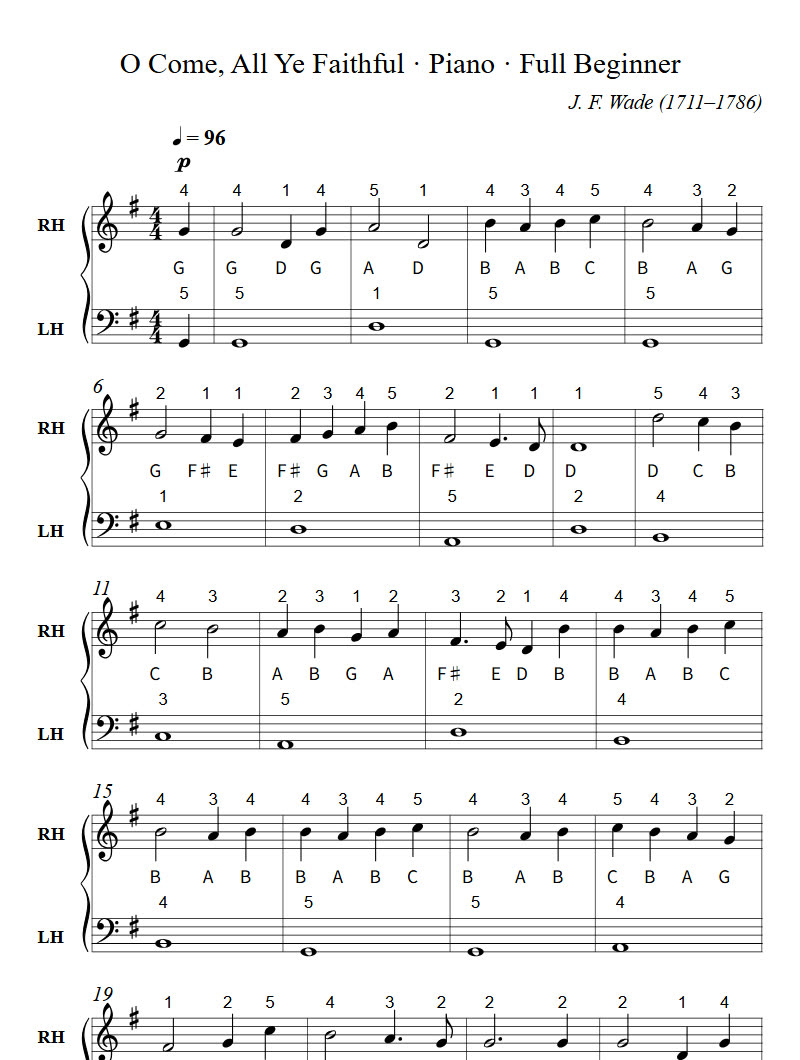 J. F. Wade (1711–1786)
O Come, All Ye Faithful
The Christmas hymn 'O come, all ye faithful'. The refrain grows louder three times, making it a great closing piece for choirs and ensembles.
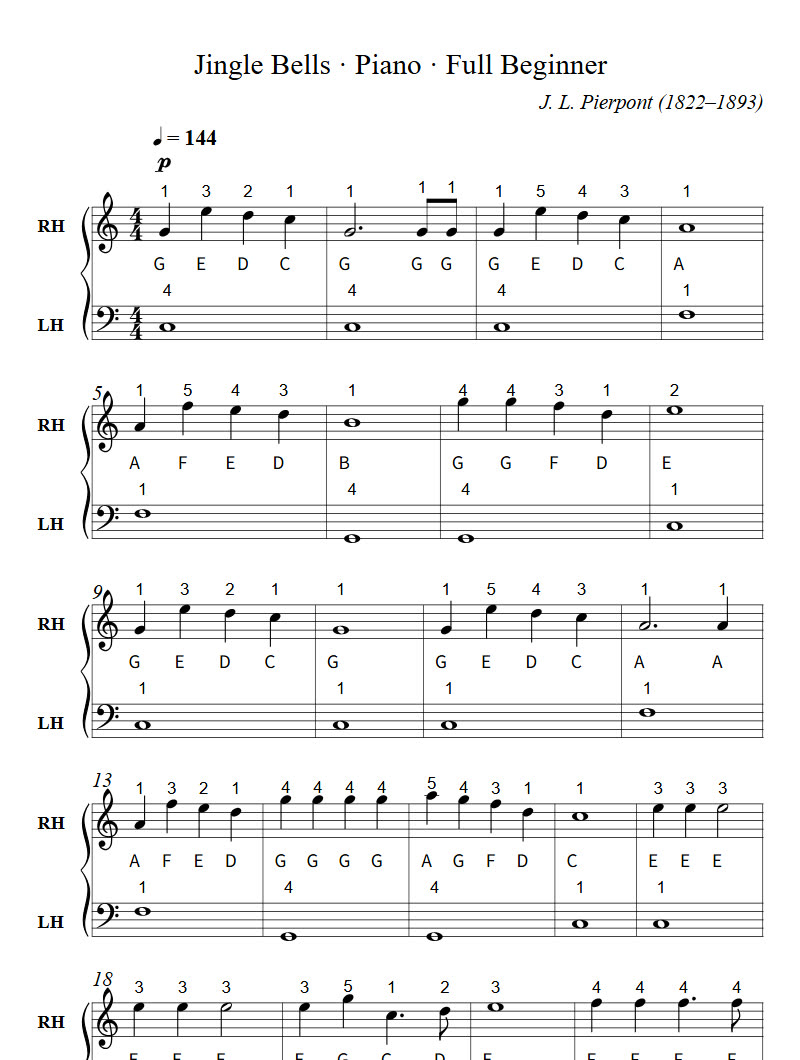 J. L. Pierpont (1822–1893)
Jingle Bells
The full Jingle Bells with verse and chorus. Choose Highlights to play just the chorus.
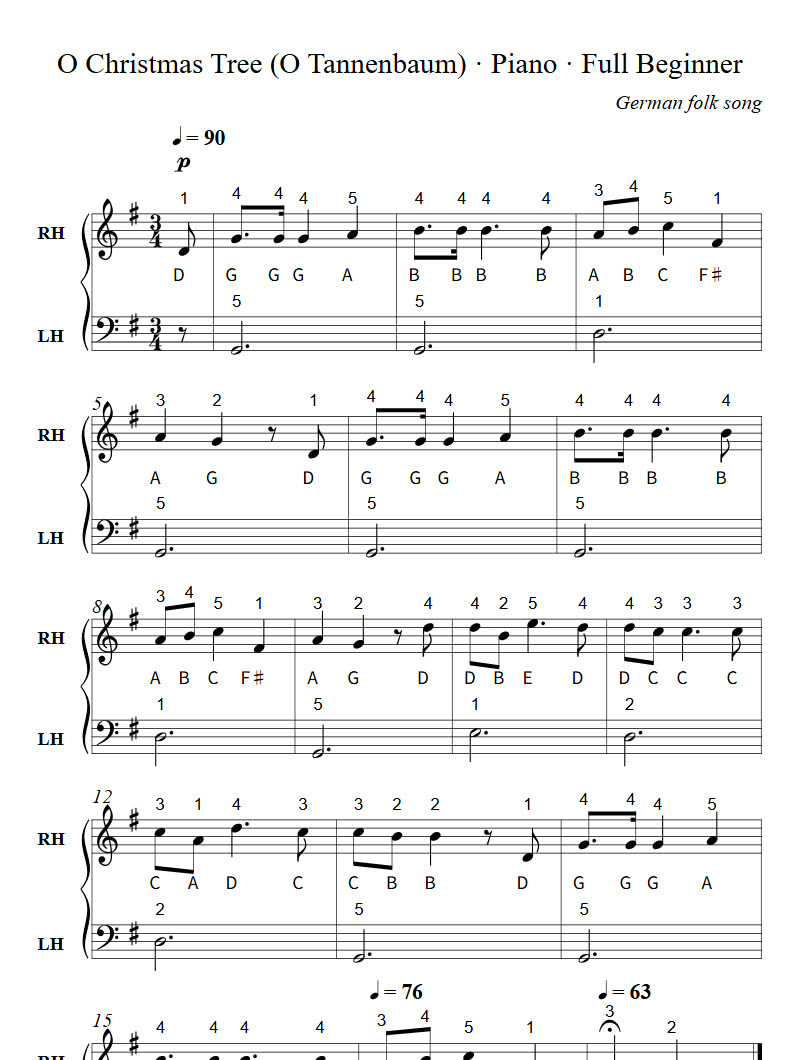 German folk song
O Christmas Tree
The German carol 'O Tannenbaum'. It's a Christmas song rather than a hymn, so it suits school events too.
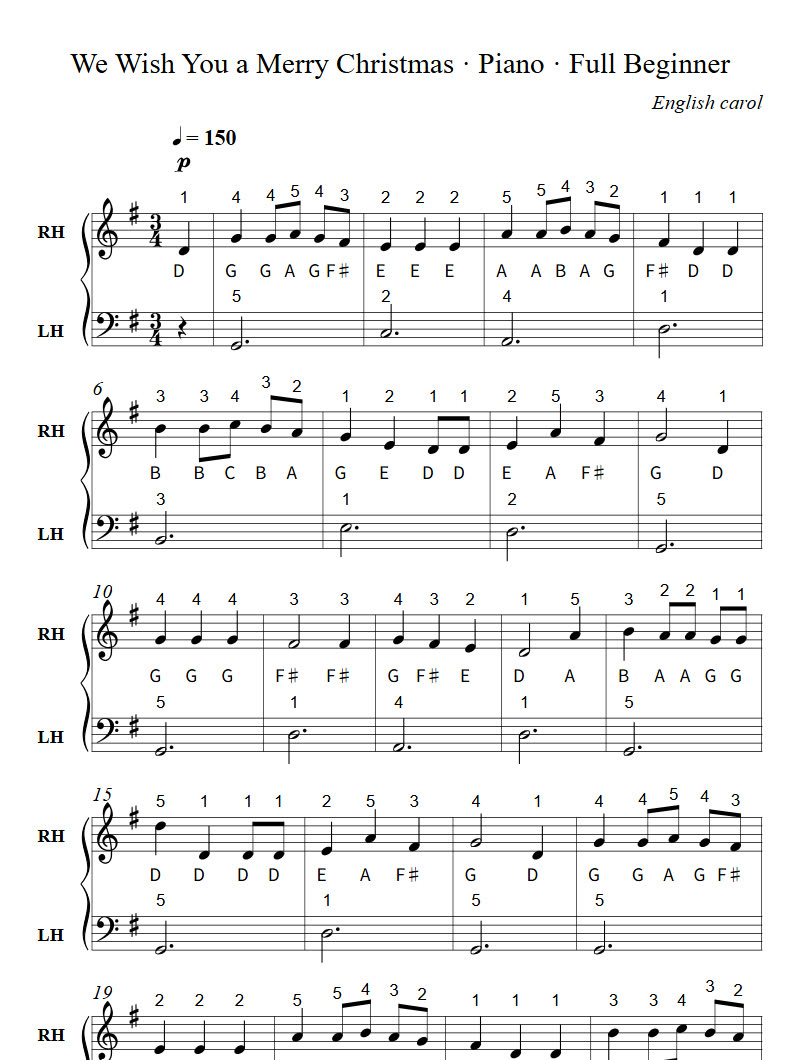 English carol
We Wish You a Merry Christmas
An English carol played brightly in 3/4: verse, chorus, and verse again.
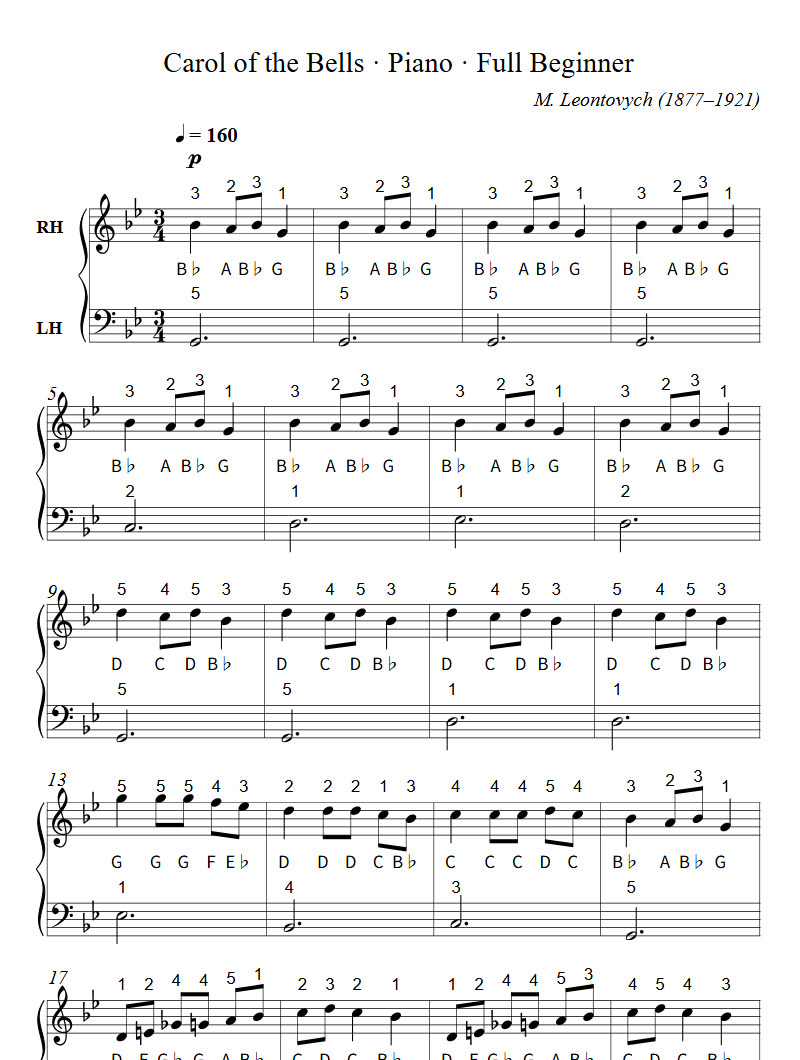 M. Leontovych (1877–1921)
Carol of the Bells
A Ukrainian carol where four notes, C–B–C–A, repeat like bells. It's in 'Home Alone'.
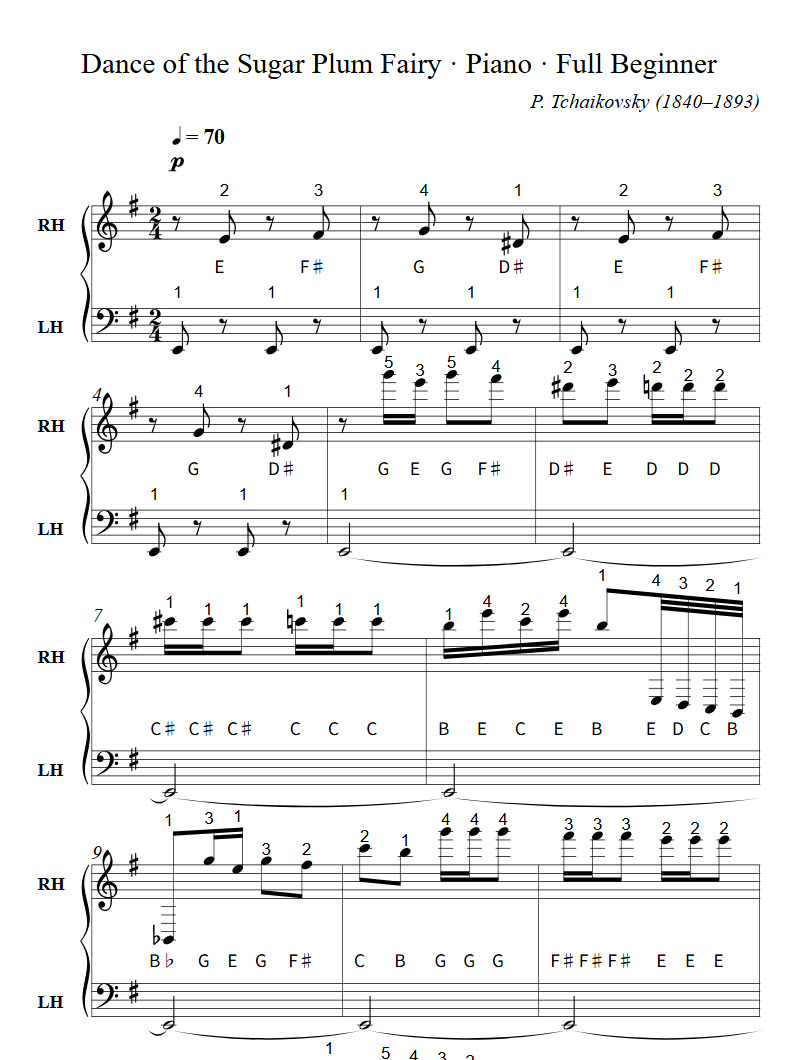 P. Tchaikovsky (1840–1893)
Sugar Plum Fairy
The celesta piece from The Nutcracker. Melody instruments are written an octave lower, like a celesta part.
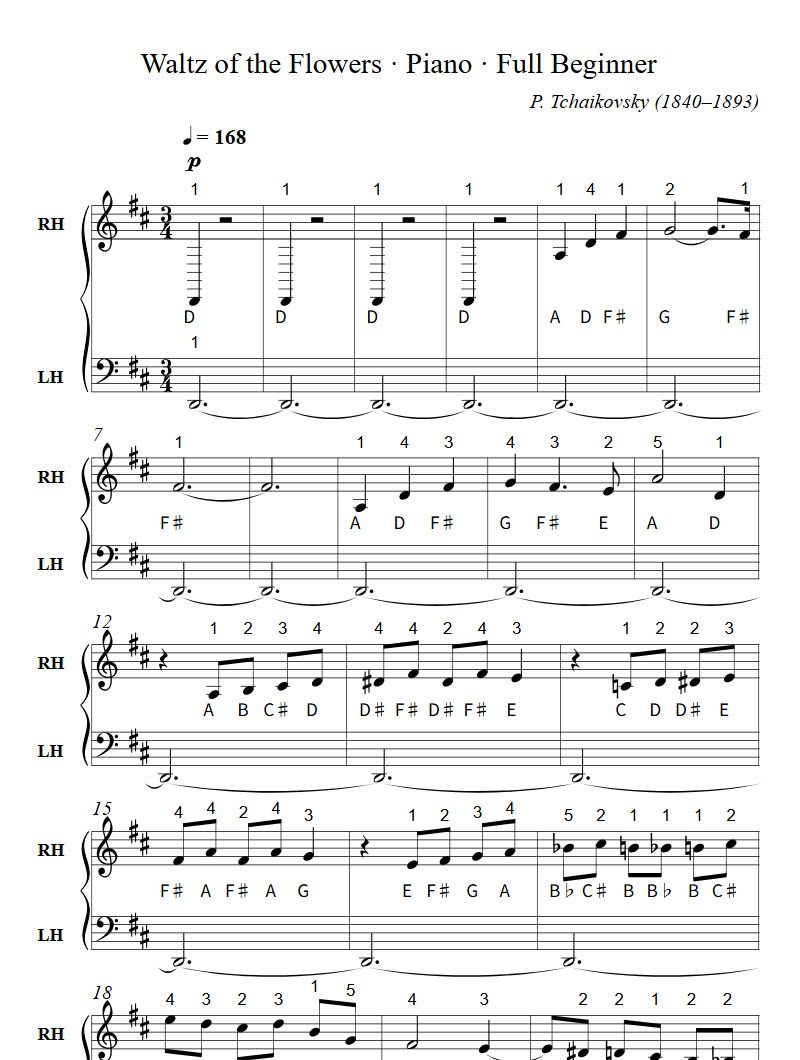 P. Tchaikovsky (1840–1893)
Waltz of the Flowers
The waltz from The Nutcracker, a must at year-end ballet performances.