Piano studies
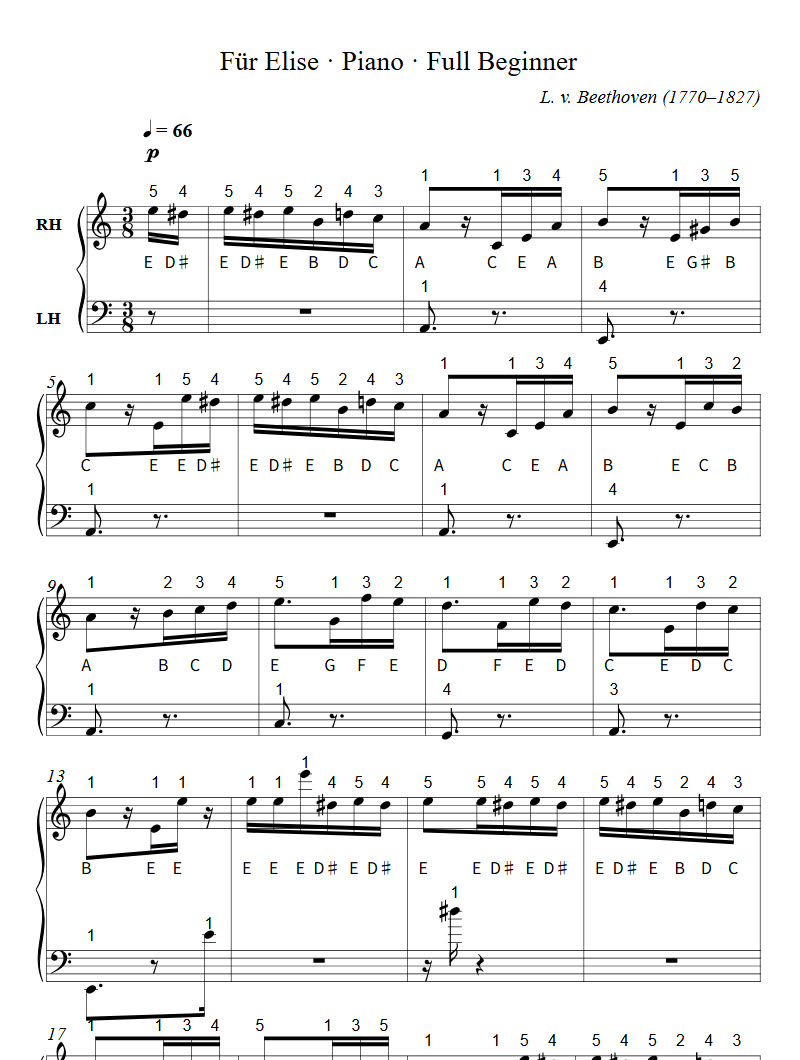 L. v. Beethoven (1770–1827)
Für Elise
The first piece many piano students reach for. Learn the opening E–D♯–E line and you're halfway there.
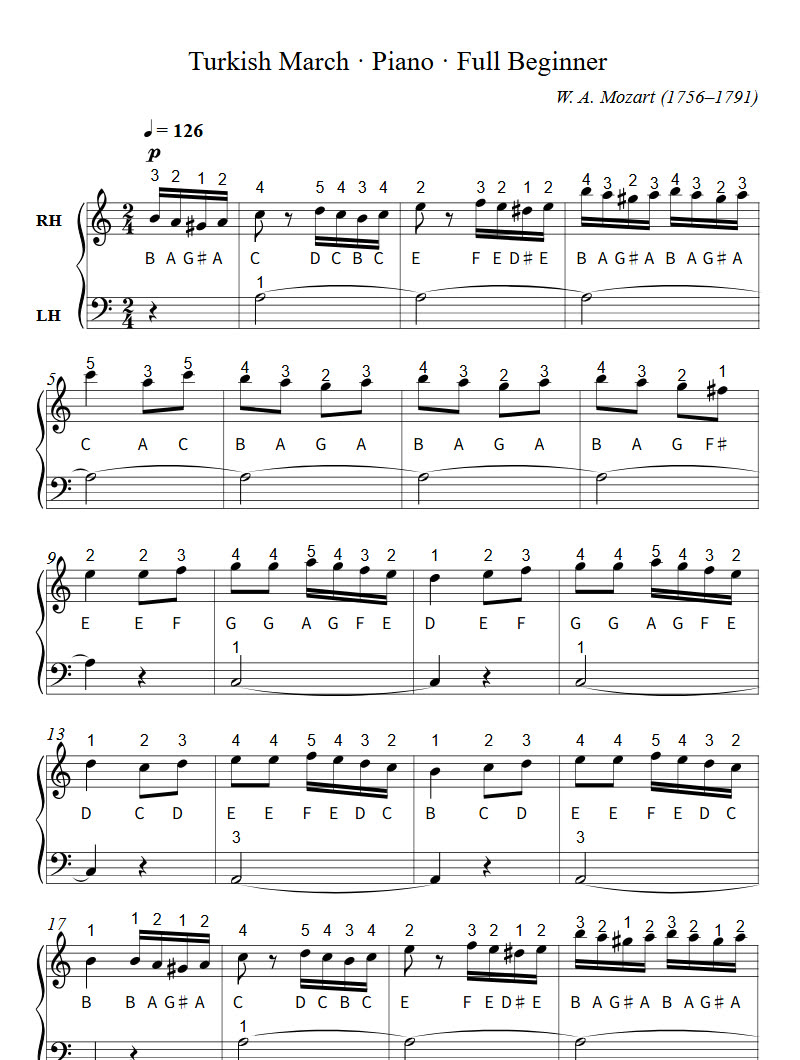 W. A. Mozart (1756–1791)
Turkish March
Its bright marching rhythm makes it a recital favorite. The beginner version is arranged so your fingers don't tangle.
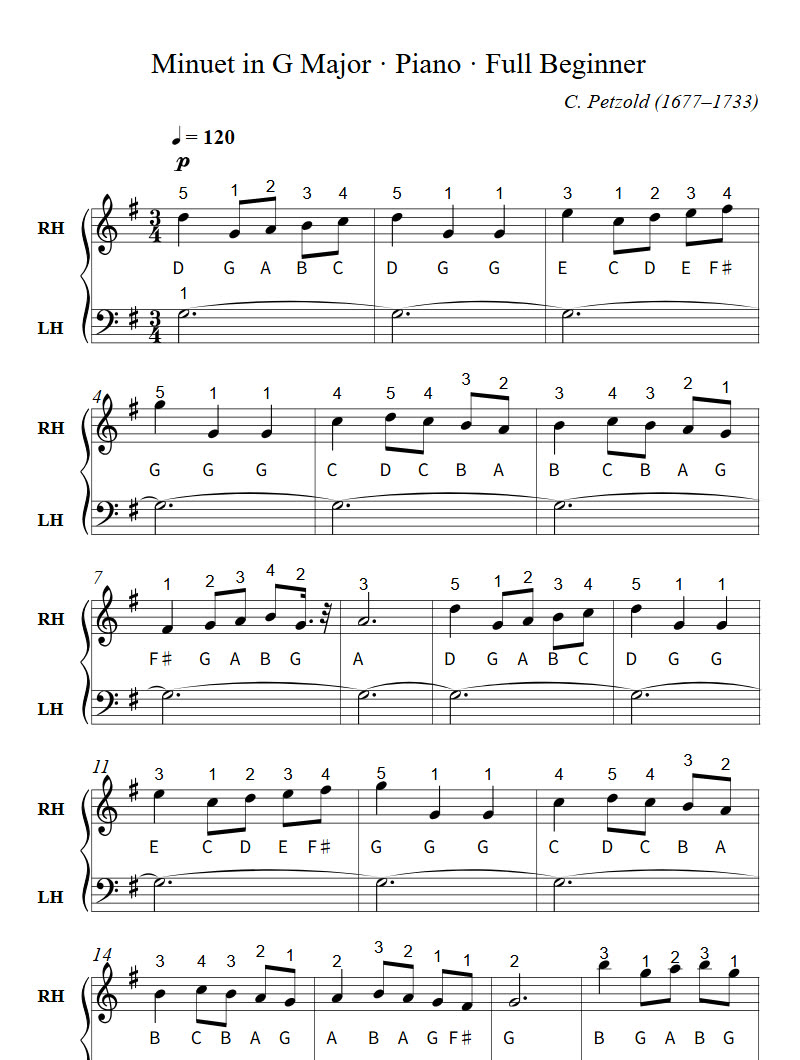 C. Petzold (1677–1733)
Minuet in G
The minuet from the Notebook for Anna Magdalena Bach — a piece every piano student meets.
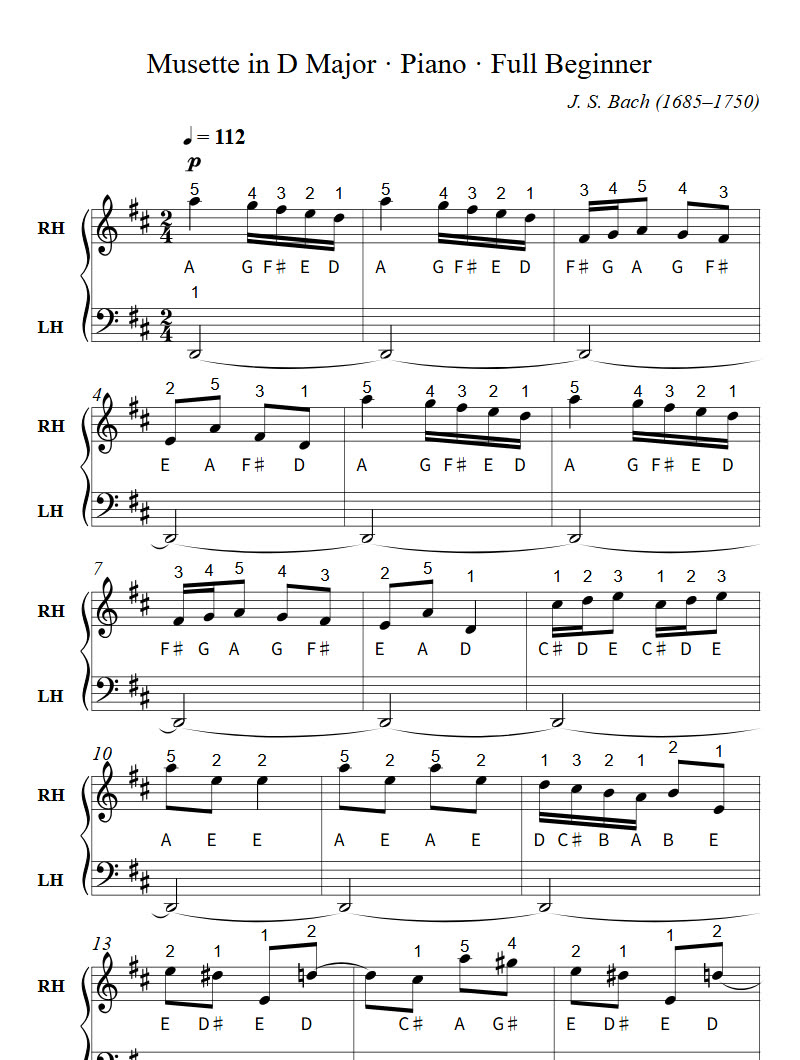 J. S. Bach (1685–1750)
Musette in D
A short piece from the Notebook for Anna Magdalena Bach. The left hand leaps between octaves.
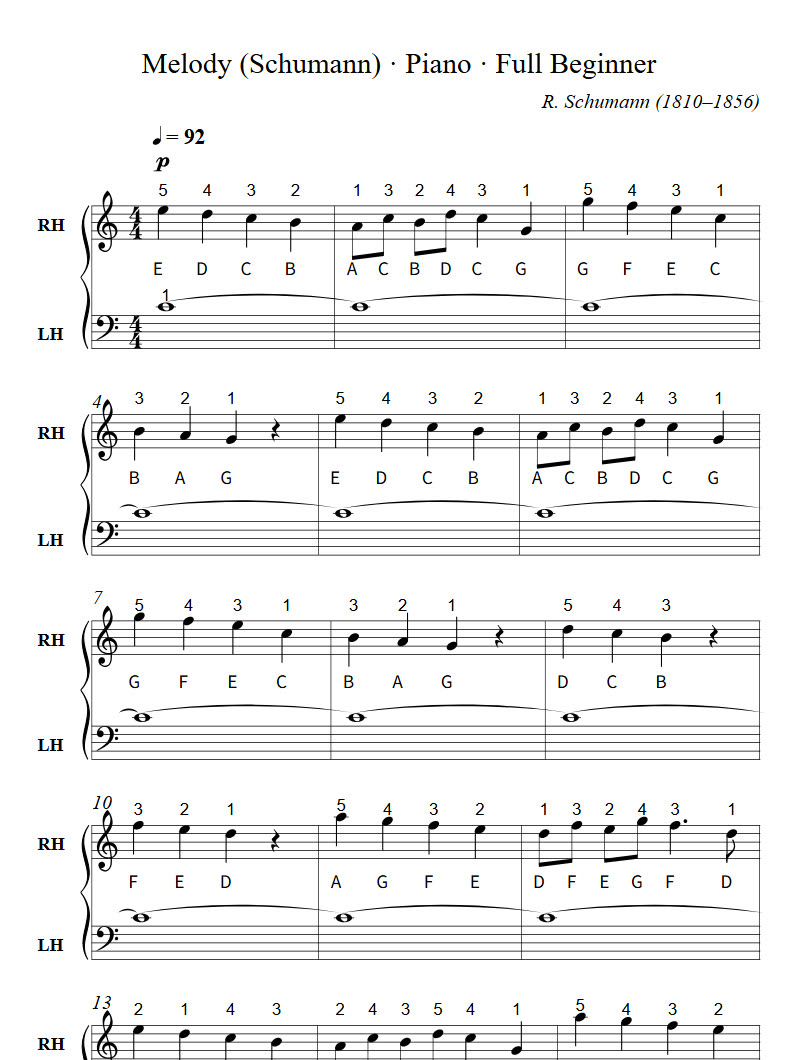 R. Schumann (1810–1856)
Melody (Schumann)
No. 1 from Schumann's 'Album for the Young'. Play the right-hand melody as if singing.
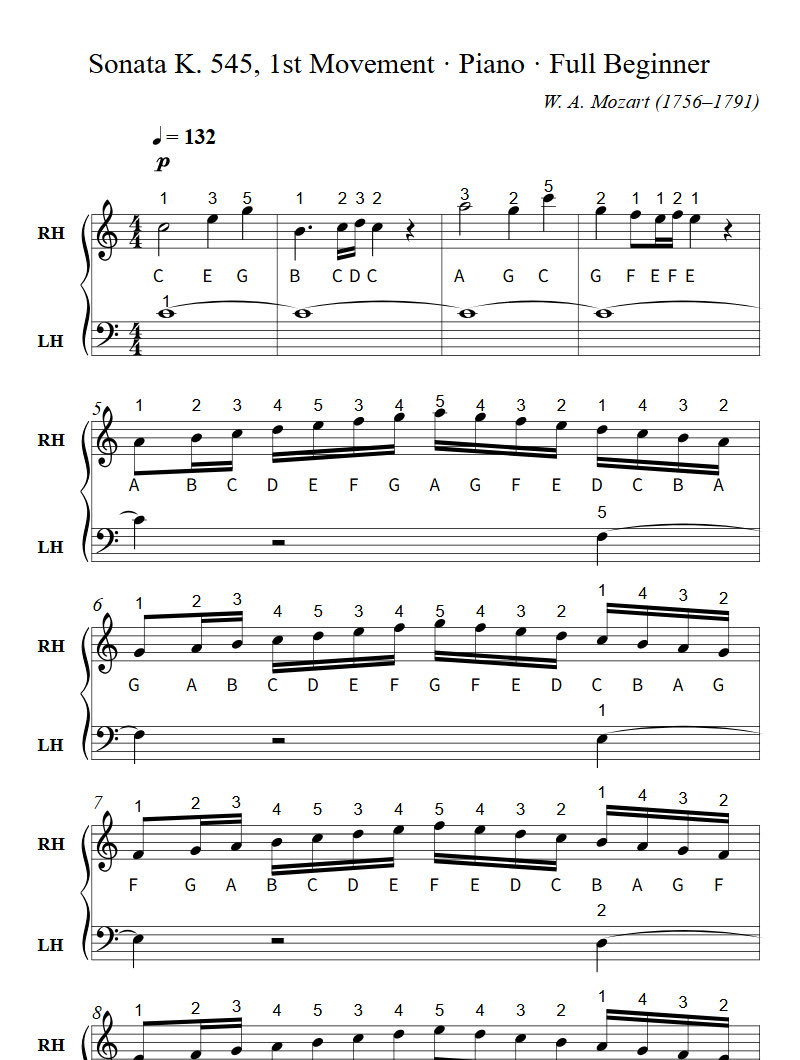 W. A. Mozart (1756–1791)
Sonata K. 545
Mozart's 'easy sonata': a C–E–G theme followed by quick scales.
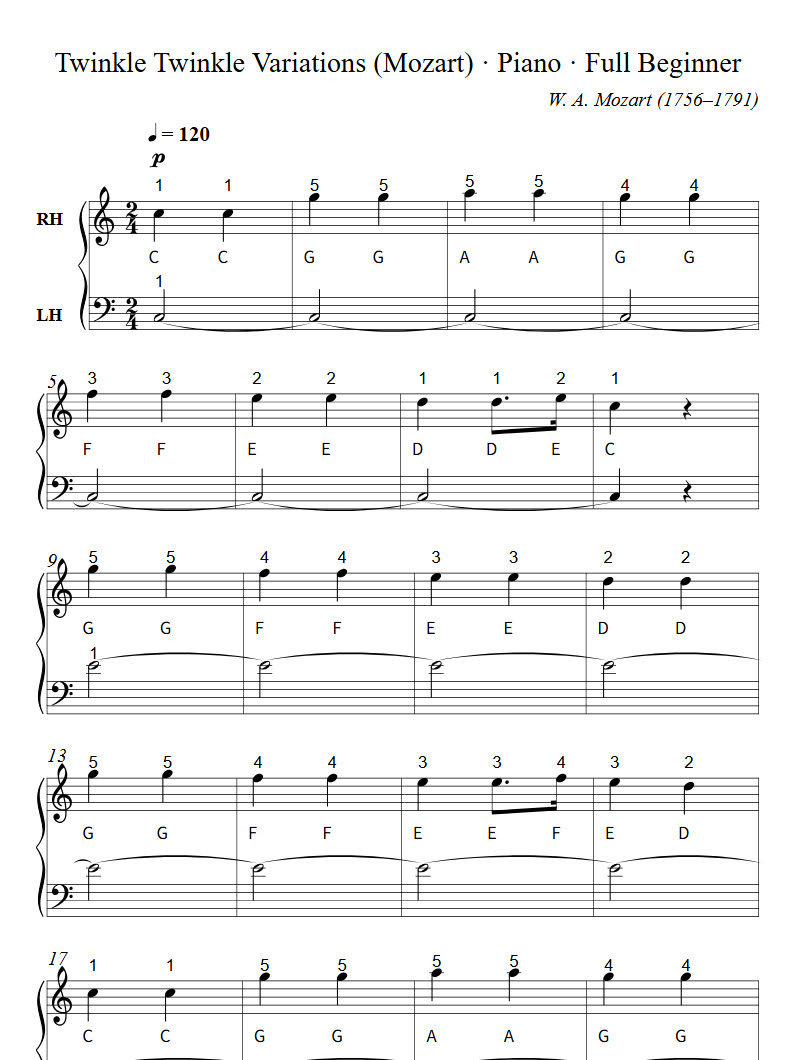 W. A. Mozart (1756–1791)
Twinkle Variations
Mozart's variations on the 'Twinkle, Twinkle' tune: the theme plus 11 variations.
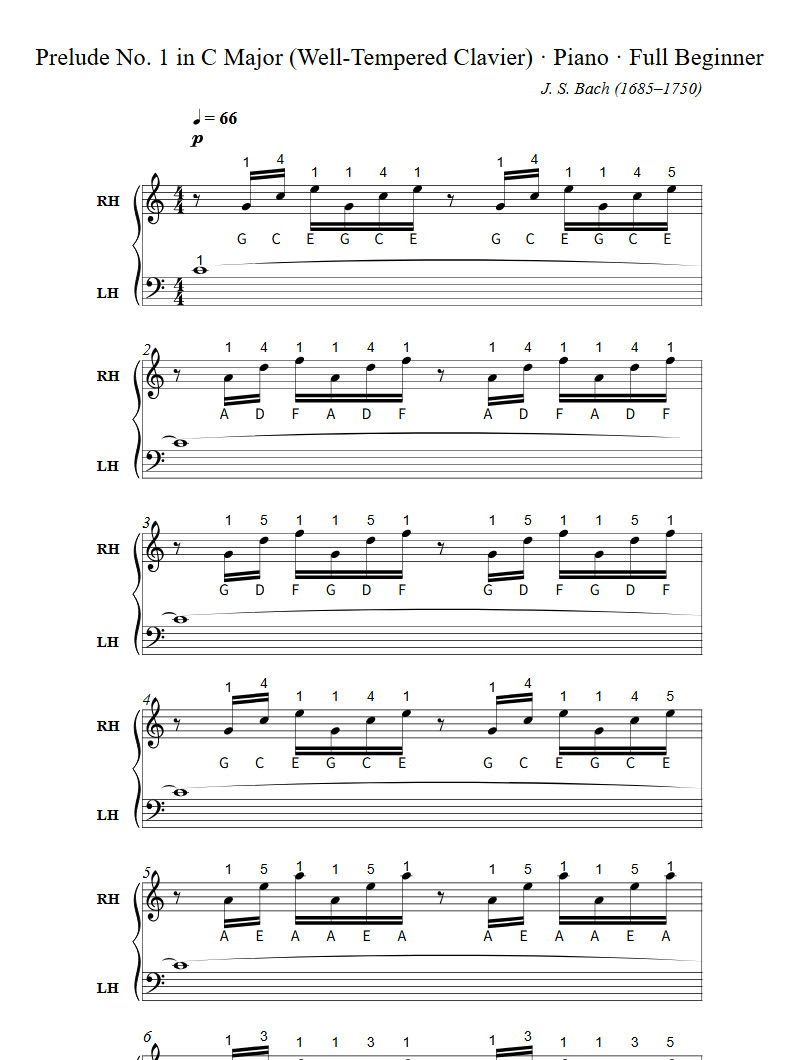 J. S. Bach (1685–1750)
Prelude in C
The first piece of Bach's Well-Tempered Clavier, Book 1. The same broken-chord pattern changes harmony bar by bar.
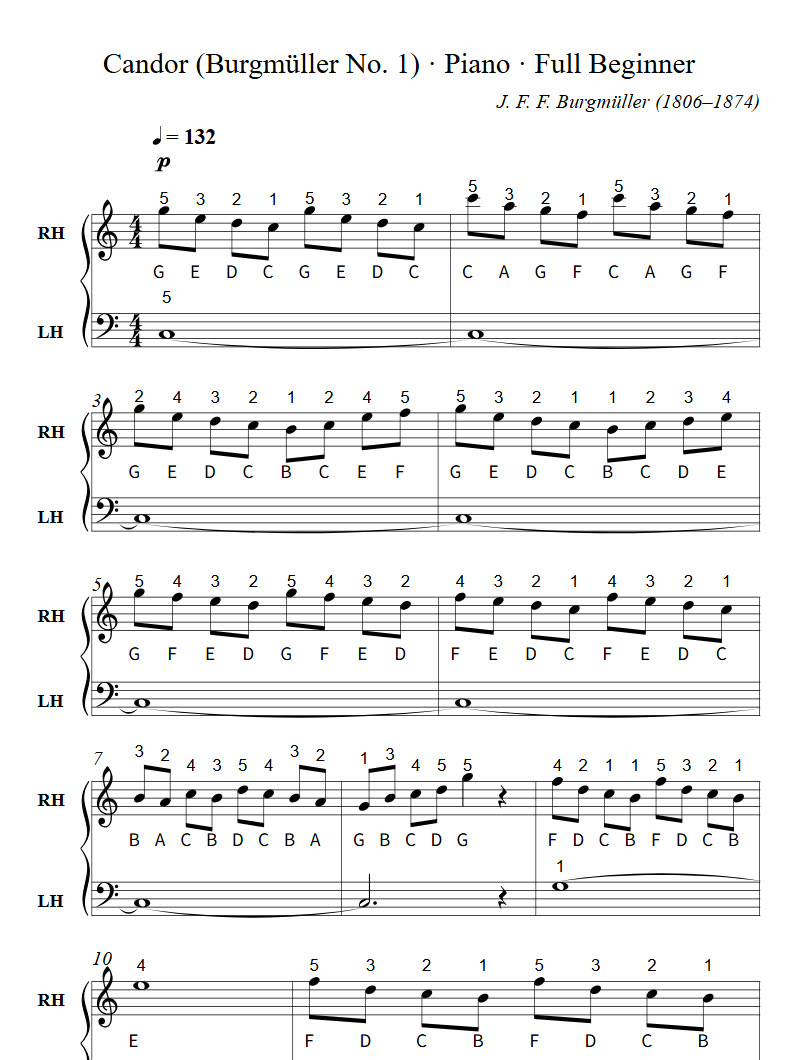 J. F. F. Burgmüller (1806–1874)
Candor (Burgmüller)
No. 1 of Burgmüller's 25 Easy Études — a piece many students play alongside Czerny.
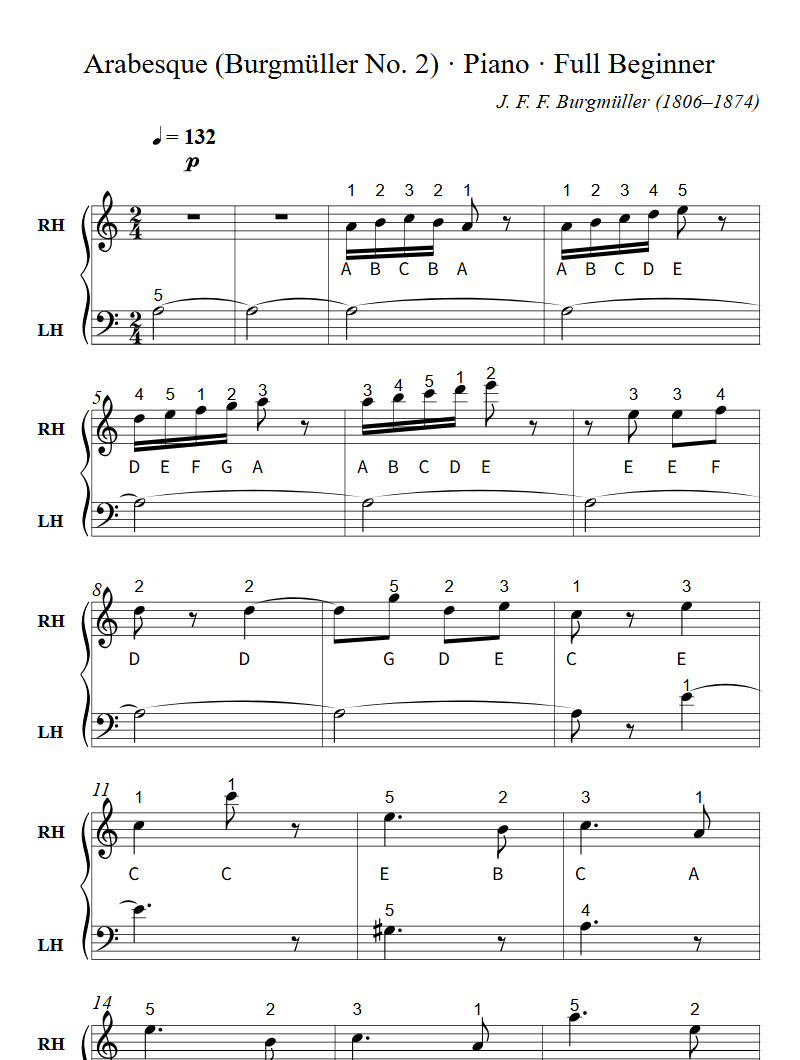 J. F. F. Burgmüller (1806–1874)
Arabesque (Burgmüller)
No. 2 of Burgmüller's 25 Easy Études — a recital favorite with fast rolling sixteenth notes.
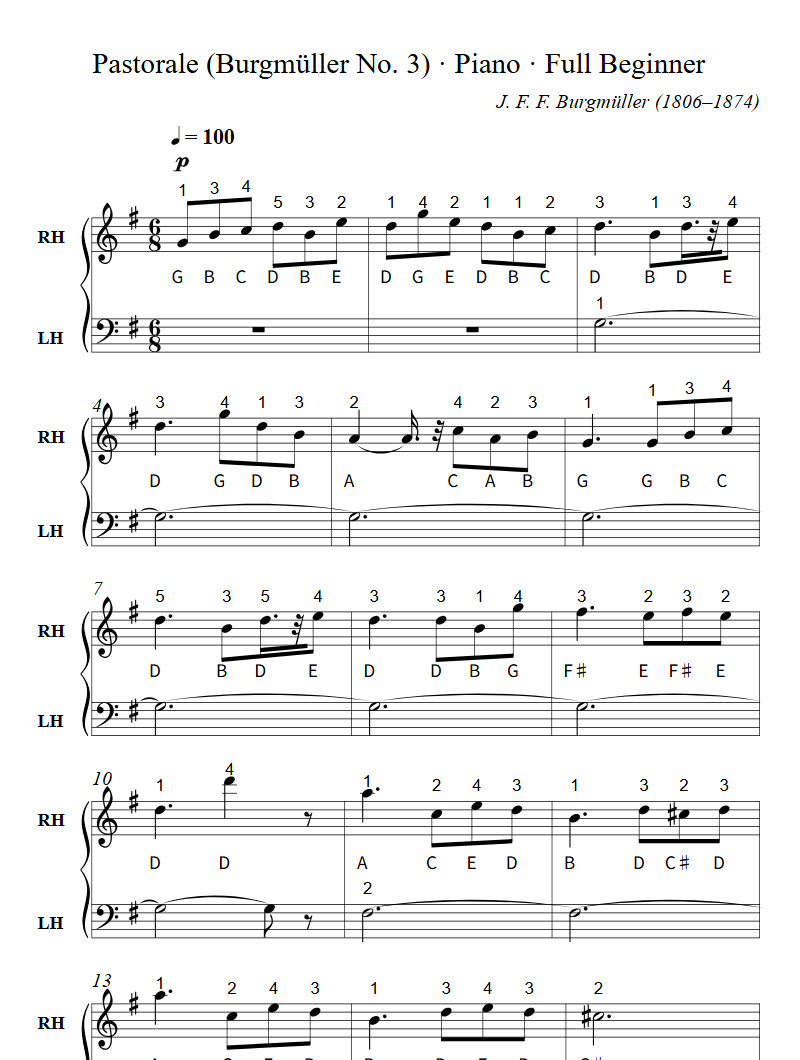 J. F. F. Burgmüller (1806–1874)
Pastorale (Burgmüller)
No. 3 of Burgmüller's 25 Easy Études, in 6/8, evoking open fields.
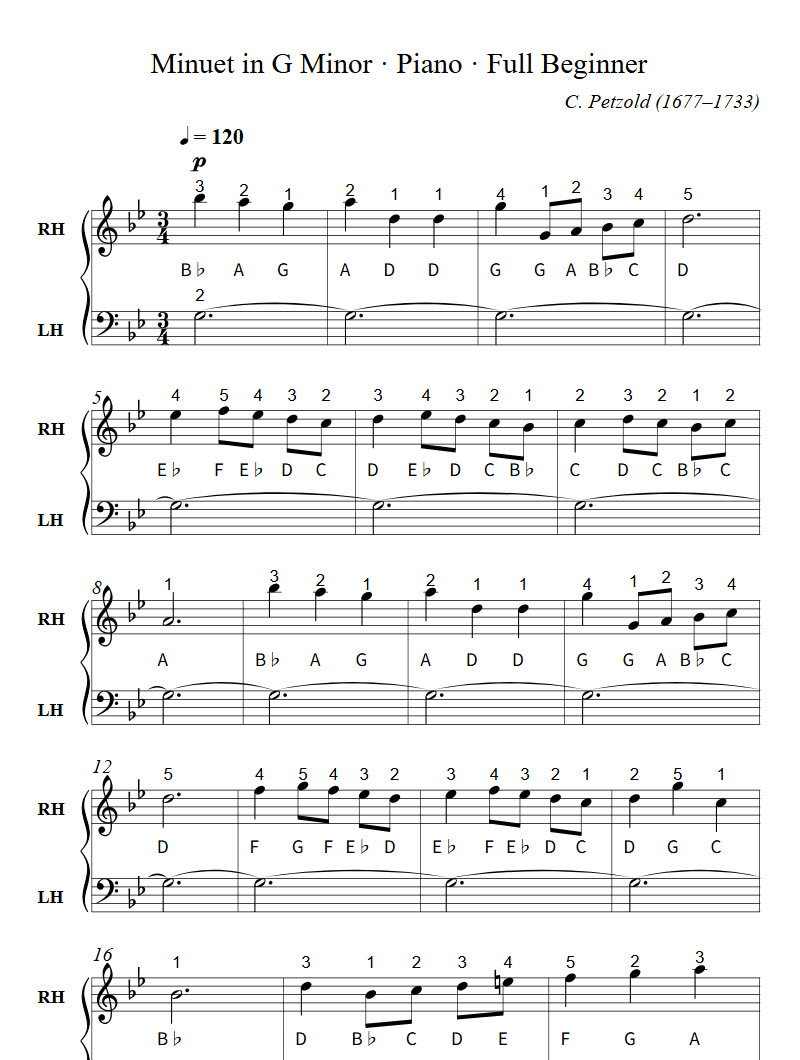 C. Petzold (1677–1733)
Minuet in G Minor
The minor-key minuet from the Notebook for Anna Magdalena Bach, often paired with the Minuet in G.
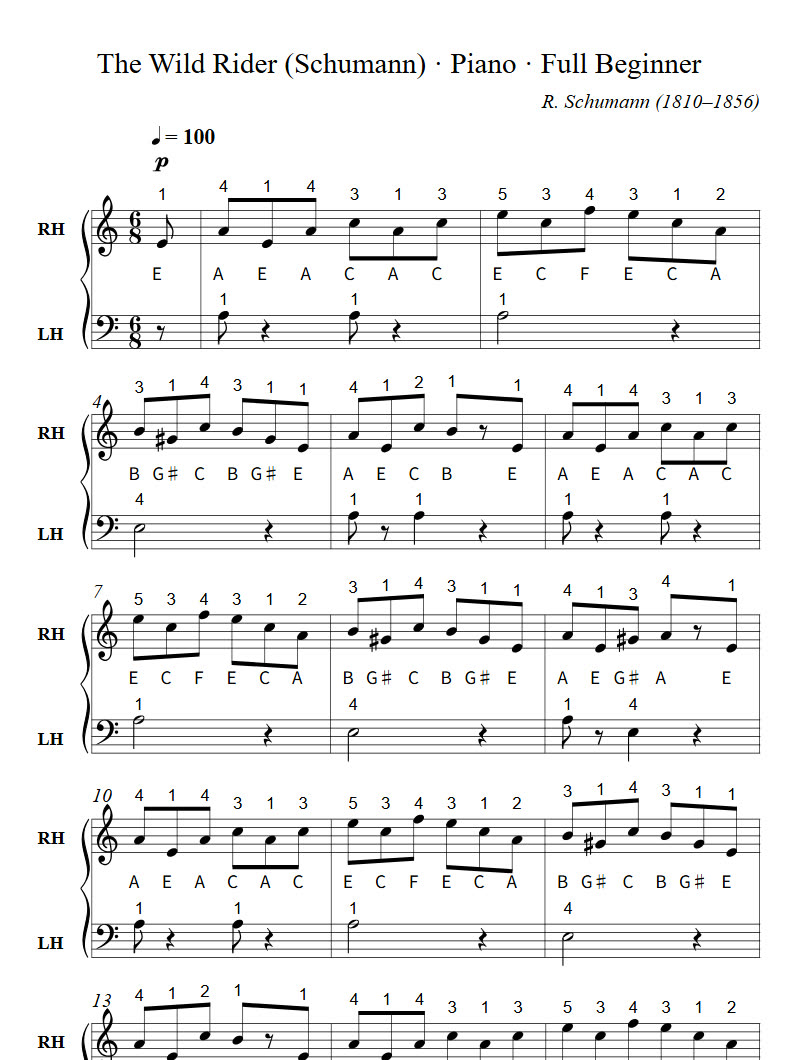 R. Schumann (1810–1856)
The Wild Rider
No. 8 from Schumann's 'Album for the Young'. Play it short and strong, like a galloping horse.
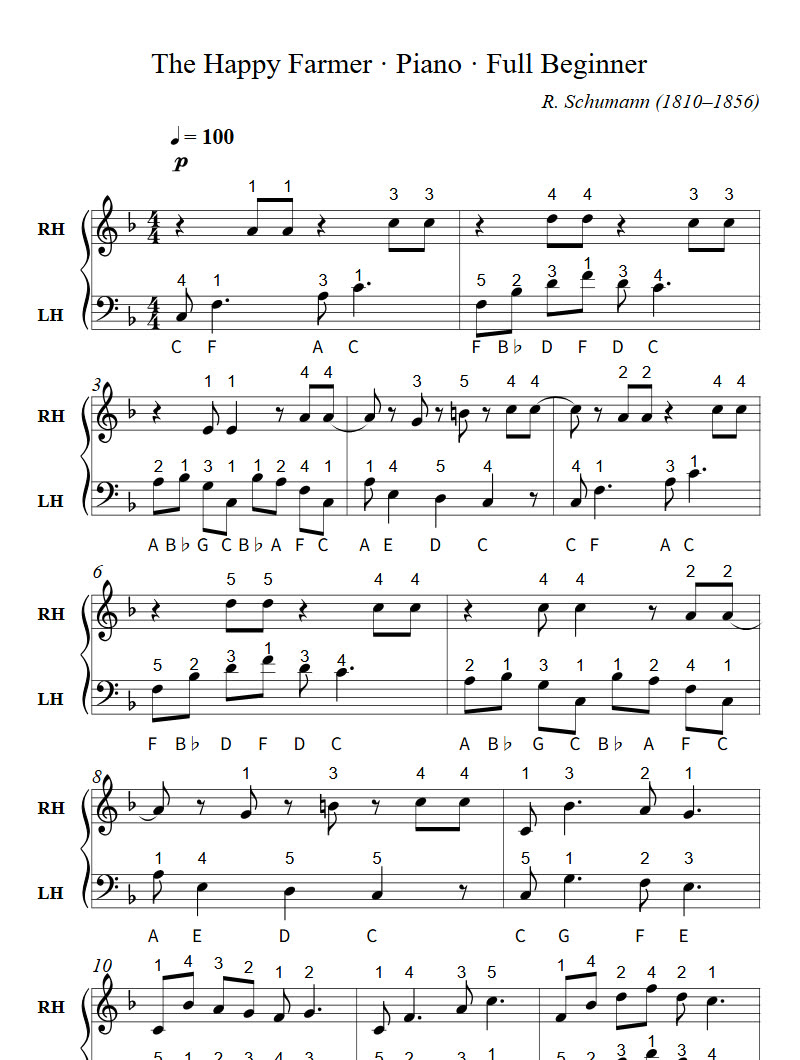 R. Schumann (1810–1856)
The Happy Farmer
No. 10 from Schumann's 'Album for the Young'. The left hand sings the melody while the right hand supports with chords.