Easy sheet music
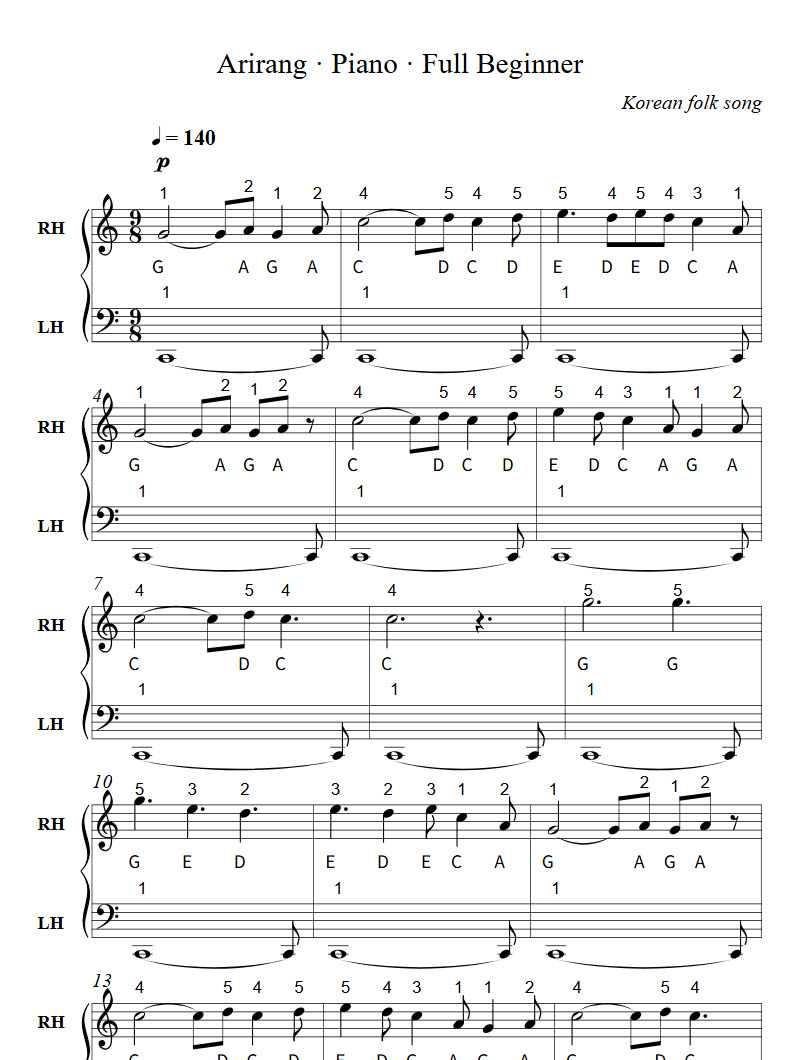 Korean folk song
Arirang
Korea's best-known folk song, sung in music class and at cultural exchange concerts.
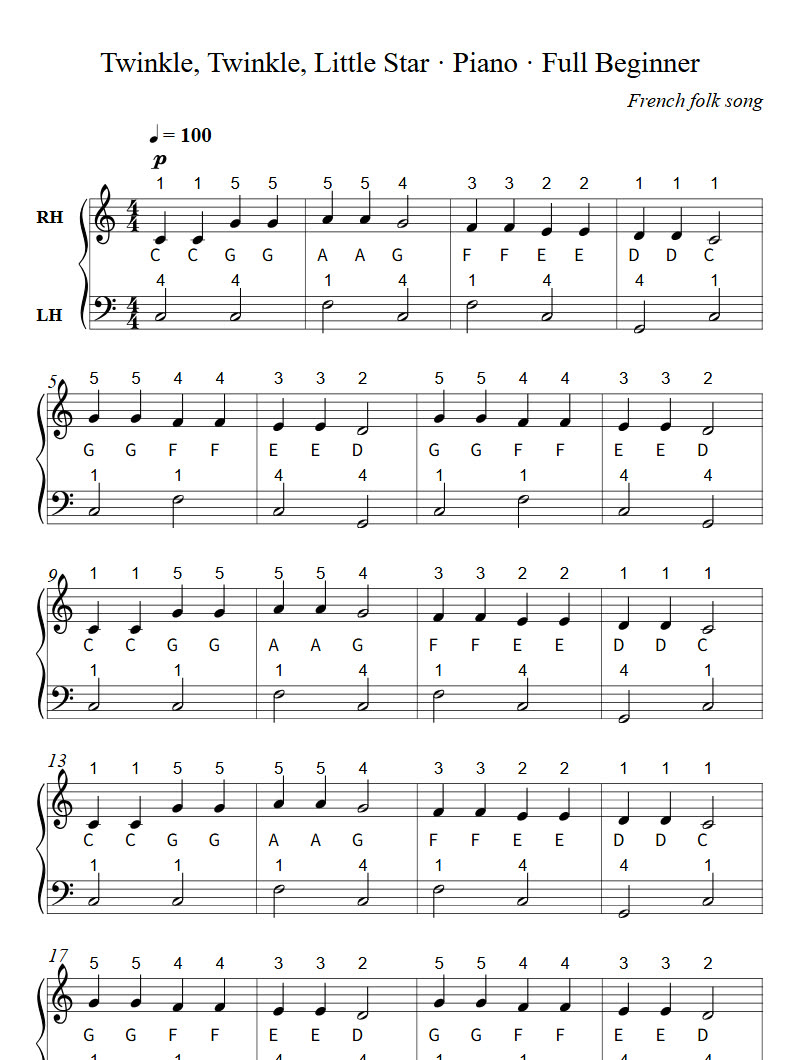 French folk song
Twinkle, Twinkle, Little Star
Often the very first piece on a new instrument. Playing each note twice is great for learning to keep the beat.
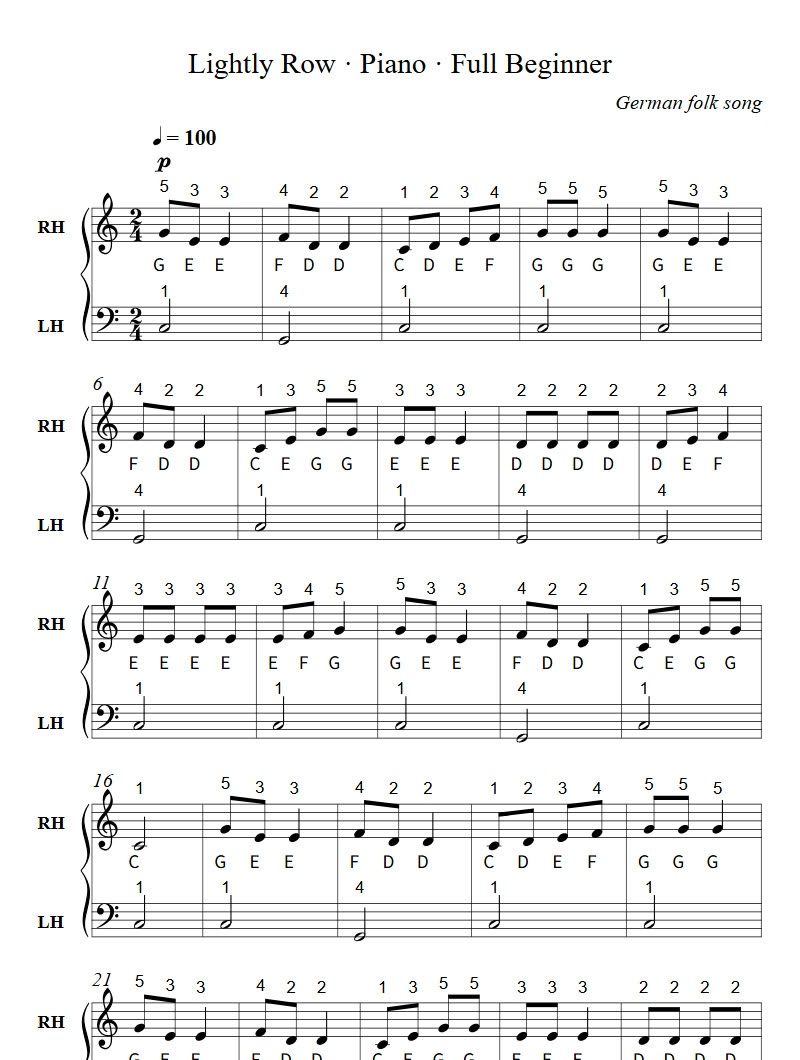 German folk song
Lightly Row
A children's song that starts G–E–E, F–D–D. You can play it with your hand in a single five-finger position.
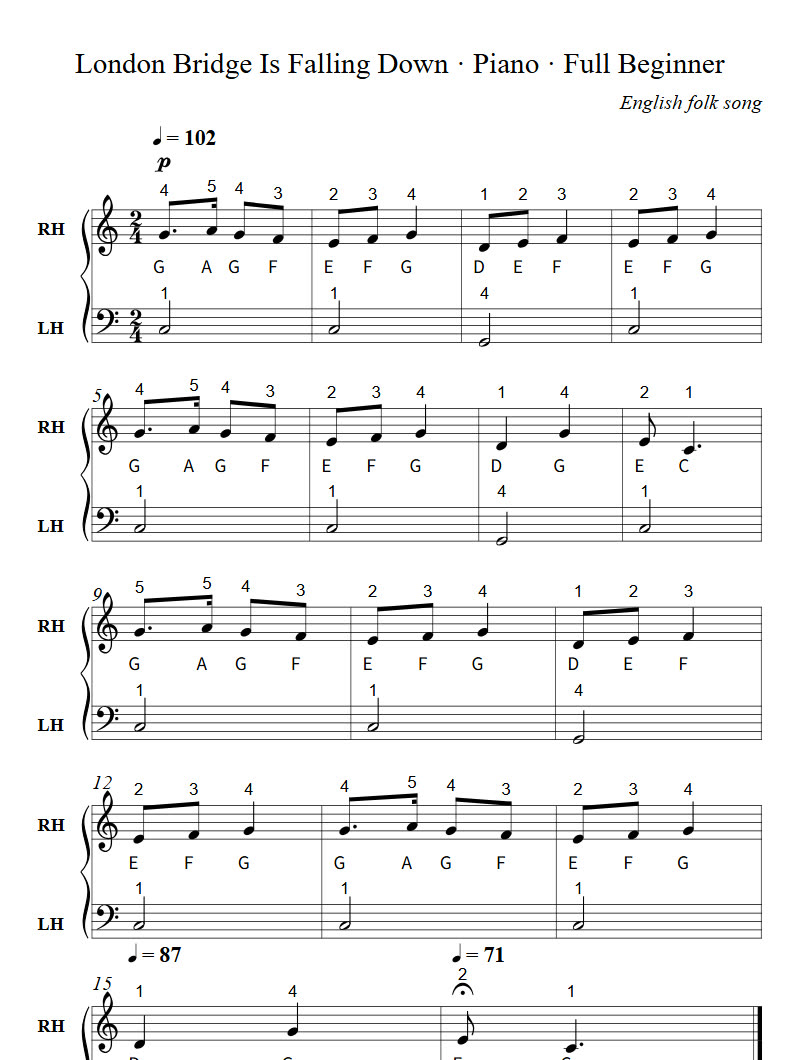 English folk song
London Bridge
An English nursery rhyme famous as a playground game. Short and repetitive, so it's easy to memorize.
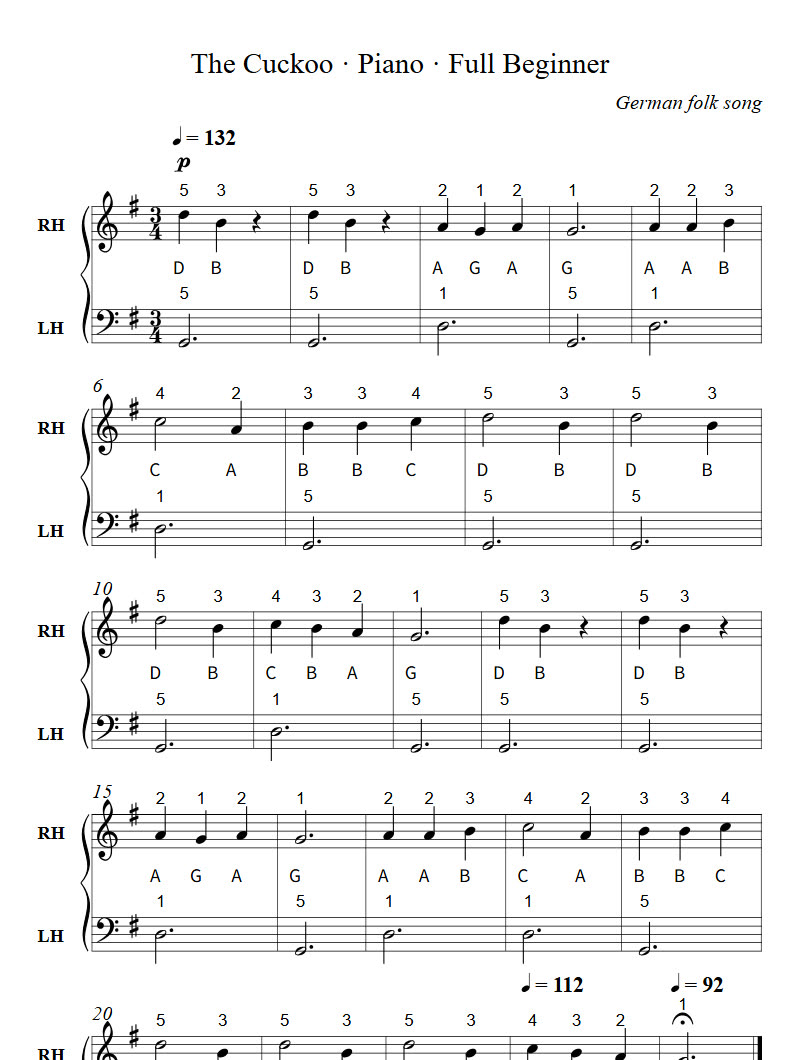 German folk song
The Cuckoo
A children's song in three beats that imitates the call 'cuckoo, cuckoo'.
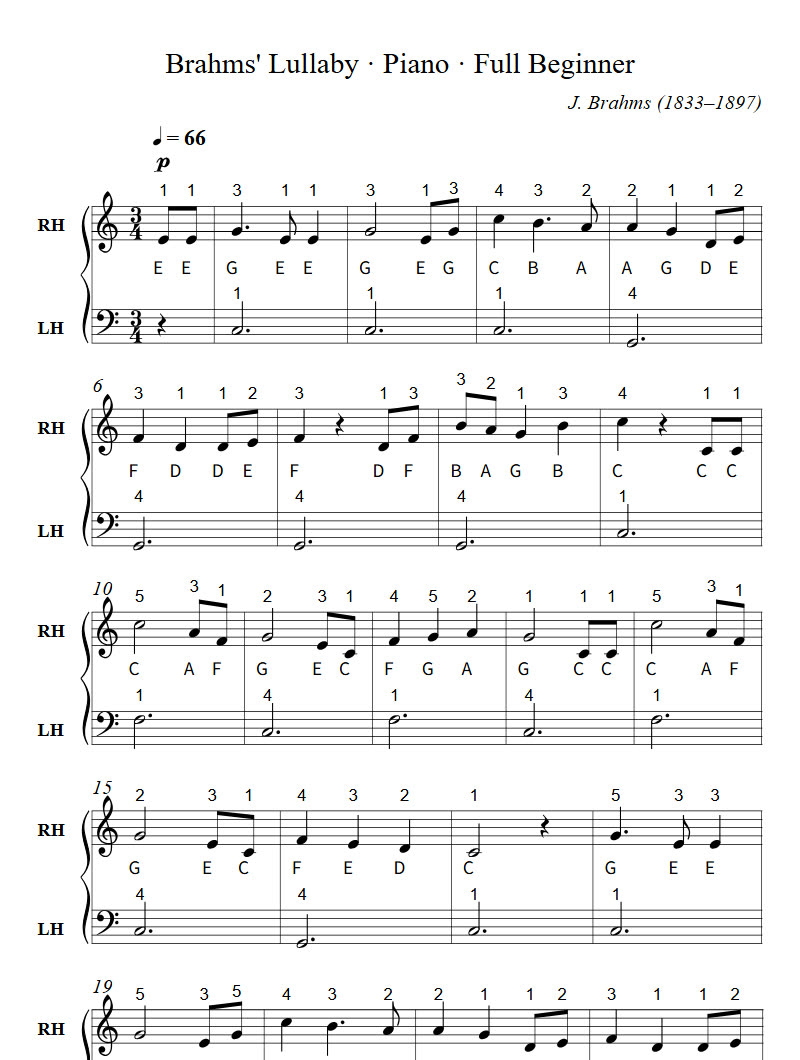 J. Brahms (1833–1897)
Brahms' Lullaby
Brahms' lullaby. Its slow three-beat lines are good practice for playing long, connected notes.
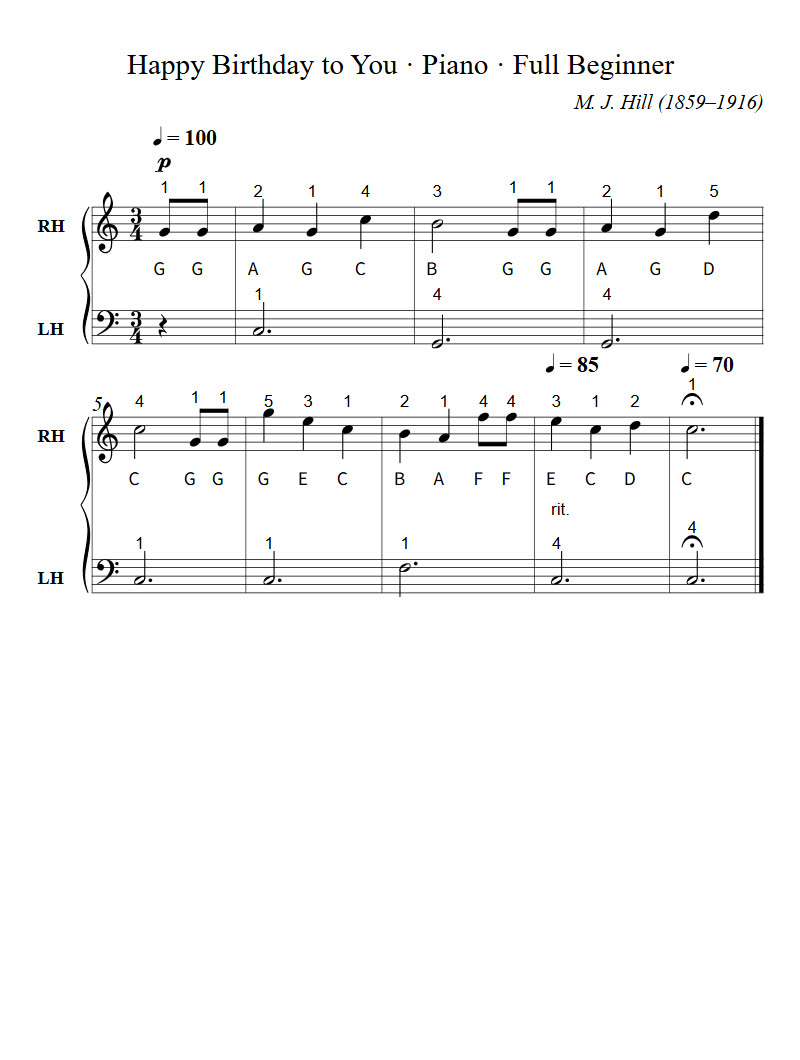 M. J. Hill (1859–1916)
Happy Birthday
Moved to C major so you can play it right away at a birthday party.
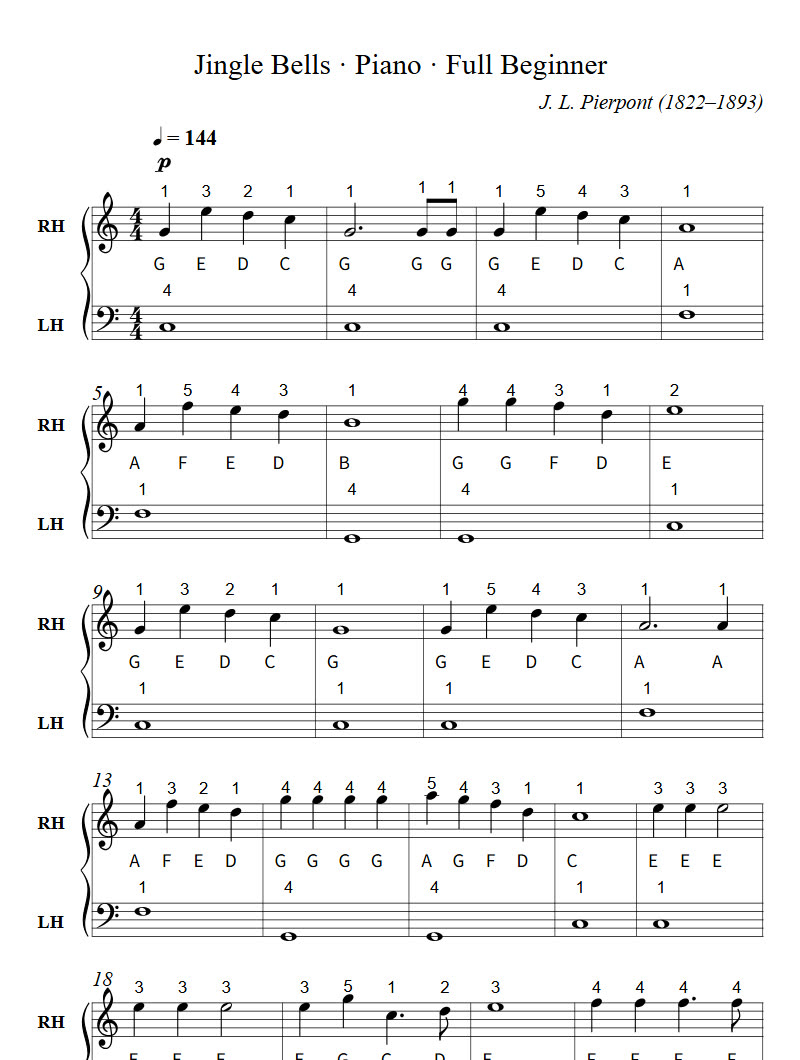 J. L. Pierpont (1822–1893)
Jingle Bells
The full Jingle Bells with verse and chorus. Choose Highlights to play just the chorus.
 American children's song
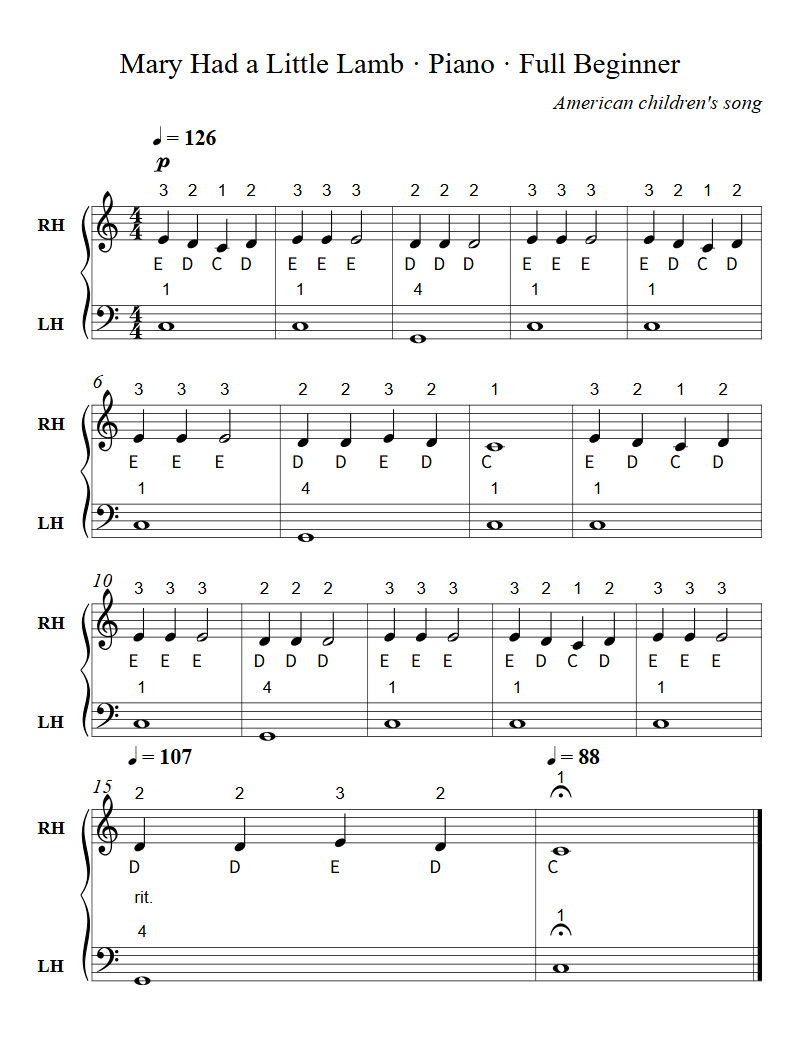
Mary Had a Little Lamb
A children's song that begins E–D–C–D–E–E–E. It uses only five notes, from C to G, so it makes a great first piece.
 American children's song
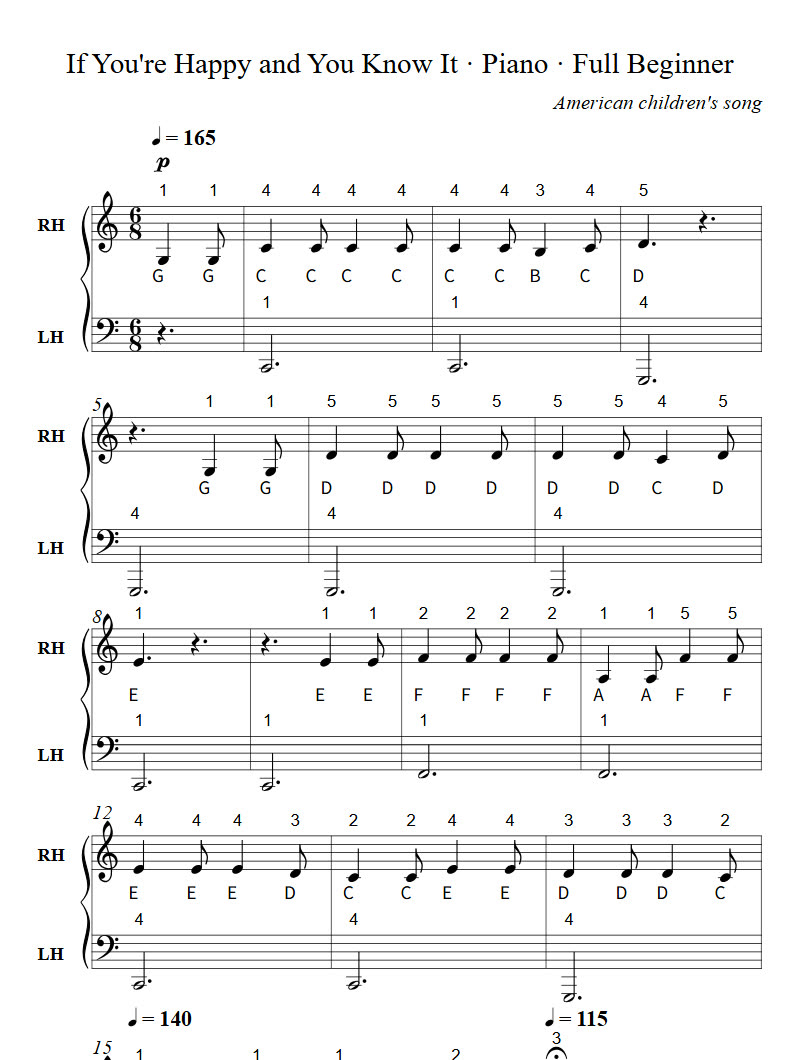
If You're Happy and You Know It
The clapping spots are left as rests, so you can clap along right there while you play.
 S. Winner (1827–1902)
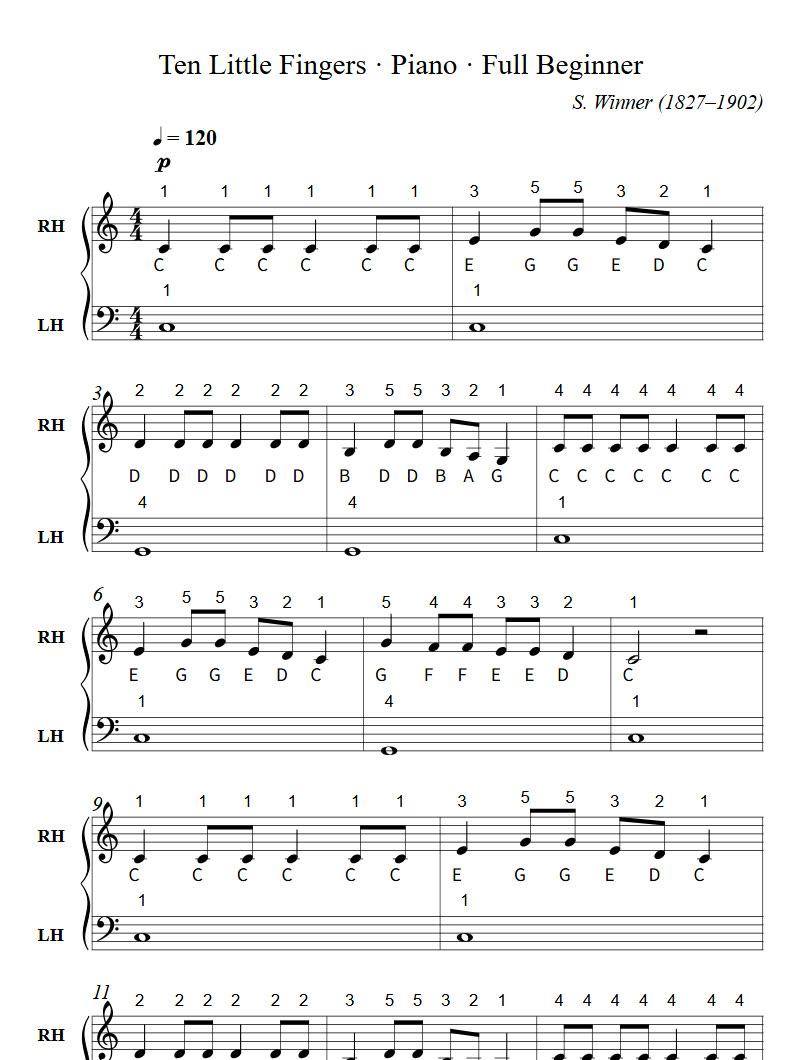
Ten Little Fingers
A counting song. Good practice for repeating the same note quickly.
 American folk song
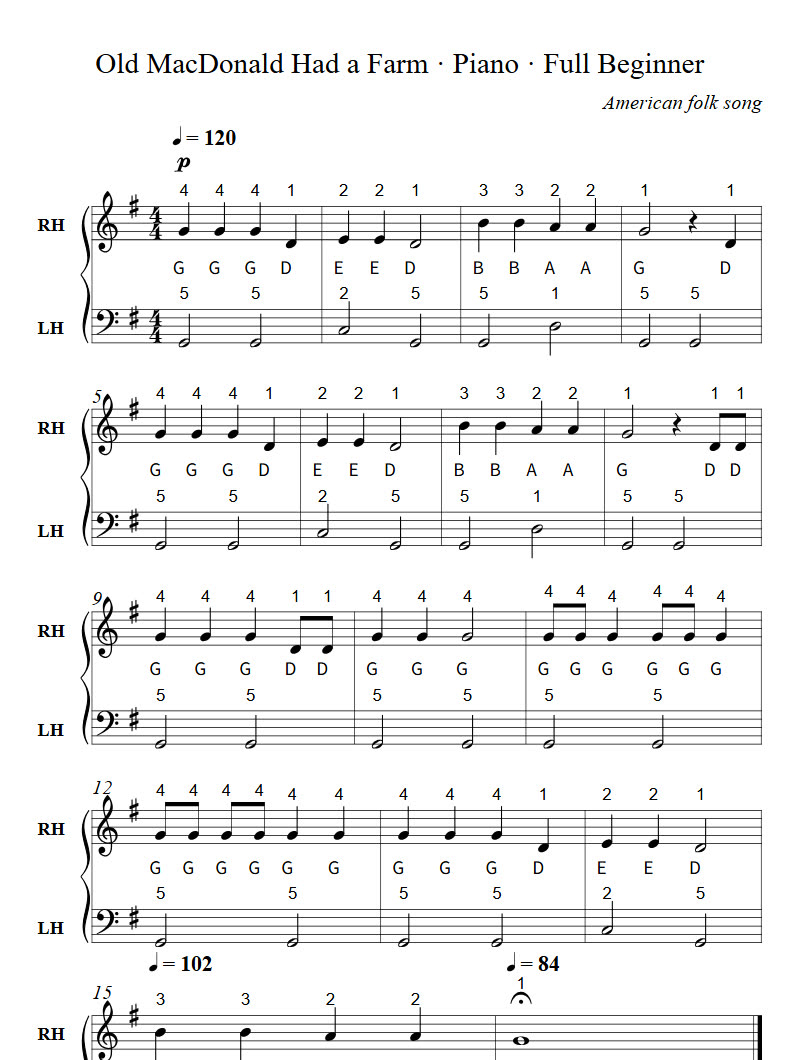
Old MacDonald
A song where you swap in different farm animal sounds. The repeated-note chorus helps you learn the rhythm.
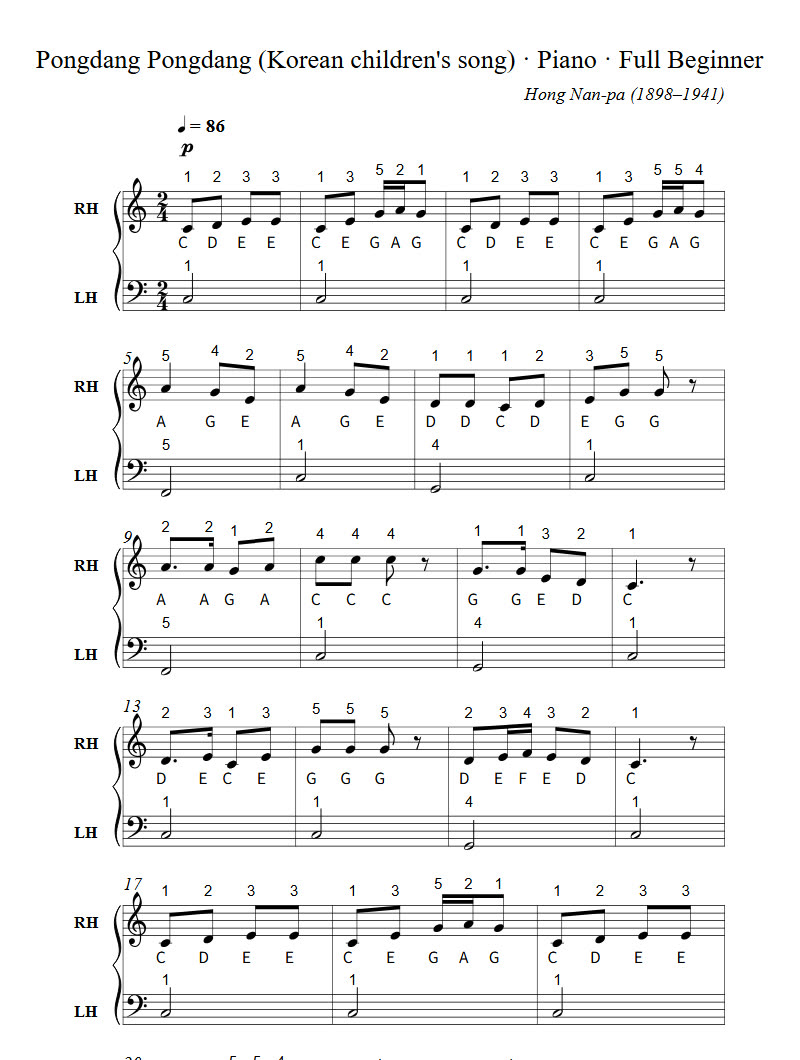 Hong Nan-pa (1898–1941)
Pongdang Pongdang
A children's song by Hong Nan-pa, taken from the original 1933 score of '100 Korean Children's Songs'.
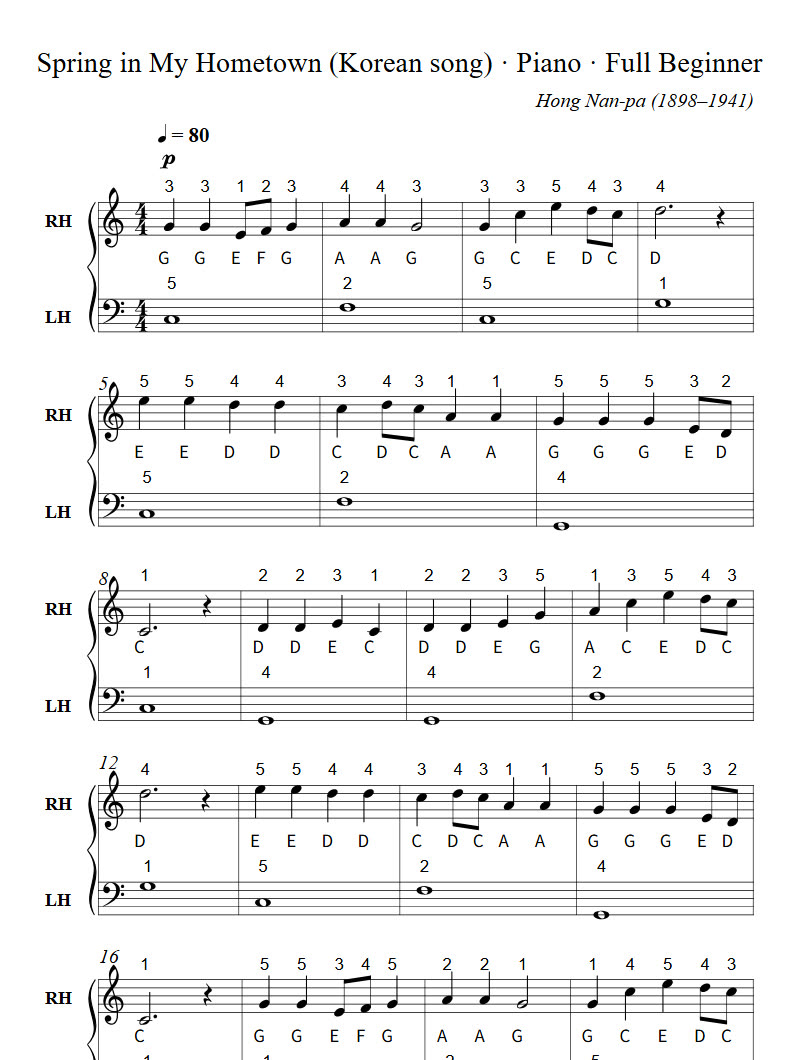 Hong Nan-pa (1898–1941)
Spring in My Hometown
Hong Nan-pa's song that begins 'The hometown where I lived'. The original is in B♭ major; the beginner version is in C major.
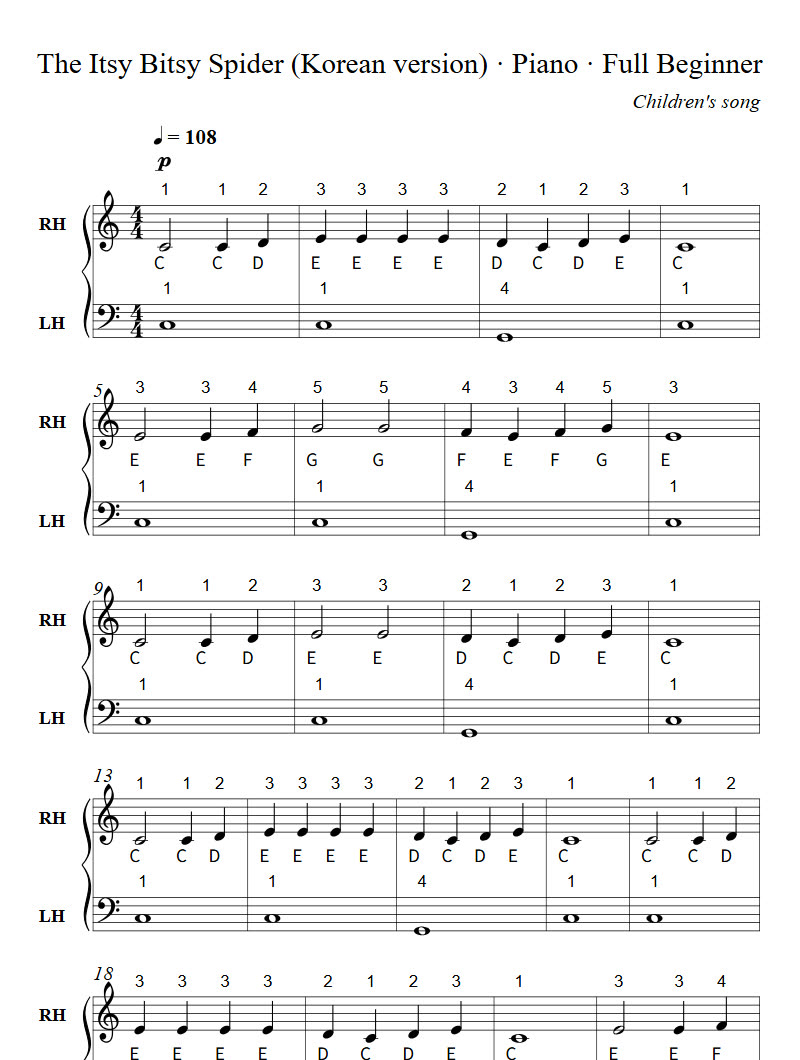 Children's song
Itsy Bitsy Spider
The spider song as it's sung in Korea, in 6/8 time.
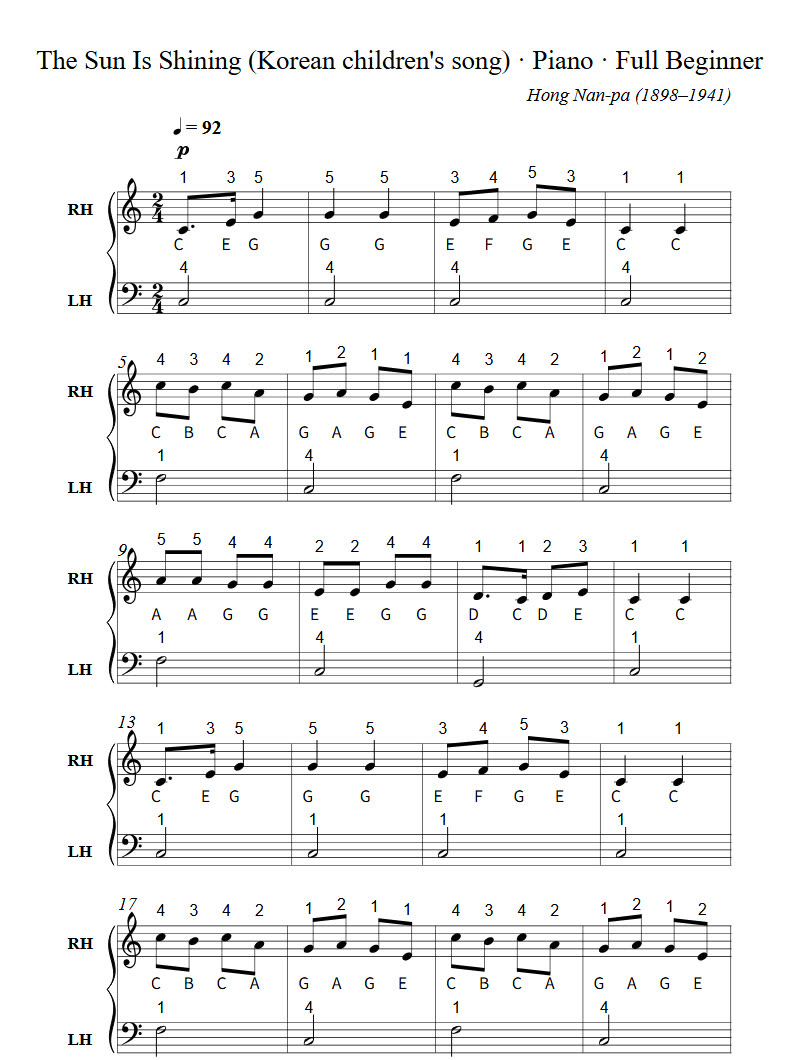 Hong Nan-pa (1898–1941)
The Sun Is Shining
A children's song by Hong Nan-pa. Play it short and detached, following the staccatos in the original score.
 Korean folk song
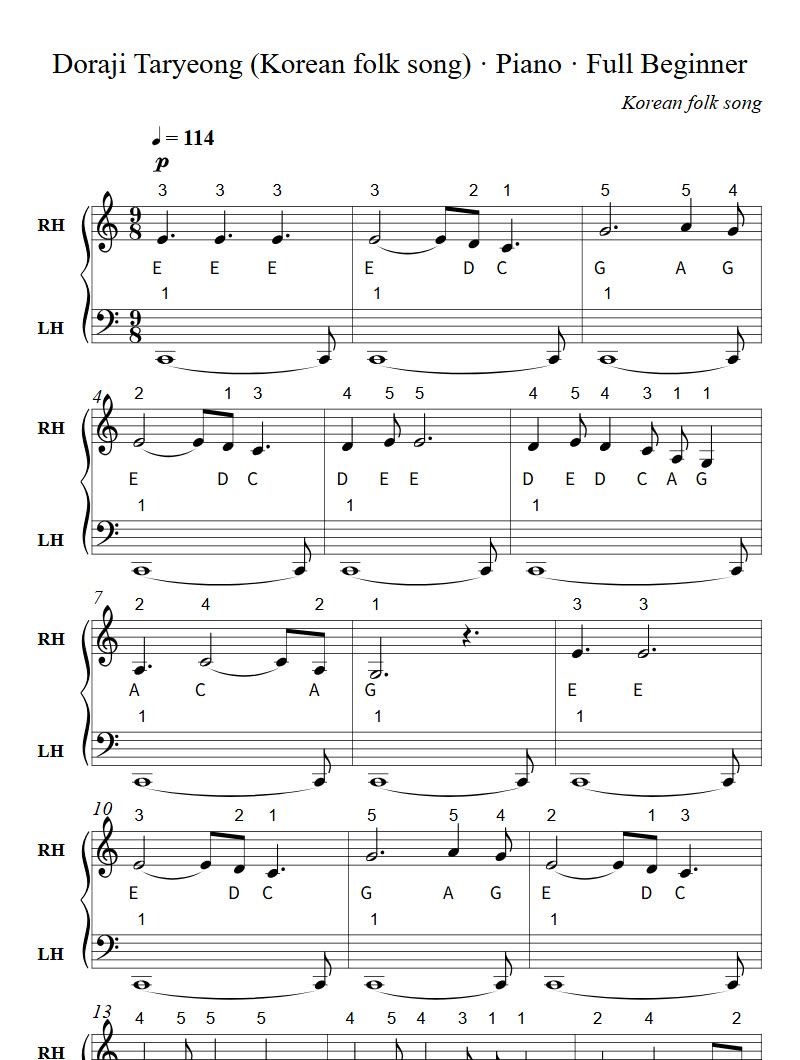
Doraji Taryeong
A Gyeonggi folk song that begins 'Doraji, doraji, baek-doraji'. Set in 9/8 to the semachi rhythm.
 H. C. Work (1832–1884)
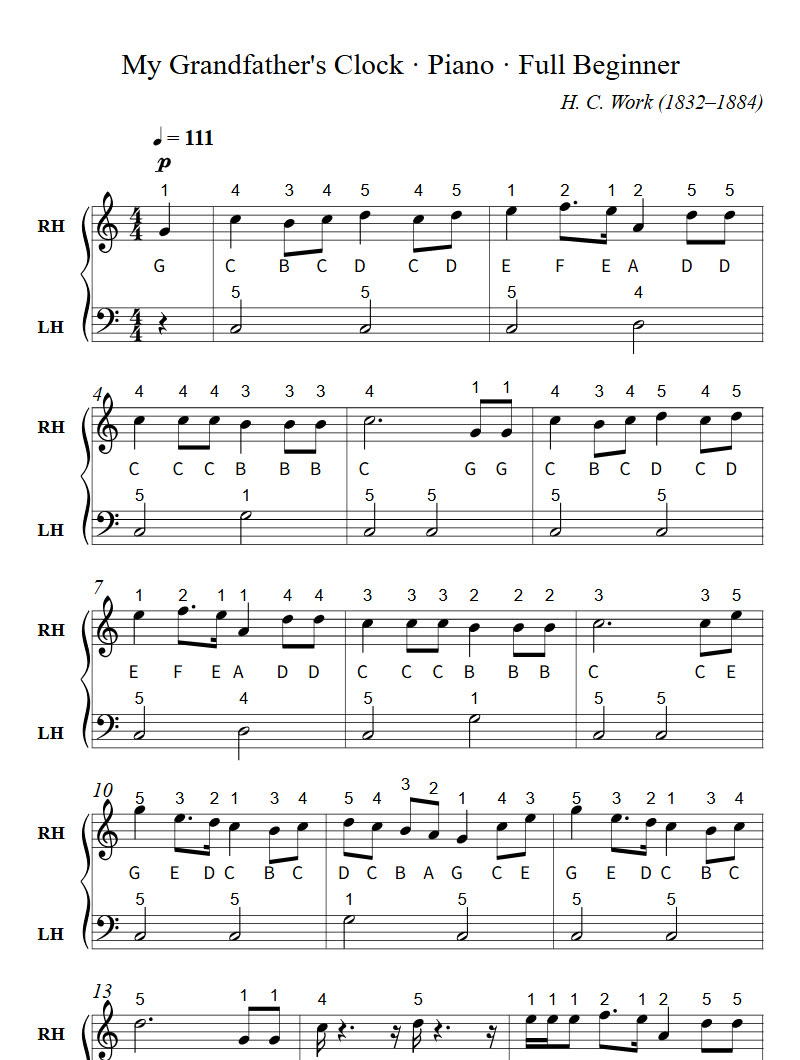
My Grandfather's Clock
An American song whose chorus imitates the tick-tock of a clock.
 Mexican folk song
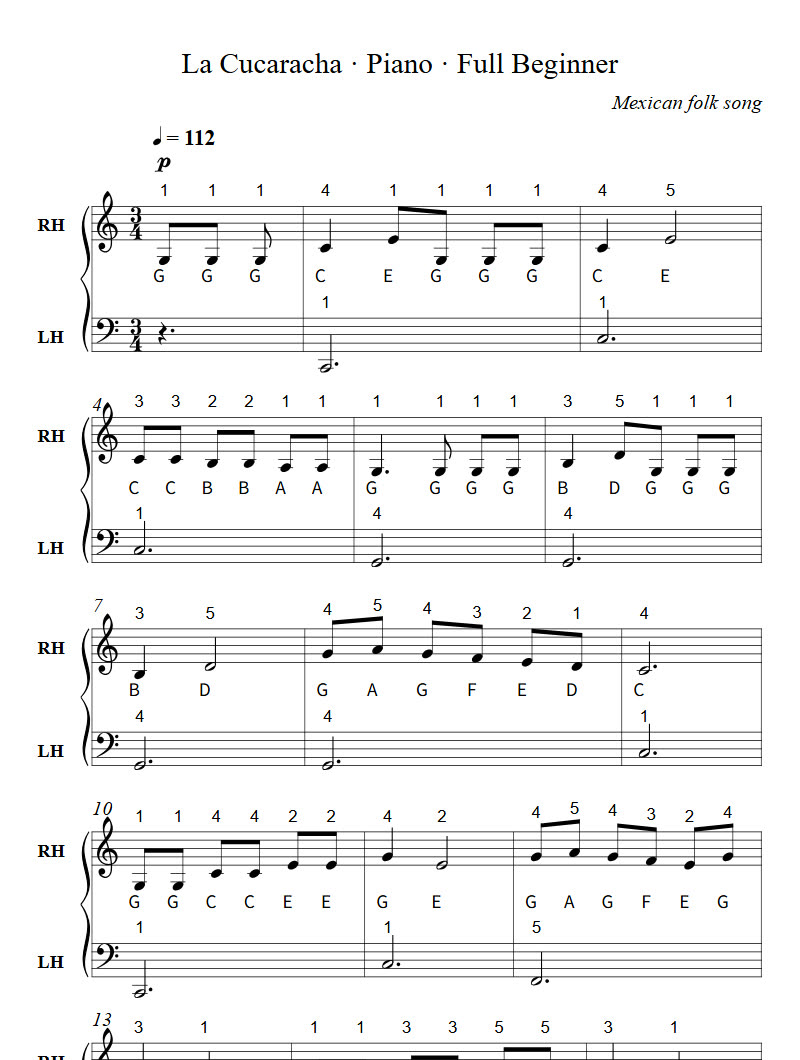
La Cucaracha
A Mexican folk song. Play the opening three-eighth-note rhythm short and lively.
 Hong Nan-pa (1898–1941)
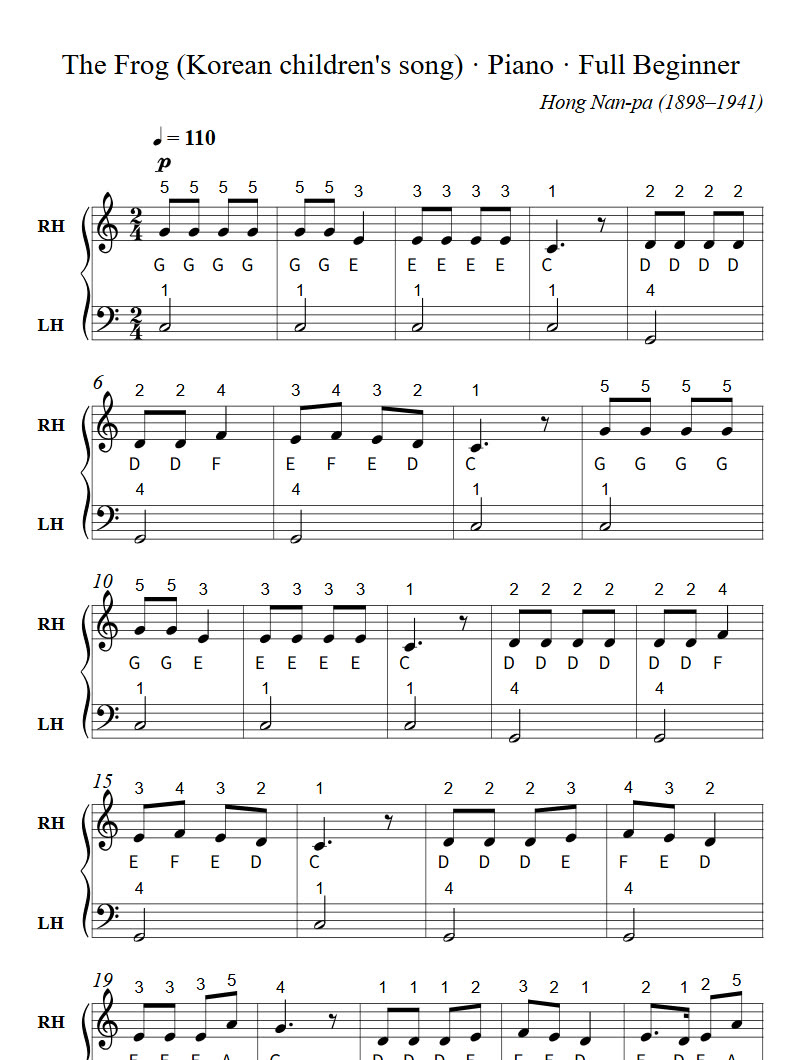
The Frog
Hong Nan-pa's song that goes 'Gaegul gaegul, the frog sings'. Taken from the original 1933 score of '100 Korean Children's Songs'.
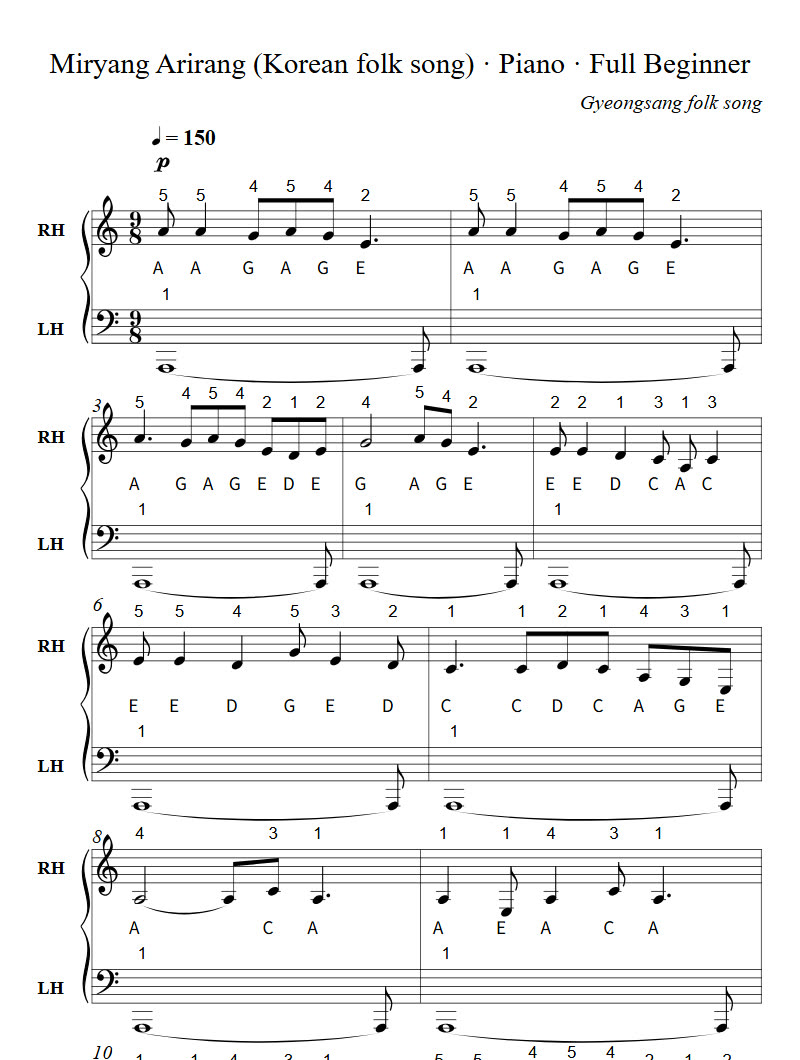 Gyeongsang folk song
Miryang Arirang
A Gyeongsang-province folk song that begins 'Nal jom boso' (Look at me). Set in 9/8 semachi rhythm as in Korean school textbooks.
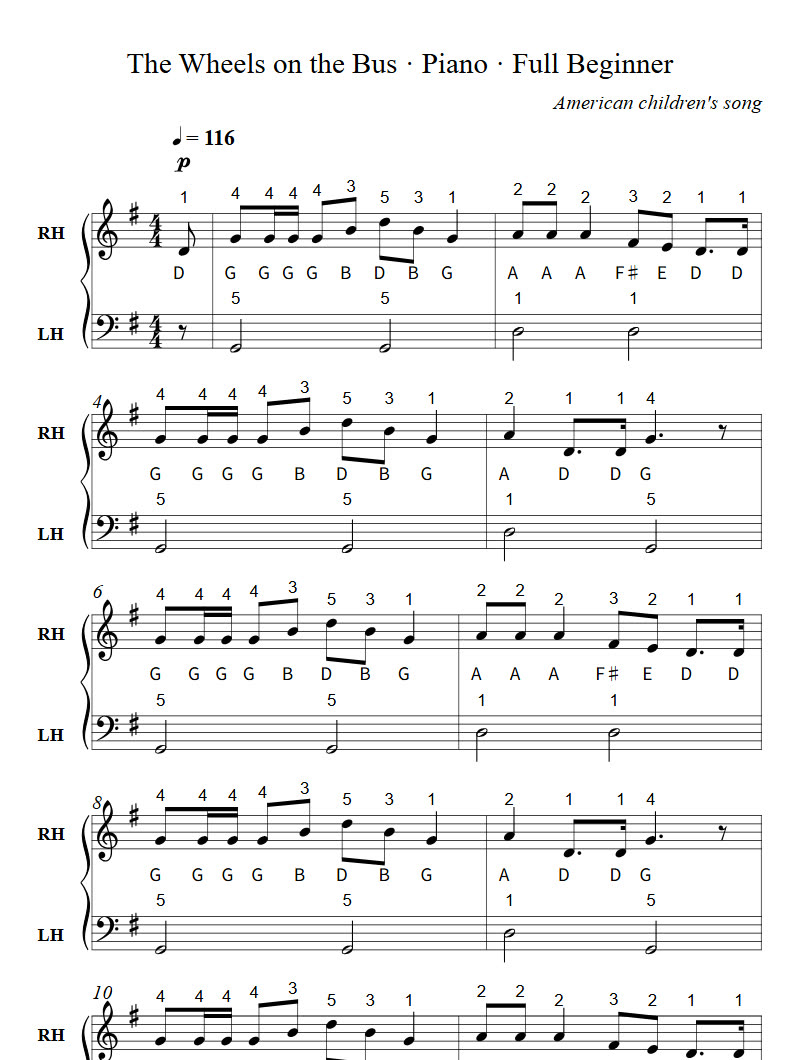 American children's song
The Wheels on the Bus
'The Wheels on the Bus' — a short song repeated three times.
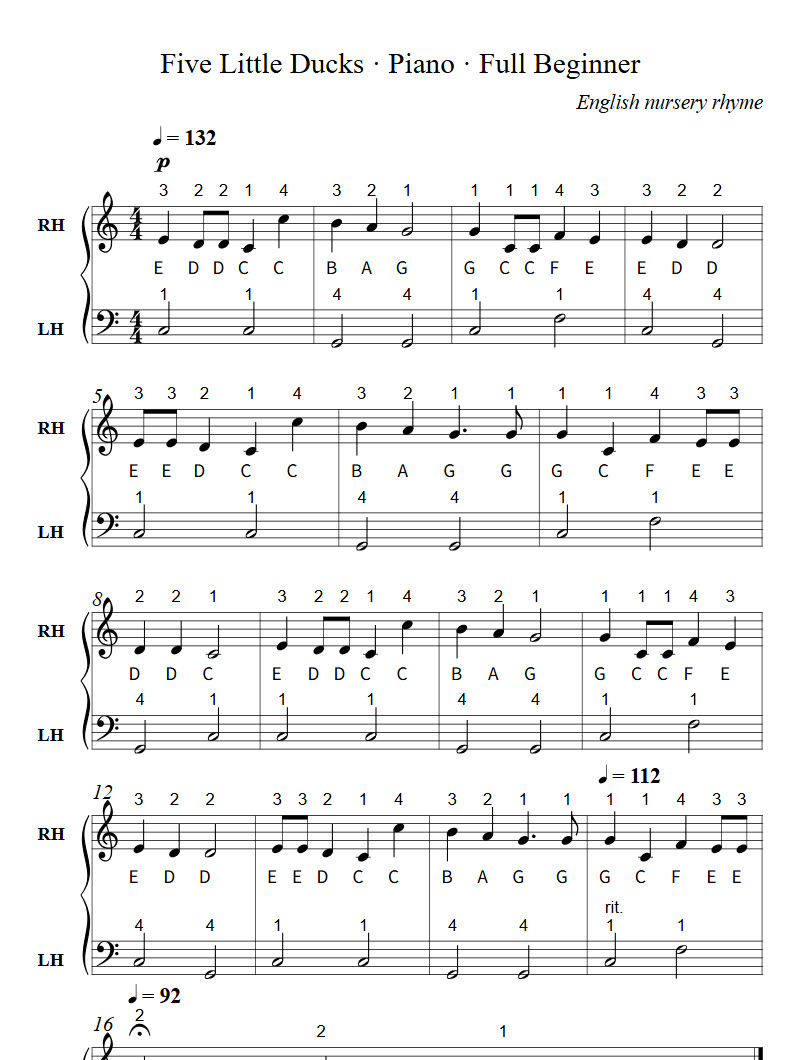 English nursery rhyme
Five Little Ducks
The nursery rhyme 'Five Little Ducks'. One duck goes missing each time, so it's repeated twice.
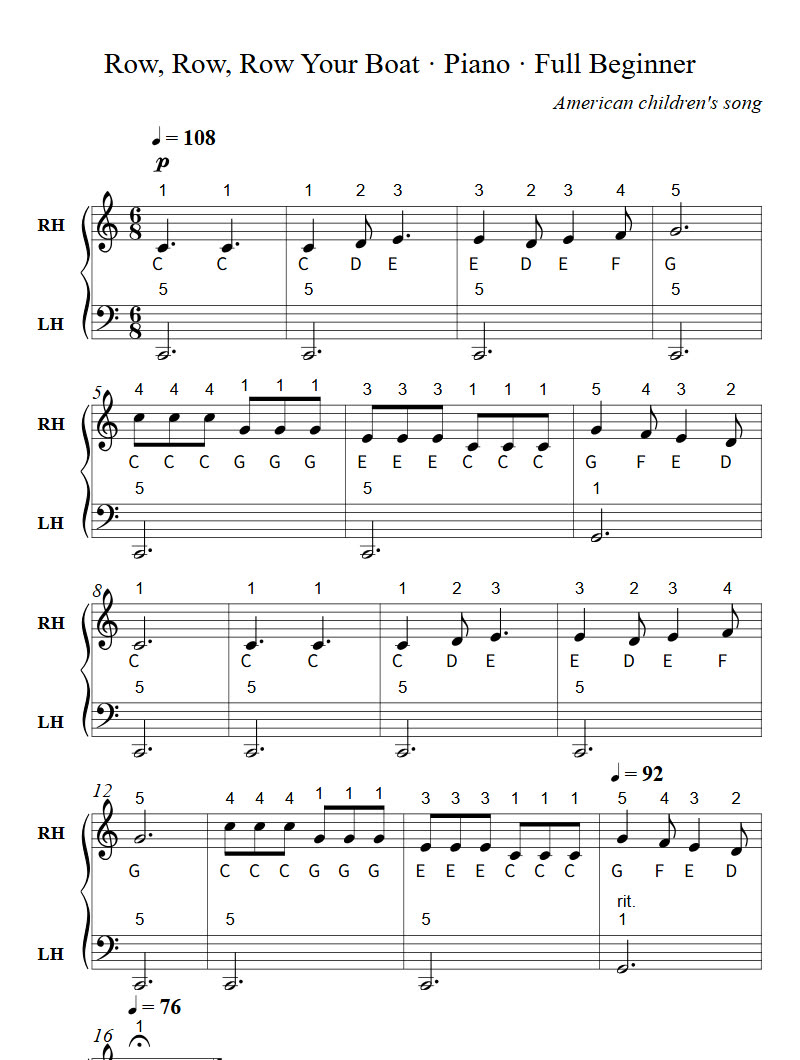 American children's song
Row Your Boat
The nursery rhyme 'Row, Row, Row Your Boat' in 6/8 — also sung as a round.
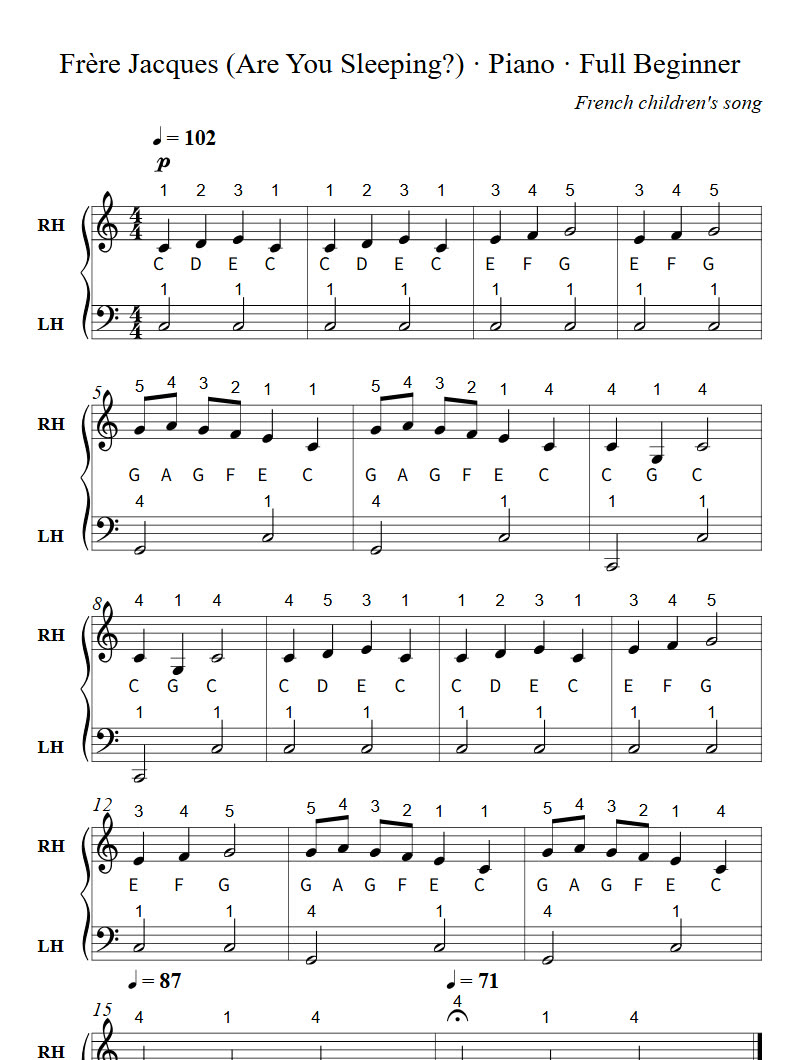 French children's song
Frère Jacques
The round sung in English as 'Are You Sleeping, Brother John?'.