Recital
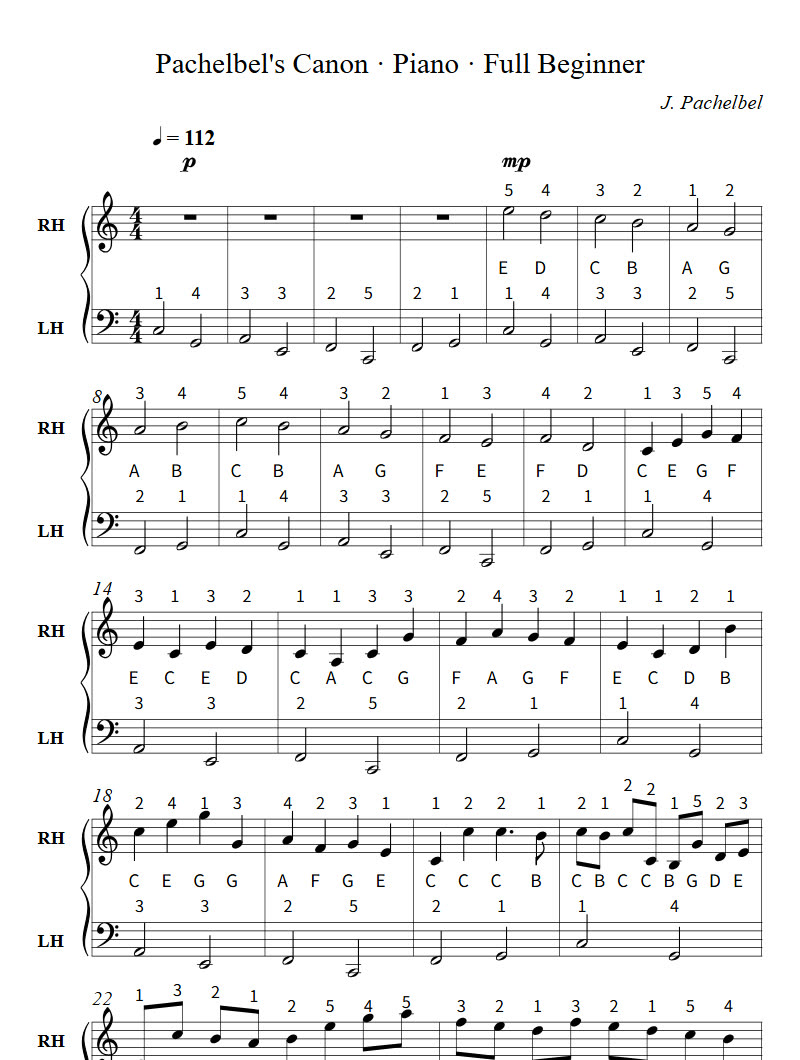 J. Pachelbel (1653–1706)
Canon in D
The most-played piece at weddings and school concerts. Layer after layer of melody builds over the same eight chords.
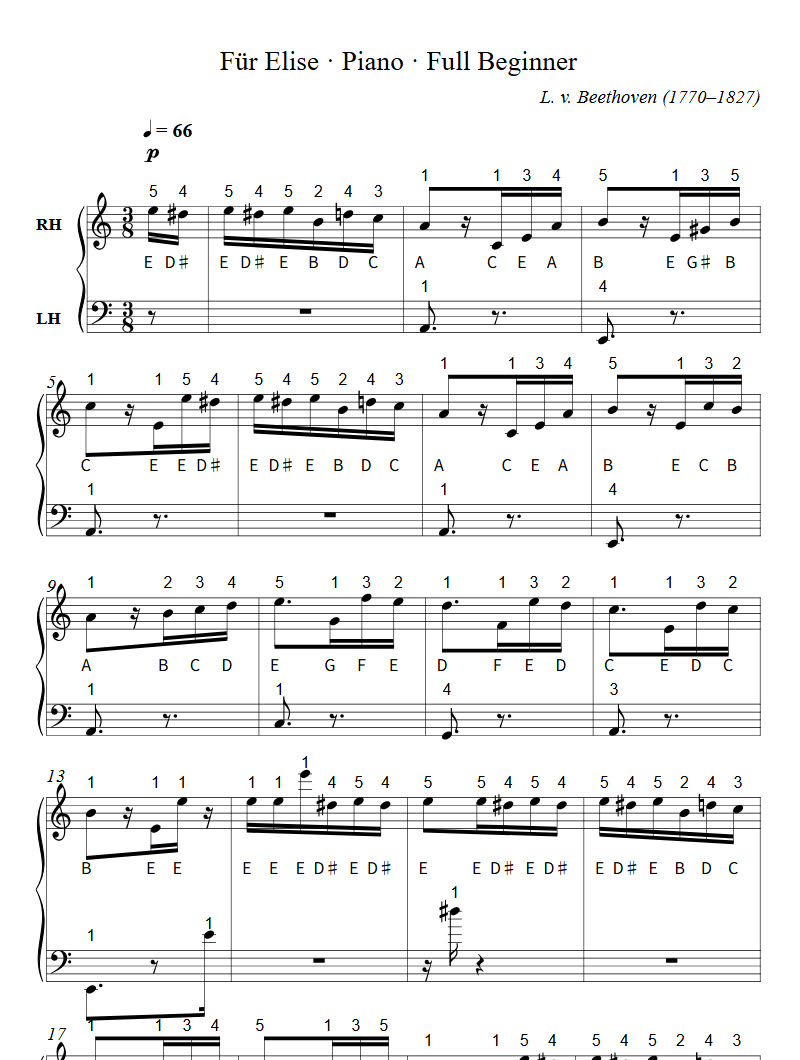 L. v. Beethoven (1770–1827)
Für Elise
The first piece many piano students reach for. Learn the opening E–D♯–E line and you're halfway there.
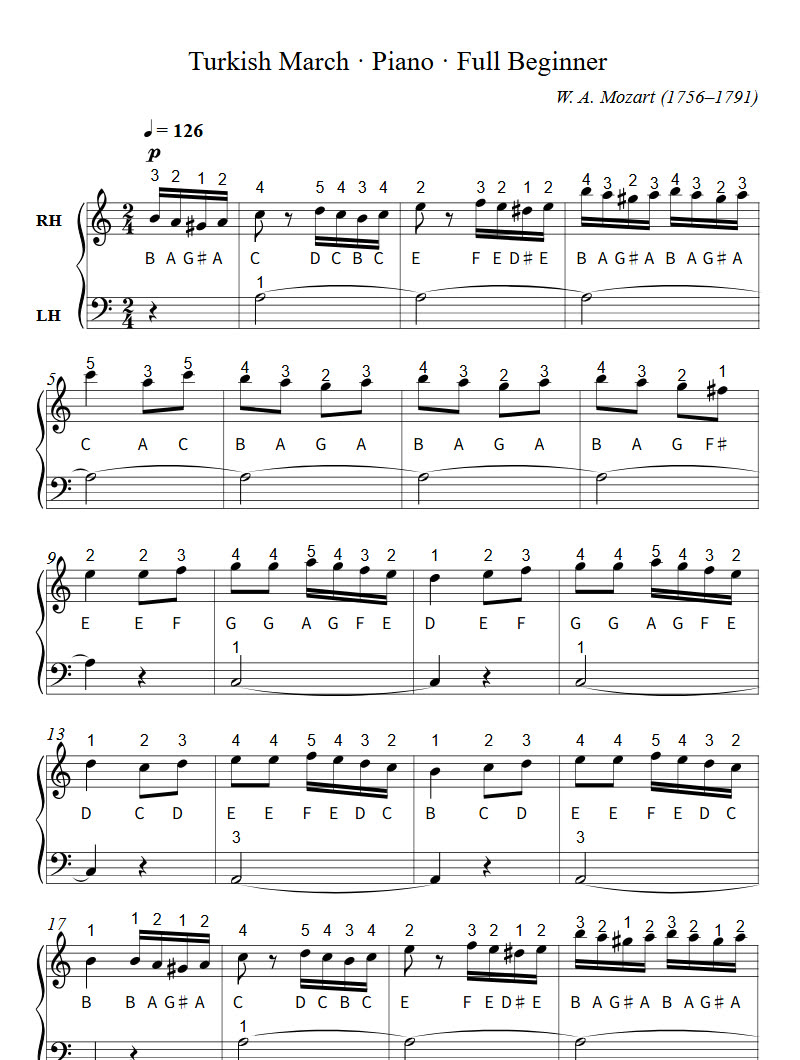 W. A. Mozart (1756–1791)
Turkish March
Its bright marching rhythm makes it a recital favorite. The beginner version is arranged so your fingers don't tangle.
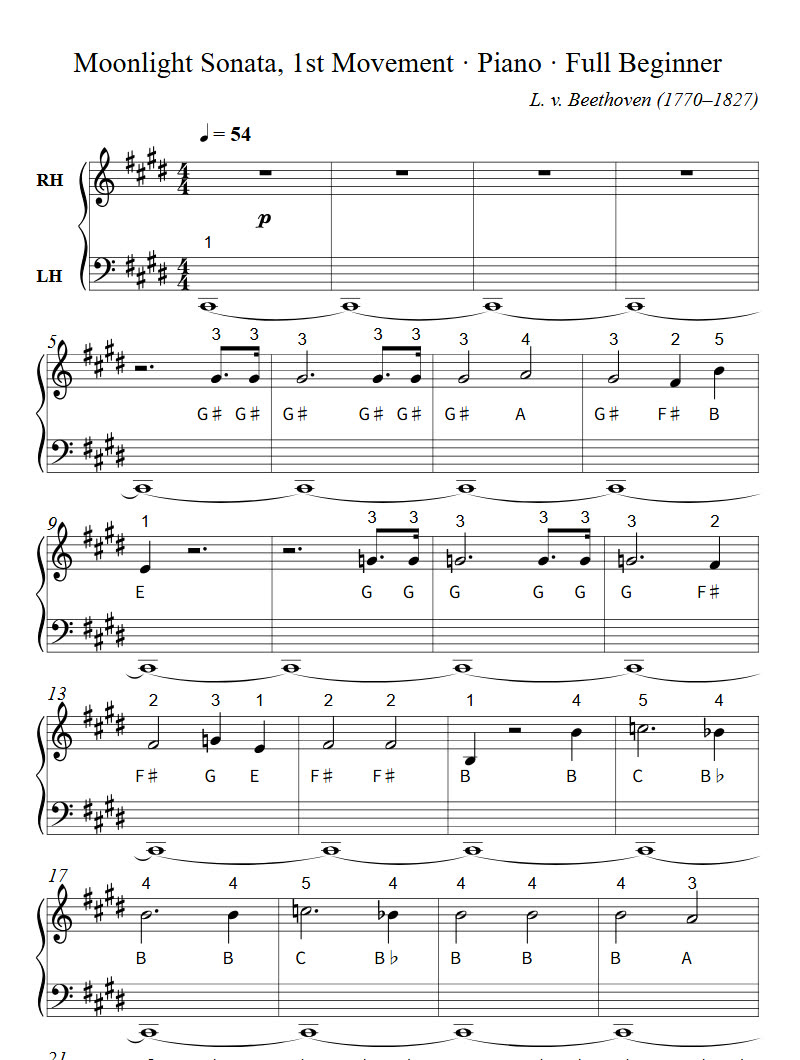 L. v. Beethoven (1770–1827)
Moonlight Sonata
The first movement of Beethoven's Piano Sonata No. 14. A slow melody floats over triplet accompaniment.
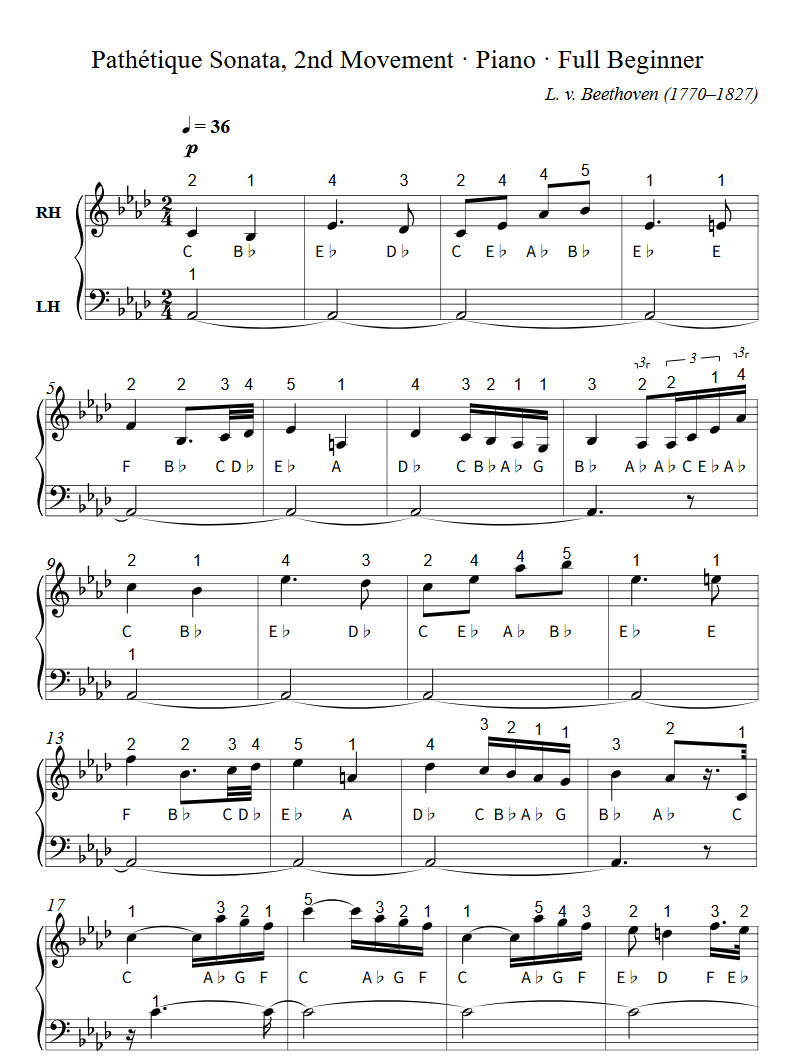 L. v. Beethoven (1770–1827)
Pathétique, 2nd Mvt.
The second movement of Beethoven's Piano Sonata No. 8. The theme returns an octave higher the second time.
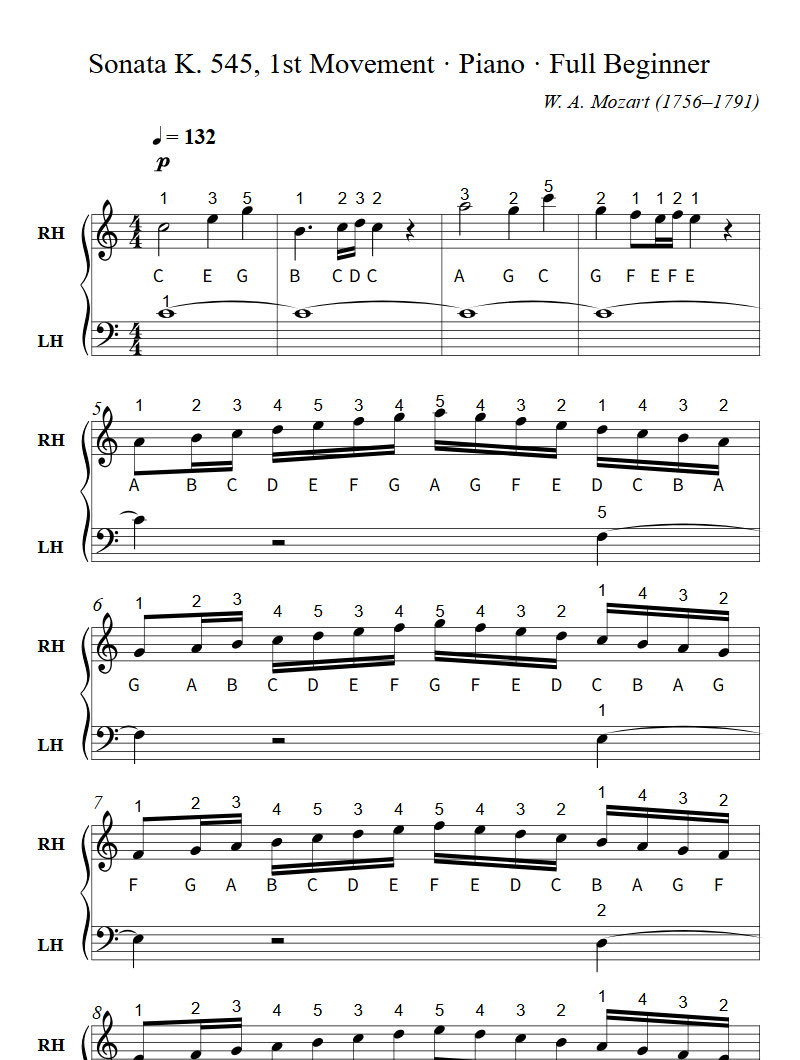 W. A. Mozart (1756–1791)
Sonata K. 545
Mozart's 'easy sonata': a C–E–G theme followed by quick scales.
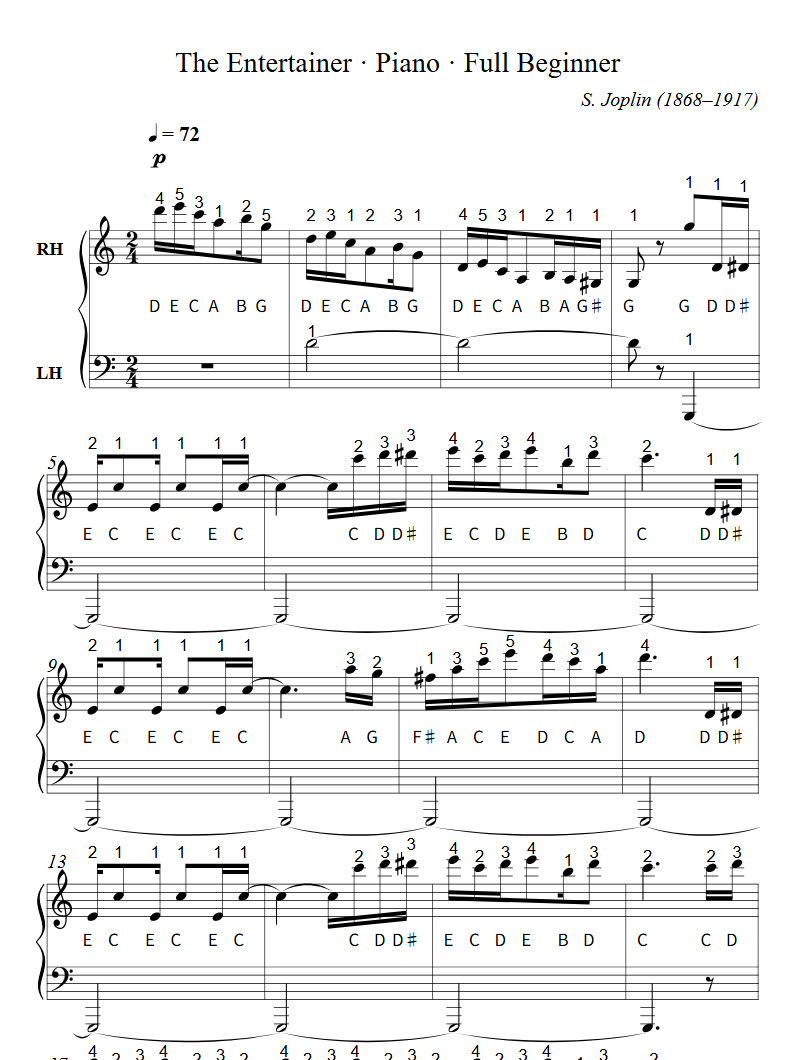 S. Joplin (1868–1917)
The Entertainer
Scott Joplin's ragtime, made famous again by the film 'The Sting'.
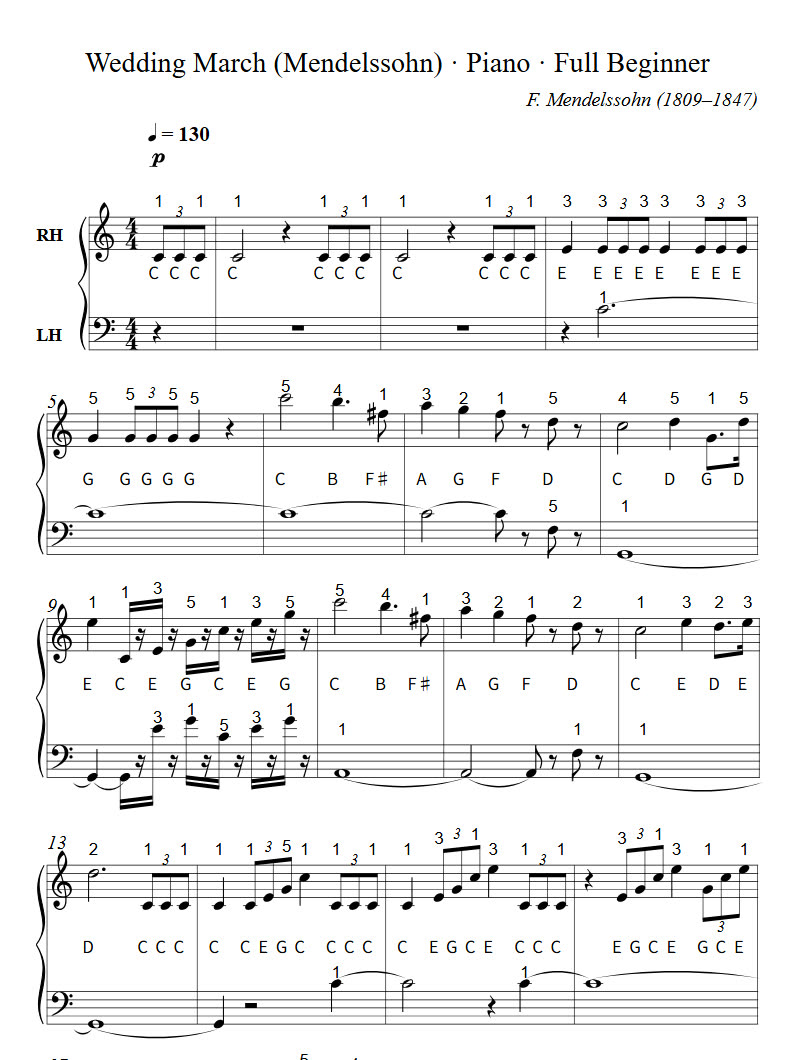 F. Mendelssohn (1809–1847)
Wedding March
Mendelssohn's march for the recessional at weddings. It opens with a trumpet fanfare.
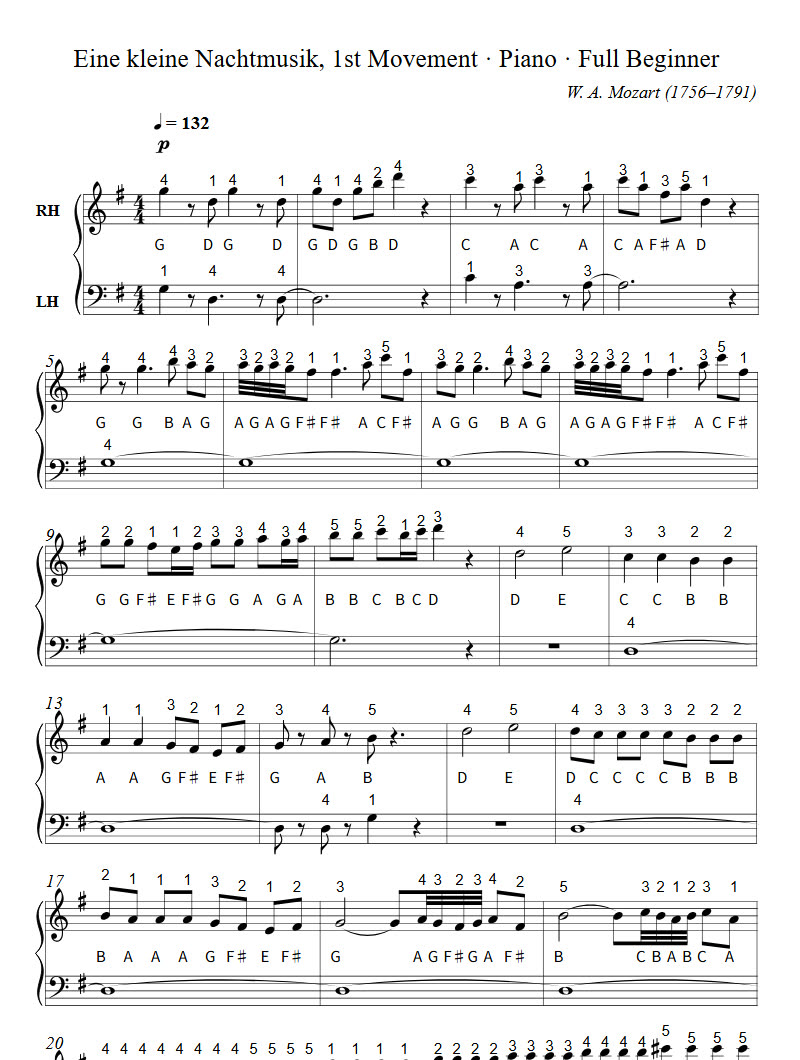 W. A. Mozart (1756–1791)
Eine kleine Nachtmusik
The first movement of Mozart's serenade. The original is for strings, so the piano left hand takes the cello part.
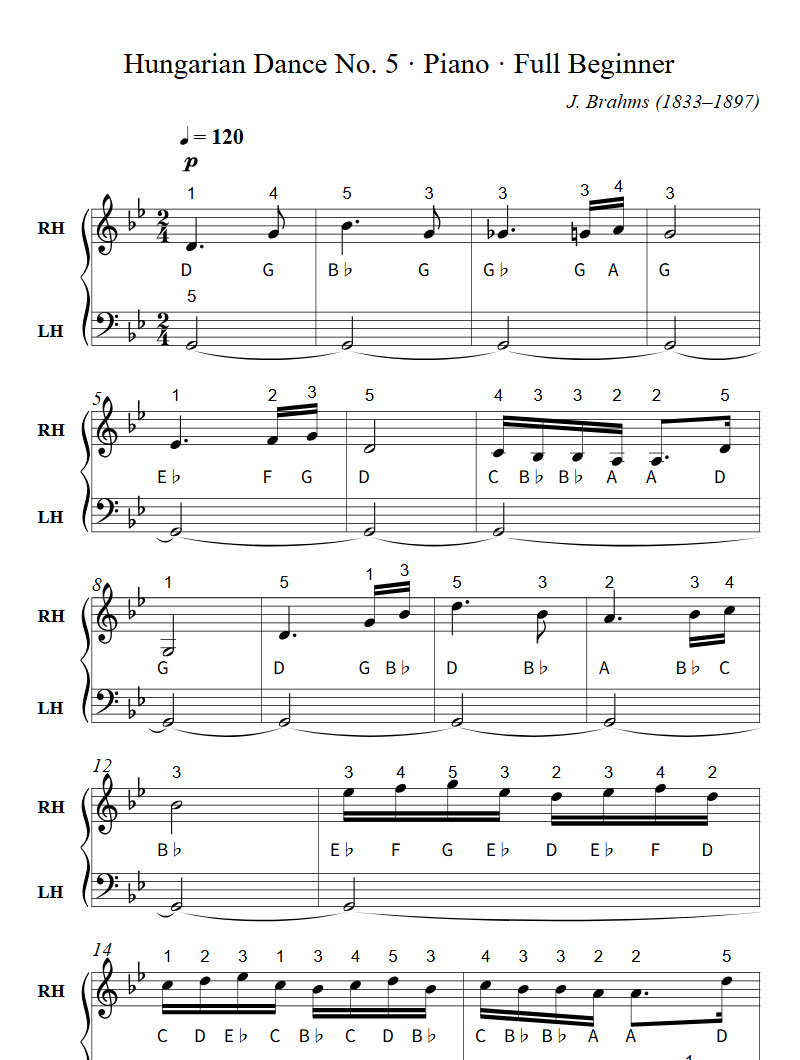 J. Brahms (1833–1897)
Hungarian Dance No. 5
Brahms' Hungarian Dance. Its gypsy-style rhythm slows down and speeds up.
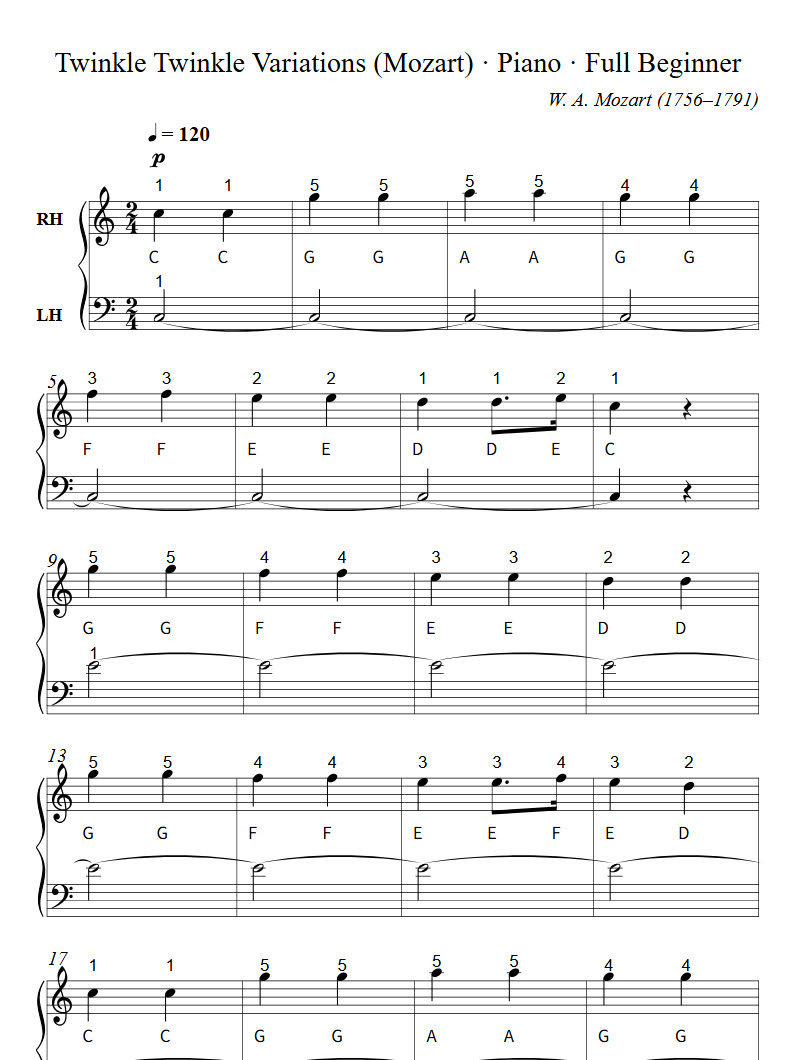 W. A. Mozart (1756–1791)
Twinkle Variations
Mozart's variations on the 'Twinkle, Twinkle' tune: the theme plus 11 variations.
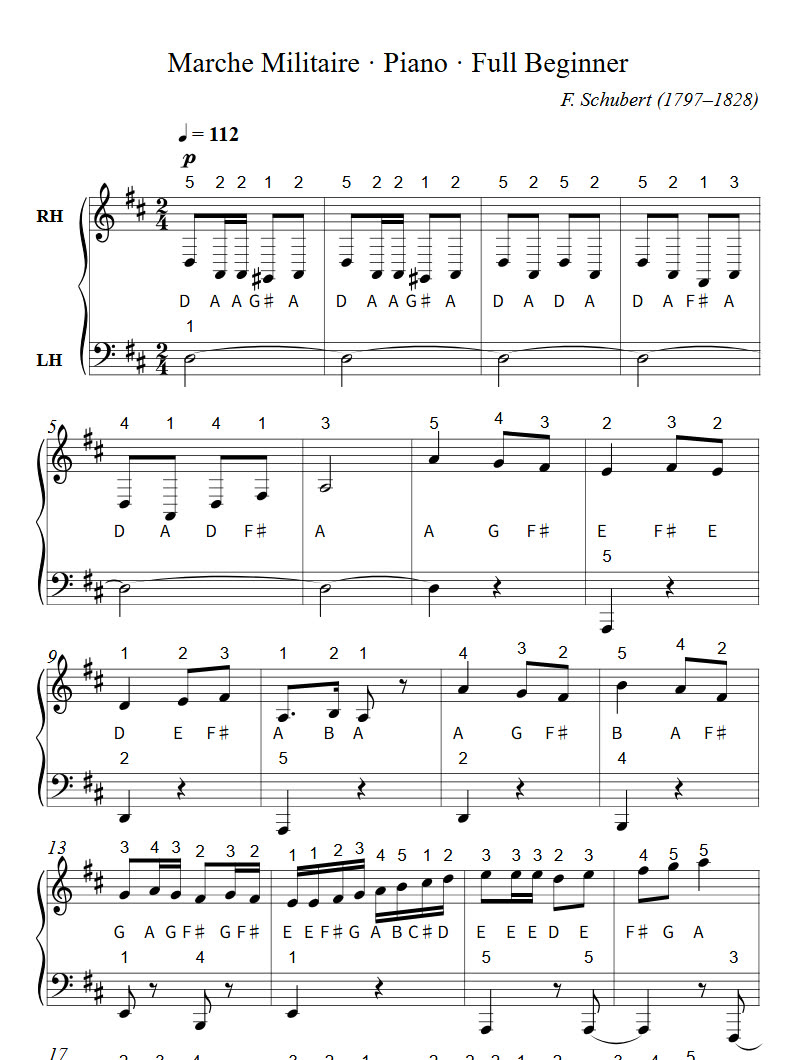 F. Schubert (1797–1828)
Marche Militaire
Schubert's march. The original is a piano duet, gathered here for two hands so you can play it alone.
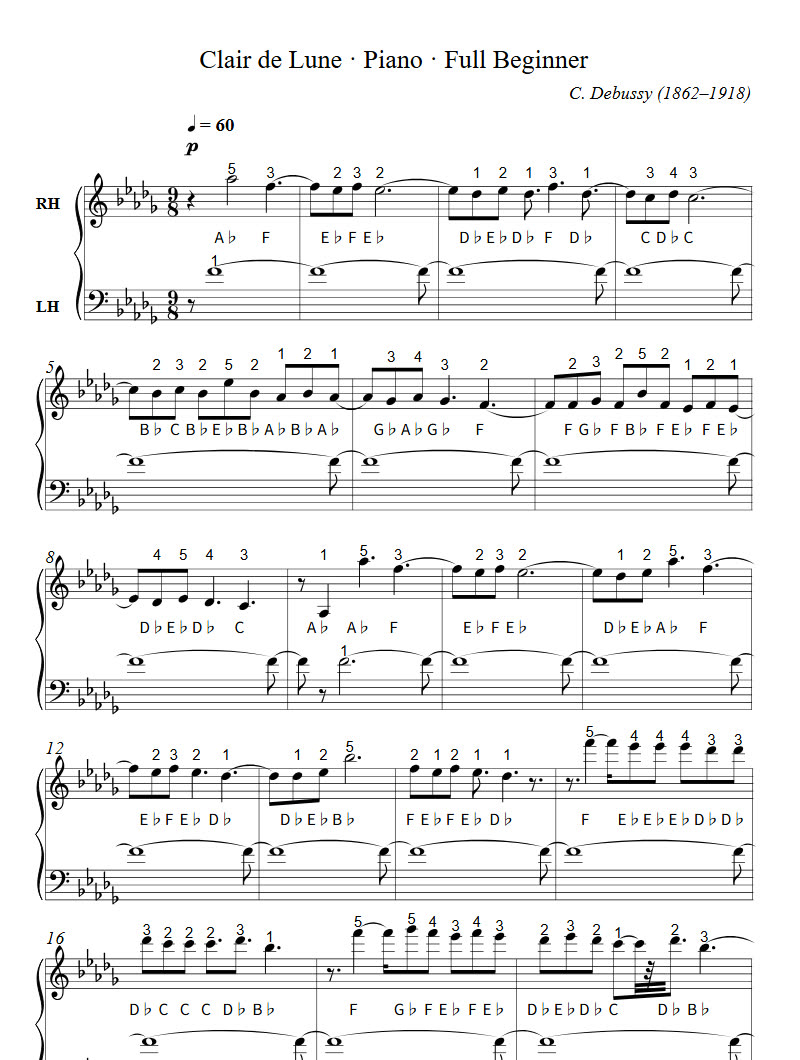 C. Debussy (1862–1918)
Clair de Lune
The third piece of Debussy's 'Suite bergamasque', flowing slowly in 9/8.
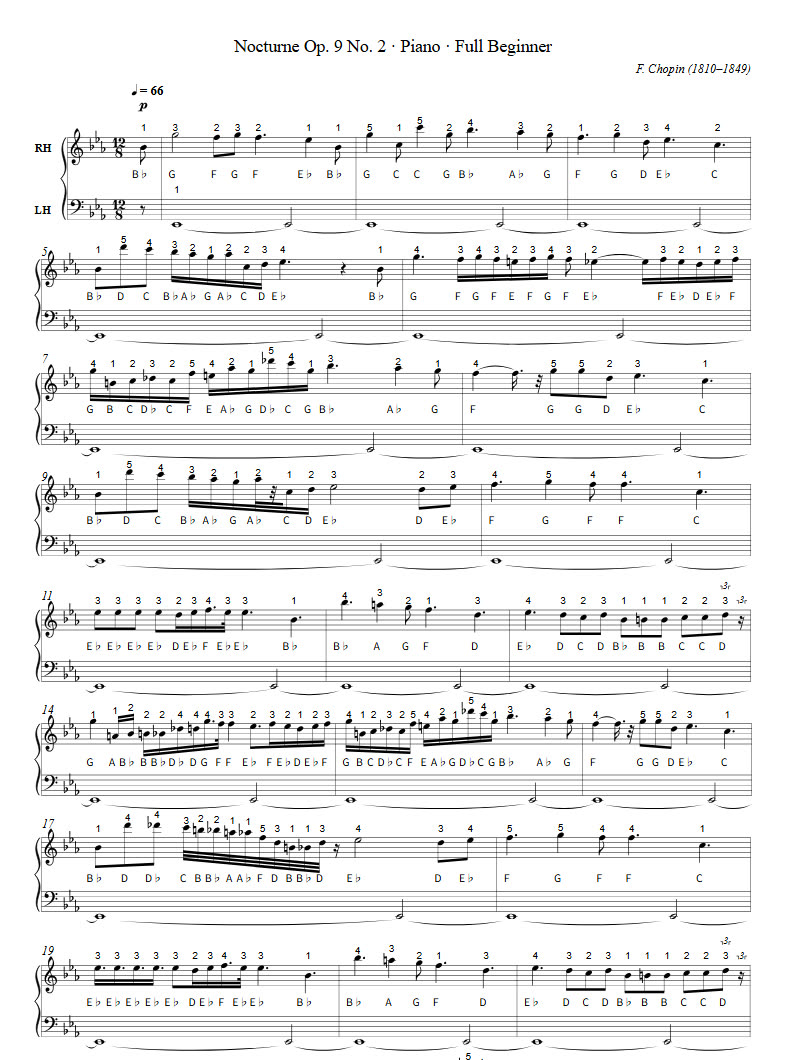 F. Chopin (1810–1849)
Nocturne Op. 9 No. 2
Chopin's best-known nocturne. A singing melody floats over a 12/8 accompaniment.
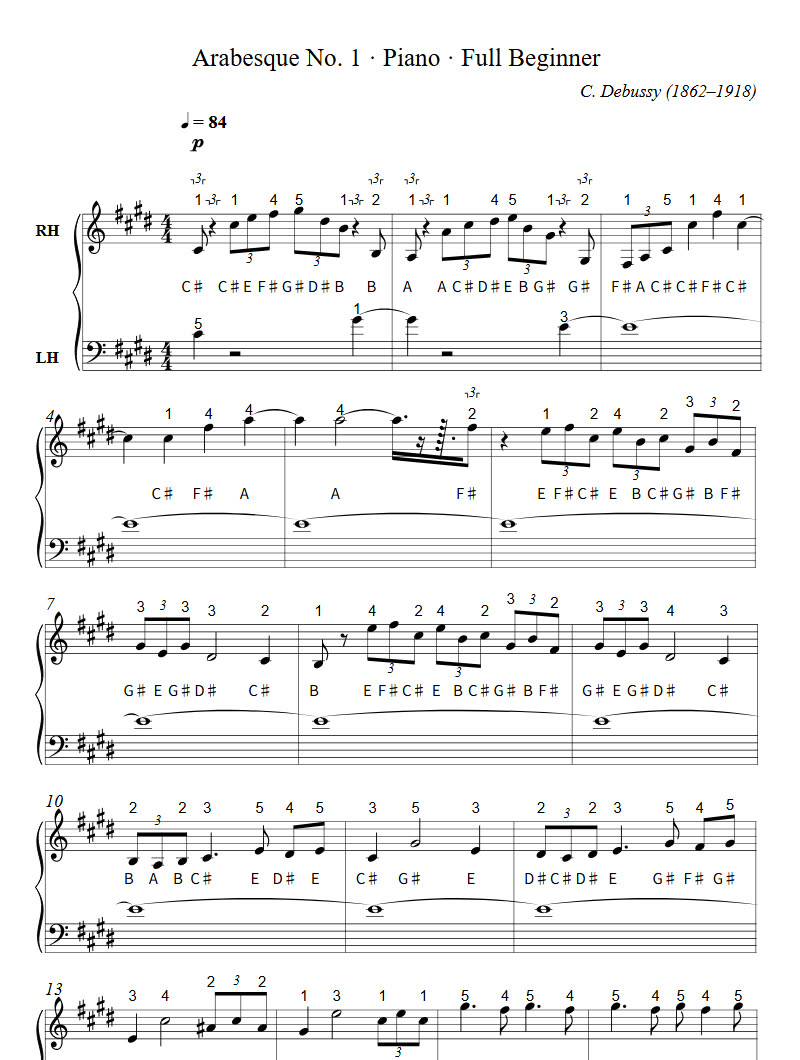 C. Debussy (1862–1918)
Arabesque No. 1
Debussy's piano piece, with triplet arpeggios rising and falling like waves.
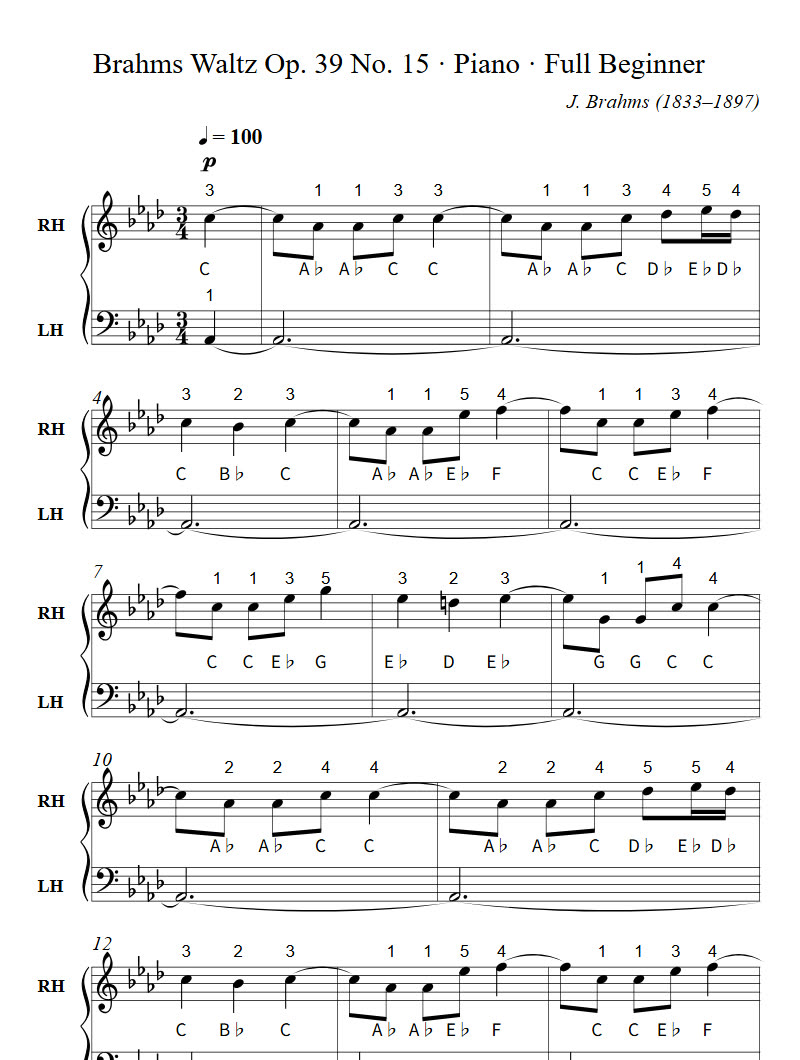 J. Brahms (1833–1897)
Brahms Waltz
No. 15, the most famous of Brahms' Waltzes Op. 39.
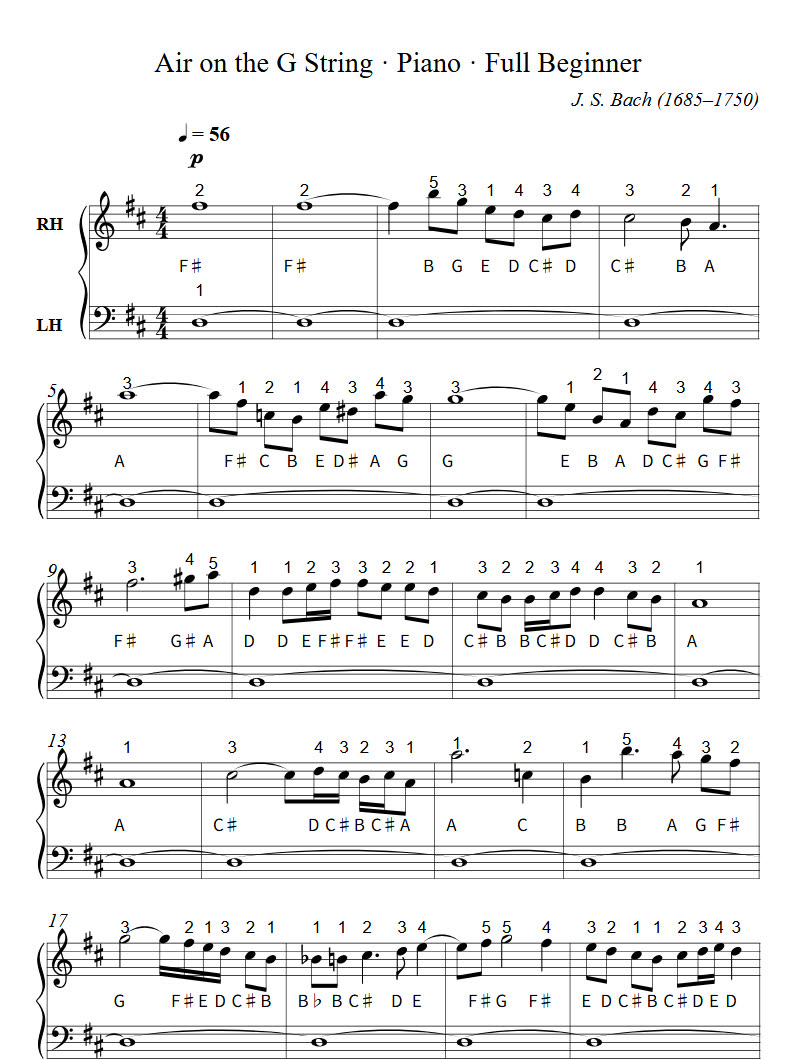 J. S. Bach (1685–1750)
Air on the G String
The Air from Bach's Orchestral Suite No. 3, taken from a piano arrangement in G major.
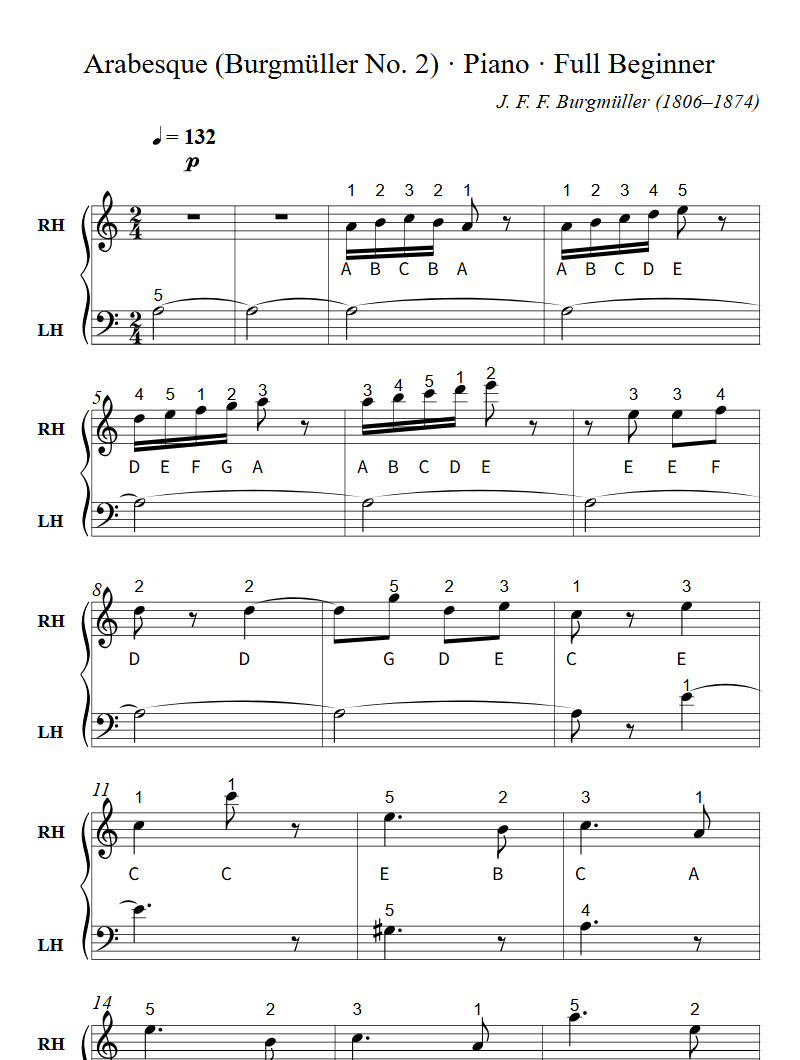 J. F. F. Burgmüller (1806–1874)
Arabesque (Burgmüller)
No. 2 of Burgmüller's 25 Easy Études — a recital favorite with fast rolling sixteenth notes.
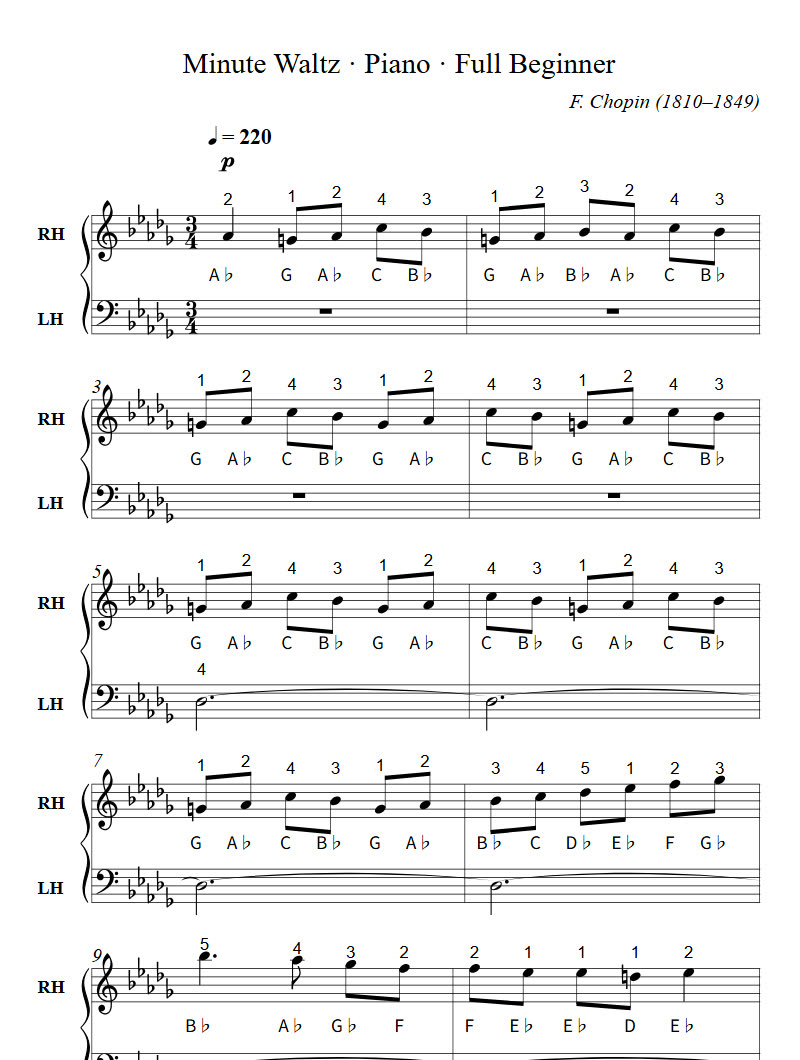 F. Chopin (1810–1849)
Minute Waltz
Chopin's 'Minute Waltz', said to picture a little dog chasing its own tail.